

From Broadway To 52nd Street
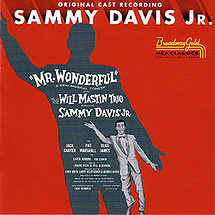
Mr. Wonderful opened at the Broadway Theatre on March 22, 1956 and ran for 383 performances. Jerry Bock, Larry Holofcener and George David Weiss composed the music and lyrics for the musical from which emerged Too Close For Comfort to become a jazz standard.
The Story: Written specifically to showcase the talents of Sammy Davis Jr. the thin plot, focusing on entertainer Charlie Welch’s show business struggles, primarily served as a springboard for an extended version of Davis’s Las Vegas nightclub act. The cast was comprised of Sammy Davis Sr., Will Mastin, Jack Carter, Chita Rivera, Malcolm Lee Beggs and Marilyn Cooper.
Jazz History: The 1930s belonged to popular swing big bands, in which some virtuoso soloists became as famous as the bandleaders. Key figures in developing the “big” jazz band included bandleaders and arrangers Count Basie, Cab Calloway, Jimmy and Tommy Dorsey, Duke Ellington, Benny Goodman, Fletcher Henderson, Earl Hines, Glenn Miller and Artie Shaw.
Swing was also dance music. It was broadcast on the radio ‘live’ nightly across America for many years especially by Hines and his Grand Terrace Cafe Orchestra broadcasting coast-to-coast from Chicago, well placed for ‘live’ time-zones. Although it was a collective sound, swing also offered individual musicians a chance to ‘solo’ and improvise melodic, thematic solos, which could at times be very complex and important music.
Over time, social strictures regarding racial segregation began to relax in America: white bandleaders began to recruit black musicians and black arrangers.
Sponsored By

www.whatissuitetabu.com
Daily Dose Of Jazz…
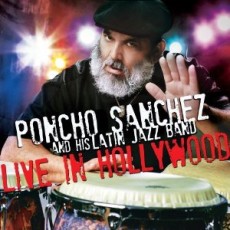
Poncho Sanchez was born October 30, 1951 in Laredo, Texas, the youngest of eleven children, but was reared in Norwalk, California. Exposed to and influenced by Afro-Cuban music (mambo, son, cha-cha, rumba, guaracha, salsa) and bebop jazz, he originally started as a guitarist. Discovering his talent for singing during an R&B band audition, he become the group’s lead vocalist. He later taught himself the flute, drums and timbales before finally deciding to pursue conga playing in high school.
In 1975, Sanchez’s idol, vibraphonist Cal Tjader invited him to perform one set with his band. Seeing the young man’s talent, Tjader hired Sanchez for a week before officially making him a full member of the ensemble. Sanchez played a crucial role as conguero for several years until Tjader’s death in 1982.
Before his death, Tjader suggested to Carl Jefferson, Concord Records founder, to sign Sanchez and his soon-to-be-formed group under the Concord Picante label. Tjader’s wishes were honored, and the first two records were composed and arranged by long-time Tjader collaborator Clare Fischer. Poncho produced 19 albums for the label and garnered a Grammy for his “Latin Soul” album.
He has played with Mongo Santamaria, Hugh Masekela and a host of jazz and Latin musicians and vocalists to numerous to name along with the iconic funk band Tower of Power on his “Do It” project. Poncho Sanchez is respected as one of the top percussionists of our time and continues to perform worldwide.
More Posts: conga,percussion
From Broadway To 52nd Street
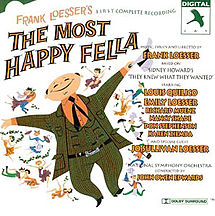
The Most Happy Fella opened at the Imperial Theatre on May 3, 1956 with Jo Sullivan, Robert Wede and Art Lund in the starring roles performing music composed by Frank Loesser. The musical ran for 676 performances and rendered unto jazz the classic tune Joey, Joey, Joey.
The Story: Rosabella comes to Napa Valley to marry the handsome young man who sent her his picture and proposed by mail. Certain that she has found someone to really love her, she soon discovers that Joe is just a hired hand and the man who proposed is Tony, an aging Italian vintner. He sent Joe’s picture fearing that one of himself would have disheartened her. The shock sends Rosabella into Joe’s arms. Eventually she realizes that Tony is an honorable, loving man. When he offers to accept not only her but the baby she is now pregnant with, she comes to love him.
Broadway History: Off-Broadway shows, performers, and creative staff are eligible for awards from the New York Drama Critics’ Circle Award, the Outer Circle Critics Award, the Drama Desk Award, the Obie Award (presented since 1956 by The Village Voice), the Lucille Lortel Award (created in 1985 by the League of Off-Broadway Theatres & Producers), and the Drama League Award. Although Off-Broadway shows are not eligible for TonyAwards, an exception was made in 1956 (before the rules were changed), when Lotte Lenya won for “Best Performance by a Featured Actress in a Musical”, for the Off-Broadway production of The Threepenny Opera.
Sponsored By
www.whatissuitetabu.com

Daily Dose Of Jazz…
Terumasa Hino was born in Tokyo, Japan on October 25, 1942. His initial exposure to music began at four was with his father, a step dancer and trumpeter, taught him tap-dancing. He soon began performing with the trumpet when he was 9 years old, later adding flugelhorn to his arsenal. In the Fifties, Hino began his career as a professional jazz musician and by 1965 after working with several noted jazz artists, he joined Hideo Shiraki’s Quintet. He remained with the band till 1969, leaving to lead his own band full-time, which he formed in 1964.
1969 saw Hino releasing his successful third album “Hi-nology” to critical acclaim and was soon performing at jazz festivals and clubs worldwide before settling in New York City in 1975. Once there he found work with numerous jazz musicians including among others Gil Evans, Elvin Jones, Jackie McLean, Ken McIntyre, Dave Liebman, Hal Galper, Carlos Garnett, Greg Osby and Sam Jones in between leading his own group, which is credited by the jazz guitarist John Scofield for him turning from fusion to jazz.
From the 1980s, he spent more time in Japan and helped incorporate several elements such as avant-garde and fusion into his music. Trumpeter Terumasa Hino has a current catalogue of fifty-one albums and he continues to perform, record and tour around the world.
More Posts: flugelhorn,trumpet

Daily Dose Of Jazz…
Dianne Reeves was born on October 23, 1956 in Detroit, Michigan to a very musical family. Her father was a singer, mother Vada Swanson played trumpet, her cousin George Duke. Raised in Denver by her mother after her father died, she took piano lessons and sang at every opportunity. Inspired at age 11 to sing, she discovered she wanted to be a singer when a teacher brought students together. Subsequently her uncle, Charles Burrell, a bass player with the Denver Symphony Orchestra, introduced her to the music of jazz singers, from Ella Fitzgerald to Billie Holiday and was especially impressed by Sarah Vaughan.
By 16, Reeves was singing in the high school big band at Denver’s George Washington High School and that same year the band played at the National Association of Jazz Educators, taking first place. It was there she met trumpeter Clark Terry, who became her mentor. A year later she began the study of music at the University of Colorado prior to moving to Los Angeles in 1976. There her interest in Latin-American music grew and she began experimenting with different kinds of vocal music and finally decided to fully pursue a career as a singer. She met Eduardo del Barrio, toured with his group “Caldera”, sang in Billy Childs’ jazz band “Night Flight” and later she toured with Sergio Mendes.
From 1983 until 1986 Reeves toured with Harry Belafonte as a lead singer and immersing herself in world music for the first time. The following year she became the first vocalist signed to the reactivated Blue Note/EMI label. Dianne is well known for her fluent improvisational style that mixes elements of jazz with R&B, for which she has won four Grammy awards since her first release in 1977, “Welcome To My Love”. She has 18 albums to her credit as a leader and more than two dozen collaborations with Nicholas Payton, Christian McBride, Eddie Henderson, Solomon Burke, Tom Browne, Gordon Goodwin, Joe Sample, George Duke, both Chico and Von Freeman, Ronnie Laws, McCoy Tyner, Wayne Shorter and the list goes on. She was featured prominently as the vocalist performing in the studio adjacent to that of Edward R. Murrow in the 2005 film Good Night, and Good Luck.
Considered one of the most important contemporary jazz singers, Dianne Reeves continues to perform, tour and record, her latest import album being “Beautiful Life”.
More Posts: vocal