

Daily Dose Of Jazz…
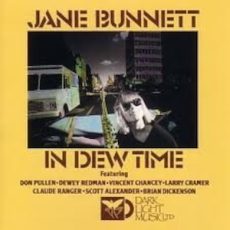
Claude Ranger was born in Montréal, Canada on February 3, 1941 and studied drums briefly with several teachers and arranging with Frank Mella. Beginning his career with Montréal show bands, he was a leading figure among the city’s jazz musicians by the mid-1960s.
A sideman to Lee Gagnon, Pierre Leduc, and Ron Proby among others, Claude led the bands heard on the CBC’s Jazz en Liberté. He was a member of Aquarius Rising with Brian Barley, Michel Donato and Daniel Lessard from 1969 to 1971. Moving to Toronto, Canada he lived there for fifteen years beginning in 1972. It was here that Claude was a member of the Moe Koffman Quintet and accompanied Canadian and U.S. musicians when they came through the city, such as, Lenny Breau, George Coleman, Larry Coryell, Sonny Greenwich, James Moody, Doug Riley, Don Thompson, and Phil Woods.
His own bands appeared at the Music Gallery, Jazz City, the Festival International de Jazz de Montréal (FIJM) and the Ottawa International Jazz Festival. A Ranger quintet was a finalist in the 1986 FIJM, receiving a special jury citation for his drumming. Relocating to Vancouver, Canada he served as a mainstay of the du Maurier International Jazz Festival, again as an accompanist to Canadian and U.S. musicians and as a leader of his own groups.
West Coast musicians Ron Samworth, Clyde Reed, Bruce Freedman and drummer Dylan vander Schyff also influenced Claude’s career. He was considered a jazz musician and drummer with natural swing, in the bebop-based tradition of Max Roach. Displaying great stamina, he sometimes worked against the grain of jazz in Canada. His ensembles ranged from a trio to the 15 and 19-piece Jade Orchestra that debuted at the 1990 Vancouver festival.
Ranger played a role in Canada similar to the one created by Art Blakey in the US – that of a veteran musician whose bands served as an important platform for the development of younger players. His discography included recordings by Allen, Barley, Breau, Gagnon, Greenwich, Koffman, Riley, Thompson, Jane Bunnett, P.J. Perry, Herb Spanier, Michael Stuart, and U.S. musicians Dave Liebman, and Michael Munoz.
Drummer, composer, arranger, and teacher Claude Ranger continues to pursue his career in music.

More Posts: arranger,bandleader,composer,drums,educator,history,instrumental,jazz,music
Daily Dose Of Jazz…
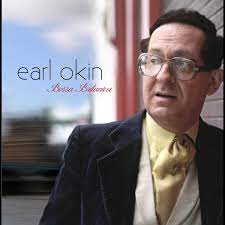
Earl Okin was born in Carshalton, Surrey, England on January 31, 1947 and has lived in the West London neighborhood of Notting Hill since he was six years old. In 1959, at the age of 12, he appeared on a BBC TV talent show “All Your Own” playing guitar and singing his own songs. He wrote for The Beatles publisher Dick James.
Recording his first single at Abbey Road in 1967, some of his songs were covered during the 1960s by Cilla Black, Georgie Fame and Helen Shapiro. During the 1970s, Okin started to perform as a support act in large venues, beginning with folk acts and progressing to open for a variety of acts such as Jean-Luc Ponty and Van Morrison. However, it was the 1979 invitation to tour with Paul McCartney and Wings which prompted him to pursue his musical career full-time, and perform at jazz festivals.
In 1981, he appeared on the tv show Parkinson and was invited by Nigel Planer to perform at the Comic Strip. This led to his second career on the alternative comedy circuit where he remains a headline act. However, his act continues to be primarily musical. He has never performed stand-up. Fans’ favourite comedy songs of his are Mango, Bessie and My Room.
Working as a songwriter and jazz singer/musician, with a particular interest in bossa nova, he gives concerts in Brazil from time to time, as well as touring his one-man show, a mixture of music and comedy, worldwide. He has performed in New York City, toured India, Singapore, other nearby countries, and at home in London’s major venues.
He has released two singles, thirteen albums, written an autobiography, composed a six-movement symphony, and produced a biographical documentary Who is Earl Okin? Singer, songwriter, guitarist, pianist and comedian Earl Okin continues to perform and tour.
Acquaint an inquisitive mind with a dose of a Carshalton vocalist who is in the company of musical genius around the world as a member of the jazz canon…

More Posts: comedian,guitar,history,instrumental,jazz,music,piano,songwriter,vocal

Daily Dose Of Jazz…
Bobby Battle was born on January 8, 1944 and grew up in Detroit, Michigan. He moved to New York City in 1968, playing with Roland Kirk and Pharoah Sanders shortly after his arrival.
He studied at New York University from 1972 to 1975. He played with Don Pullen and Sam Rivers through the late 1970s, and worked often with Arthur Blythe in the 1980s and 1990s. He also worked with Kenny Dorham, Sonny Stitt, and Sonny Fortune. He worked as a duo with Jimmy Ponder in 1987.
Battle’s only release as a leader is The Offering, issued in 1990 on Mapleshade, on which Battle leads a quartet with David Murray, Larry Willis, and Santi Debriano. As a sideman he recorded four albums with Arthur Blythe and four with Don Pullen.
Drummer Bobby Battle, who occasionally played saxophone, died on December 6, 2019 in his hometown.
More Posts: bandleader,drums,history,instrumental,jazz,music
Daily Dose Of Jazz…
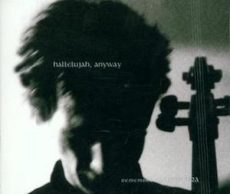
Carlos Zíngaro or Carlos Zíngaro Alves was born December 15, 1948 in Lisbon, Portugal. He studied classical music at the Lisbon Music Conservatory from 1953 to 1965, and during the years 1967/68 he studied pipe organ at the Sacred Music High School and did studies on musicology and electroacoustic music.
During the 1960s, he was a member of the Lisbon University Chamber Orchestra. In 1967 he formed the musical group Plexus. He has performed at music festivals in Europe, Asia and America. He has recorded more than 50 albums under his name or in collaboration with other musicians and composers.
Zingaro was a founding member and director of the Lisbon art gallery Cómicos from 1984 till 1990, and his work has been exhibited, and he was awarded several prizes for his illustration, comics and paintings. Samples of his work can be seen on a number of CD sleeves. Since 2002 he is the founder and president of experimental arts and music association Granular.
Violinist and electronic musician Carlos Zingaro, who is active in free improvisation, continues to perform and record.
More Posts: adventure,bandleader,history,instrumental,jazz,music
Daily Dose Of Jazz…
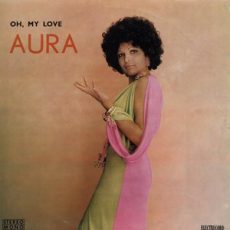
Aura Rully was born Aura Urziceanu in Bucharest, Romania on December 14, 1946. She grew up surrounded by classical music, as her father was a concertmaster with the symphony orchestra. Her vocal talent emerged very early and she sang from the time she was a little girl. She was a natural and a fast learner even though she didn’t take any formal lessons until her late teens. While she likes all kinds of music, jazz is her favourite. She was just over 13 years old when she recorded a big-band song.
She started scatting before she even knew what it was. She was just bored with the lyrics. She found out what scatting was when she heard Ella Fitzgerald do it. Her first appearance was as a guest on the Ray St. Germain Show. Sell-out performances at Club Morocco, the only jazz club in Winnipeg, Manitoba, Canada followed. It was there Ellington spotted her, taking some time out from a concert performance to drop by the club. After jamming together the next day, he sent her a ticket to New York and she performed with him full-time in the U.S. until his death two years later, in 1974. Over the course of her career, Aura has composed her own music and recorded four of her own albums.
She has toured and performed with Bill Evans, Duke Ellington, Ella Fitzgerald, Ahmad Jamal, Hank Jones, Thad Jones, Dizzy Gillespie, Quincy Jones, Paul Desmond, Joe Pass and Mel Lewis.
Vocalist Aura Rully, who has performed as Urziceanu-Rully in America, continues to perform and record.
More Posts: bandleader,history,instrumental,jazz,music,vocal