

Daily Dose Of Jazz…
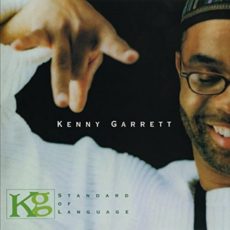
Kenny Garrett, born October 9, 1960 in Detroit, Michigan and his father played saxophone as a hobby. After graduating from Mackenzie High School in 1978 he joined the Duke Ellington Orchestra, led by Mercer Ellington. He moved on to join the Mel Lew Orchestra playing the music of Thad Jones followed by a stint with the Dannie Richmond Quartet that focused on the music of Charles Mingus.
1984 saw him recording his first album as a bandleader, Introducing Kenny Garrett, on the Criss Cross label. Moving to Atlantic Records he recorded Prisoner of Love and African Exchange Student. Since 1990 the majority of Garrett albums are co-produced by pianist/composer Donald Brown beginning with signing with Warner Bros. Records label, releasing Black Hope in 1992. Songbook, his first album made up entirely of his own compositions, recorded in 1997, was nominated for a Grammy Award.
Over the course of his ongoing career Kenny has performed and recorded with among others, Art Blakey, Joe Henderson, Brad Mehldau, Freddie Hubbard, Woody Shaw, McCoy Tyner, Pharoah Sanders, Brian Blade, Marcus Miller, Chick Corea, John McLaughlin, Herbie Hancock, Bobby Hutcherson, Ron Carter, Elvin Jones, Geri Allen, Jack Walrath, Cedar Walton, Rodney Kendrick, Charnett Moffett and Mulgrew Miller. Best known in many circles for the five years he spent playing with Miles Davis during the trumpeter’s electric period.
Garrett has won a Grammy Award, has been nominated for a Soul Train Award, a Grammy and a NAACP Image Award nominations for Seeds from the Underground, was awarded an Echo Award in the Saxophonist of the Year in 2013 and has received an Honorary Doctorate in Music from Berklee College of Music. Post-bop saxophonist and flautist Kenny Garrett who has released nineteen albums as a leader and over thirty as a sideman, continues to pursue his solo career.

More Posts: saxophone
Daily Dose Of Jazz…
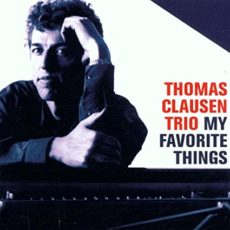
Thomas Clausen was born on October 5, 1949 in Copenhagen, Denmark and grew up in a musical home with his father playing a strong and able jazz piano in swing style, his mother from a family of singers. He began playing very young with great artists of jazz and his energetic and lyrical piano playing was discovered by Dexter Gordon in 196. During that same year he joined Palle Mikkelborg’s projects and groups and was soon playing regularly with the bass players Niels-Henning Orsted Pedersen, Bo Stief, and Mads Vinding, as well as with the drummers Alex Riel, Bjarne Rostvold, and Kasper Winding.
Accompanying a number of international jazz stars visiting Copenhagen, Thomas has performed with Ben Webster, Elvin Jones, Jan Garbarek, Joe Henderson, Phil Woods, Lee Konitz, Stan Getz, Chet Baker, Eddie ”Lockjaw” Davis, Jackie Mclean, Gary Bartz, and Johnny Griffin, just to mention a few. In the mid 80’s he was a regular member of the Peter Herboltzheimer International Big Band in Germany.
Clausen formed his own band in 1978, when he started Mirror, a group that recorded the first LP with his own compositions and included Jan zum Vohrde on saxophone and flute, bassist Ole Skipper Moesgaard, and Aage Tanggaard on drums. 1979 saw him leading his first jazz trio, with bassist Niels-Henning Orsted Pedersen and once again Tanggaard on drums, releasing two albums by 1983. Towards the end of the decade another trio emerged with Mads Vinding and Alex Riel and participated in the first Jazzpar Prize concerts in Copenhagen, Odense, and Paris in 1990, joined by with Gary Burton. The collaboration with Burton lasted a couple of years and led to two recording sessions.
Through the Nineties he delved into Brazilian music, recording and performing with many who were living in Denmark and Germany. His Brazilian Quintet continued into the new millennium, performing and touring throughout Europe. At 67, pianist, composer, arranger and bandleader Thomas Clausen has received the Ben Webster Prize, The Jasa Prize, The Fanfare Prize, and The Danish Society for Jazz, Rock and Folk Composers Prize, received support from the Danish Arts Foundation for fifteen consecutive years from 1993 to 2007 and continues to compose, perform as a leader and co-leader and to tour.
More Posts: piano
Daily Dose Of Jazz…
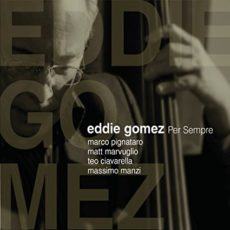
Edgar Gómez was born October 4, 1944 in Santurce, Puerto Rico and emigrating with his family at a young age arrived in New York City, where he was raised. He started on double bass in the City’s school system at the age of eleven and at age thirteen went to the New York City High School of Music & Art. He played in the Newport Festival Youth Band, led by Marshall Brown from 1959 to 1961, and graduated from Juilliard in 1963.
Gómez has performed with Miles Davis, Dizzy Gillespie, Gerry Mulligan, John Coltrane, New York Art Quartet, Benny Goodman, Buck Clayton, Ahmad Jamal, Bill Bruford, Scott LaFaro, Marian McPartland, Paul Bley, Michael Brecker, Wayne Shorter, Steps Ahead, Steve Gadd, Ron Carter, Jeremy Steig, Herbie Hancock, Tony Williams, Al Foster, Chick Corea, Mark Kramer, Eugenio Toussaint and Carli Muñoz, just to name a few giants.
Spending a total of eleven years with the Bill Evans Trio and touring the United States, Europe and Asia, as well as recording dozens of albums, in which two of the Trio’s recordings won Grammy awards. Though Eddie was a member of the Manhattan Jazz Quintet and Steps Ahead, most of his career has been as an accompanist, a position suited for his quick reflexes and flexibility. This gave him the opportunity to record some 73 albums above and beyond his projects as a leader.
He was awarded an Honorary Doctorate of Music from Berklee College of Music in Valencia, Spain, and was the first honorary doctorate granted at the college’s new international campus. Double bassist Eddie Gómez continues to perform, record and tour.

More Posts: bass
Daily Dose Of Jazz…
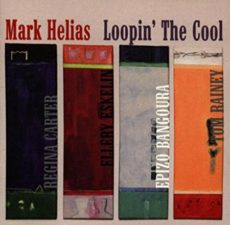
Mark Helias was born on October 1, 1950 in New Brunswick, New Jersey and did not begin playing the double bass until the age of 20. He graduated from Yale University’s School of Music with a Masters degree in 1976 and went on to study at Rutgers University. In the late Seventies he, along with Gerry Hemingway on drums, put together BassDrumBone, and continuing to play together. The 80s saw him again with Hemingway and trombonist Ray Anderson where he led the avant-funk band Slickaphonics.
Helias performed with the previous members of Ornette Colemans original band, Don Cherry, Dewey Redman, and Ed Blackwell. Mark also performed with AACM affiliates Anthony Braxton, Anthony Davis, Muhal Richard Abrams, and Julius Hemphill. Furthermore, he played with Cecil Taylor, Marilyn Crispell, Simon Nabatov, and reed players Oliver Lake, Carlos Ward, Arthur Blythe, Don Byron, and Marty Ehrlich, among others. He also had performances with Abbey Lincoln, Mose Allison, and J.B. Horns.
Since 1984 he has released six recordings under his own name and further six albums leading the archetypal improvising trio Open Loose since 1996. The group comprises Helias on bass, first Ellery Eskelin, then Tony Malaby on tenor saxophone and Tom Rainey on drums.
Bassist Mark Helias has received six NEA Grants in Jazz Performance, two NYFA Grant in Music Composition, teaches at Sarah Lawrence College, The New School, and SIM (School for Improvised Music) when not performing, composing or recording.

More Posts: bass
Daily Dose Of Jazz…
Charles Davis was born on September 29, 1946 in Sydney, Australia and started playing flute during his youth. After a short period of studying classical guitar in Sydney, he started playing jazz, rock and folk in groups after moving to Brighton. Hearing a lot of music in a rock music context, I was so fascinated.
A move to Germany in the Seventies saw him playing the flute and later for a short period of time, the saxophone in jazz rock groups. By 1980 he started playing guitar and piano. Being inspired by the various saxophone groups that appeared in the 70s, by the 90s Davis formed one of the first jazz groups composed solely of flutes. This ground breaking group required that the various members compose for this unique formation taking into account the different types of flutes. Later in the decade, after meeting bansuri player Joachim Hübner, his interest turned to the classical north indian music and became a student of the Chanchala and Duo Bubachala.
Charles has attended workshops and masterclasses conducted by James Newton, Robert Dick and Dieter Bihlmeier, Hari Prasad Chaurasia, Jeremy Steig, Hossein Omoumi and Herbie Mann. Alto, bass and double bass flautist Charles Davis currently resides in Germany and continues to compose, record and perform.