

Daily Dose Of Jazz…
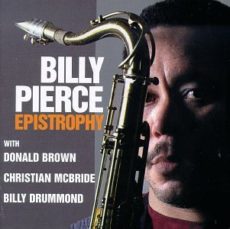
Billy Pierce was born September 25, 1948 in Hampton, Virginia and was raised in Florida by parents who were both educators. The household valued music and Pierce and his siblings each learned an instrument. He took up the saxophone as a child and started out listening to records by Dave Brubeck. Later he was drawn to the music of John Coltrane and Cannonball Adderley. Since he was only 16 when he graduated from high school, his parents steered him toward a college in the South so he wouldn’t be too far from home. After he turned 18, and studied with Joe Viola, Andy McGhee and Joe Allard at Berklee College of Music,
Also known as Billy, he went on to play with Art Blakey and the Jazz Messengers in the early 1980s and in the Tony Williams quintet in the mid-1980s to early 1990s. He has led numerous sessions and released an equal number of CDs. He is the school’s woodwind department chair.
He has recorded with Blakey and Williams as well as with Makoto Ozone and Superblue. Saxophonist Billy Pierce continues to perform, compose and record.

More Posts: saxophone
Daily Dose Of Jazz…
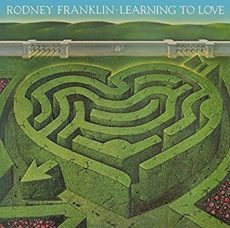
Rodney Franklin was born on September 16, 1958 in Berkeley, California and at the age of six he took jazz piano lessons at Washington Elementary School. He was taught by Dr Herb Wong who was a jazz journalist, disc jockey and music teacher.
Influenced by McCoy Tyner, George Duke, Chick Corea and Lonnie Liston Smith he would develop his own sound. Franklin worked with John Handy in San Francisco, California as well as Bill Summers, Freddie Hubbard and Marlena Shaw. He recorded his debut album in 1978 In The Center on the CBS label at age of 20.
1980 saw the release of the album You’ll Never Know which garnered some major chart success and additional six albums were albums were recorded for CBS during the Eighties and worked with bassist Stanley Clarke. Though Rodney gained some notoriety in the United States he was much more popular in the United Kingdom.
Moving to the BMG record label in 1988 he recorded Diamond Inside Of You, introducing vocals by Jennifer Holliday, who would go on to find fame on Broadway in Dreamgirls. By the Nineties he produced and released one album on the Nova label, however, pianist Rodney Franklin continues to composer and work in various music genres in and out of jazz.

More Posts: piano
Daily Dose Of Jazz…
Joseph Francis Michael Morris was born September 13, 1955 in New Haven, Connecticut. Starting on guitar he was primarily self-taught with only a few lessons, and played his first professional gig in 1969 . Jimi Hendrix and other guitarists of that period inspired him to learn to play the blues and John Coltrane’s Om inspired him to learn about jazz. From the age of 17 he worked to establish his guitar voice in the free jazz context, inspired by Cecil Taylor, Eric Dolphy, Leroy Jenkins and Thelonious Monk. After high school he performed in rock bands, rehearsed in jazz bands, and played improvised music until 1975, when he moved to Boston, Massachusetts.
By 1983 he formed his own record company, Riti, and recorded his first album, Wraparound. An early mentor and playing partner was pianist Lowell Davidson. Between 1989 and 1993 he performed and recorded with his electric trio Sweatshop and electric quartet Racket Club. 1994 saw Joe become the first guitarist to lead his own session in the twenty-year history of Black Saint/Soul Note with the trio recording Symbolic Gesture.
Morris has continued to record extensively for Leo, Knitting Factory, AUM Fidelity, Hathut, Clean Feed, ESP and RogueArt record labels. He has led his own groups and has recorded and performed with Matthew Shipp, William Parker, John Zorn, Joe Maneri, Rob Brown, Ivo Perelman, Ken Vandermark and DKV Trio, Jim Hobbs, Steve Lantner, Daniel Levin, Petr Cancura and David S. Ware among others.
He has lectured and conducted workshops throughout the United States and Europe, is a former member of the faculty of Tufts University Extension College and is currently on the faculty at New England Conservatory in the jazz and improvisation department. Guitarist, bassist, improviser and composer Joe Morris continues to perform and record.


Daily Dose Of Jazz…
Lars Danielsson was born on September 5, 1958 in Smålandsstenar, Sweden and was educated at the music conservatory in Gothenburg and studied double bass, electric bass and cello. In 1985, he formed a quartet with saxophonist Dave Liebman, pianist Bobo Stenson and drummer Jon Christensen, producing several albums. He also worked with big bands.
He played and recorded with, among others, John Scofield, Jack DeJohnette, Mike Stern, Billy Hart, Charles Lloyd, Terri Lyne Carrington, Leszek Możdżer, Joey Calderazzo, Gino Vannelli and Dave Kikoski.
Since 1980, he has released eight solo albums with the Lars Danielssons Quartet. In these albums, Alex Acuña, John Abercrombie, Bill Evans, Kenny Wheeler, Rick Margitza and Niels Lan Doky were featured.
As a producer he has been responsible for productions with Cæcilie Norby and the Danish radio orchestra among others. Bassist, cellist, composer and record producer Lars Danielsson continues to compose, record, perform and tour.

Daily Dose Of Jazz…
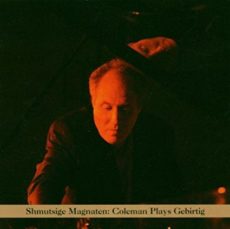
Anthony Coleman was born on August 30, 1955 in New York City and didn’t begin to study piano until the age of thirteen with Jaki Byard. He attended the New England Conservatory of Music and studied with George Russell, Donald Martino and Malcolm Peyton.
Coleman has collaborated with guitarist Elliott Sharp, trumpeter Dave Douglas, accordion player Guy Klucevsek, composer David Shea, former Captain Beefheart band member Gary Lucas, classical and klezmer clarinetist David Krakauer, guitarist Marc Ribot, bassist Greg Cohen, drummer Joey Baron and saxophonist Roy Nathanson.
He has toured with his groups Sephardic Tinge and Selfhaters throughout Europe, in the 1990s and the early 2000s. His Disco by Night was his first major solo record released by Japan’s Avant Records in 1992. He released duo albums, The Coming Great Millenium, Lobster & Friend, and I Could’ve Been a Drum with Roy Nathanson, that typify his free playing style as well as his multi-instrumental capability. Coleman and Nathanson have performed all over the U.S. and Europe. His album The End of Summer features his NEC Ensemble Survivors Breakfast.
Avant-garde pianist Anthony Coleman has released 15 albums as a leader, 33 as a sideman, appeared in four documentaries, has written four compositions, has taught theory and composition at Bennington College, is on the faculty of the New England Conservatory of Music and Mannes College New School for Music, writes articles for All About Jazz and Bomb magazine and continues to perform, compose and record.
More Posts: piano