

Daily Dose Of Jazz…
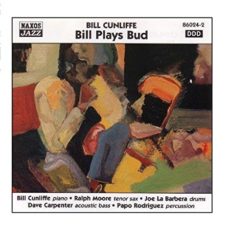
Joe LaBarbera was born into a musical family on February 22, 1948 in Mt. Morris, New York, younger brother to saxophonist Pat LaBarbera and trumpeter and arranger/composer John LaBarbera. Formally educated at Berklee College of Music in Boston, Massachusetts after graduation he spent two years with the Army band at Fort Dix, New Jersey.
He began his professional career playing with Woody Herman and the Thundering Herd, followed by the Chuck Mangione Quartet. Moving to New York Joe spent two years freelancing with a number of notable musicians, including Jim Hall, Phil Woods, Art Farmer, Gary Burton, Art Pepper, John Scofield, Bob Brookmeyer and Toots Thielemans.
By 1978, Labarbera had joined the Bill Evans Trio with bassist Marc Johnson. After the death of Evans in 1980, he joined singer Tony Bennett, then went on to work with pianist Bill Cunliffe and has recorded with his brother Pat. Relocating to Los Angeles, California, he has been teaching at the California Institute of the Arts since 1993. He is on the faculty of the Bud Shank Jazz Workshop in Port Townsend, Washington and has also served on the National Endowment for the Arts council in Washington, DC.
Drummer and composer Joe LaBarbera, who is a guest lecturer at colleges and universities, continues to record and perform.
Sponsored By


#preserving genius
More Posts: drums

Daily Dose Of Jazz…
Leroy Jones was born on February 20, 1958 in New Orleans, Louisiana and began playing trumpet at the age of ten. By the time he was 12 he was leading the Fairview Baptist Church Marching Band, a group of young musicians organized by guitar and banjo player Danny Barker.
The musicians’ union forced Barker to disband the group in 1974, so Leroy became a union musician and took over the running of the group, renaming it the Hurricane Brass Band. By 1976 he had left the group, touring for a time with Eddie Vinson and Della Reese before forming his own group, the Leroy Jones Quintet.
In 1991 Jones joined the big band of Harry Connick, Jr., and that exposure with the band, including the opportunity for the Leroy Jones Quintet to open for Connick. This in turn led to him releasing his first album under his own name titled Mo’ Cream From The Crop on the Columbia Records in 1994. Trumpeter Leroy Jones, who has ten albums as a leader, has also appeared with the Preservation Hall Jazz Band and Dr. John and continues to tour and record with his quintet.
Sponsored By

Voices From The Community
#preserving genius
More Posts: trumpet
Daily Dose Of Jazz…
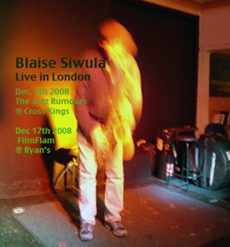
Blaise Siwula was born in Detroit, Michigan, on February 19, 1950 and grew up in a working/middle-class Black neighborhood. His next-door neighbor practiced saxophone in the afternoon and occasionally allowed him inside to watch him play. He began studying the alto saxophone at the age of 14, playing in the middle-school concert band. But, upon hearing John Coltrane’s Om in 1969, he was compelled to take the tenor saxophone and make it his voice.
He attended college on and off for an extended period from 1968-1980, studying theory and composition at Wayne State University and earning his B.F.A. degree. Siwula’s first personal encounters with jazz musicians came around 1971 with drummer Doc Watson, while both were living in a hotel near the downtown campus of Wayne State. Then the saxophonist got married, moved to San Francisco, California and started playing free improvised music in coffee houses and writing poetry.
Influenced by hearing Art Pepper in San Francisco, as well as Ornette Coleman, Sonny Stitt, Archie Shepp, Pharoah Sanders, Sun Ra, Blue Mitchell, Elvin Jones, and Miles Davis in memorable live performances around the Detroit area in the early ‘1970s. After spending four years in Northern California, Blaise moved back to Detroit, then headed for Europe in 1989, working and traveling as a street musician for three months, then returning to the States and settling in New York City.
Active on the metro New York improvisation scene, he worked with Amica Bunker, the Improvisers Collective, and the Citizens Ontological Music Agenda (COMA) series. During the decade of the 2000s, he concentrated his efforts as a spontaneous composer incorporating traditional musical scoring techniques with visual/graphic and performance-oriented presentations.
Over the course of his career he has played or collaborated with Doug Walker’s Alien Planetscapes, Cecil Taylor’s Ptonagas, William Hooker’s ensembles, Judy Dunaway’s Balloon Trio, Dialing Privileges with Dom Minasi and John Bollinger, Karen Borca, William Parker, Jeff Platz, Adam Lane, Wilber Morris, Vincent Chancey, Theo Jörgensmann, Rashid Bakr, Tatsuya Nakatani,, Jay Rosen, Sarah Weaver, Fala Mariam, Ernesto Rodrigues, Hilliard Greene, Joe McPhee, Ernesto Diaz-Infante, Maria De Alvear, Vattel Cherry, and Jeff Arnal, among others.
Avant-garde alto saxophonist Blaise Siwula also plays the clarinets, flutes, percussion and string instruments and continues to perform and record free jazz and curate.
Sponsored By

www.whatissuitetabu.com
#preserving genius
More Posts: clarinet,flute,percussion,saxophone,strings
Daily Dose Of Jazz…
George Bouchard was born Feb. 4, 1944 in Buffalo, New York and was the eldest of three children. His father worked in a factory and the family lived for much of his childhood in an apartment above the family delicatessen. He took saxophone lessons from the owner of a music store but was mostly self-taught, drawing inspiration from famous musicians like Charlie Parker and John Coltrane.
When he was 19, on the night after President Kennedy was assassinated, he found solace watching a jazz band play at a nightclub near his Buffalo home and decided he wanted a career in music. He earned a degree in economics from the University at Buffalo and a master’s in music from Memphis State University. He served in the Navy from 1966 to ’69.
As an educator he spent more than thirty years as a professor teaching music at Nassau Community College and 40 years of teaching during the summers at the Jamey Aebersold Jazz Workshops at the University of Louisville in Kentucky. He released four compact discs as a leader, received numerous awards for excellence in music education and for advancing the arts on Long Island, wrote a widely used instructional book called Intermediate Jazz Improvisation, and performed regularly with his group, The George Bouchard Band.
Soprano saxophonist and composer George Bouchard passed away from cancer on August 12, 2015 in Westbury, New York at age 71.
Sponsored By

#preserving genius
More Posts: saxophone
Daily Dose Of Jazz…
Frank Ricotti was born on January 31, 1949 in London, England and played in the National Youth Jazz Orchestra while a teenager, then attended Trinity College of Music from 1967 to 1970. From 1968 through 1974 hep performed with Neil Ardley, Dave Gelly, Graham Collier, Mike Gibbs, Stan Tracey, Harry Beckett, Norma Winstone and Gordon Beck.
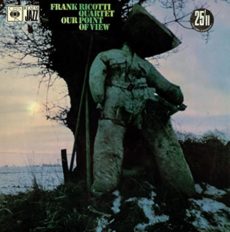
In the late 1960s and early 1970s, Ricotti led his own jazz quartet with a line-up of the band featuring the guitarist Chris Spedding, bassist Chris Laurence and drummer Bryan Spring. Together they recorded the album Our Point of View, and released it in 1969. By 1971, in partnership with bassist Mike de Albuquerque, he released the album First Wind. He recorded with Oliver Nelson on the album Oliver Edward Nelson in London with Oily Rags for the Flying Dutchman label in 1974.
The 1980s saw Frank playing with Chris Laurence and John Taylor in the group Paragonne, and then played with Beck again in 1984. After this he worked primarily as a studio musician recording with groups outside the jazz genre, such as, Status Quo, Freddie Mercury, Pet Shop Boys, Swing Out Sister, Belle and Sebastian, Clannad, Barclay James Harvest, Meat Loaf, Elkie Brooks, Rick Wakeman, Tina Turner, Aztec Camera, Thomas Anders, and Alphaville.
Between 1984 and 1987 Ricotti wrote the soundtrack music for Yorkshire Television’s The Beiderbecke Trilogy, in the style of Bix Beiderbecke. The music was performed by his band, the Frank Ricotti All Stars, and featured Kenny Baker on cornet. The band made a cameo appearance in the final series, playing in a jazz club and the soundtrack album was released in 1988.
In 2007 he played vibes on Mark Knopfler’s album Kill to Get Crimson and vibraphonist and percussionist Frank Ricotti continues to perform, record and compose.

#preserving genius
More Posts: percussion,vibraphone