

Requisites
Bags’ Opus ~ Milt Jackson | By Eddie Carter
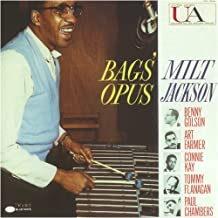
Milt Jackson steps into the spotlight to begin this morning’s discussion with one of my favorite albums from 1959, Bags’ Opus (United Artists UAL 4022/UAS 5022). This is my album to listen to when reading or relaxing because the music is so soothing, I can listen to it endlessly. Here, the vibist is leading an exceptional sextet consisting of Art Farmer on trumpet, Benny Golson on tenor sax, Tommy Flanagan on piano, Paul Chambers on bass, and Connie Kay on drums. My copy used in this report is the 1976 Japanese Stereo reissue (United Artists GXC-3135), and the album opens with the leader in ballad mode on Ill Wind by Harold Arlen and Ted Koehler. It was written in 1934 and performed by vocalist Adelaide Hall in their final show at The Cotton Club. Milt’s vibes are delicately discreet on the melody and as the featured soloist, he tells an exquisitely tender story matched by the sensitive accompaniment of the rhythm section into a gorgeous finale.
Blues For Diahann is Jackson’s tribute to actress, model, singer, Diahann Carroll, and the only original of the session. It opens with a jubilant intro by the rhythm section and a collective theme by the sextet. Golson takes off first with some straightforward blowing. Farmer doesn’t let up the pace on the next reading with a spirited solo. Flanagan follows with a dazzling display of his virtuosity, and Chambers gives a spicy performance that’s worth the wait. Kay begins the next reading with some brisk brushwork in a shared statement with Jackson. The leader wraps up everything with a short workout ahead of the close. Afternoon In Paris by John Lewis was written in 1949 and was first recorded by Phineas Newborn Jr. on the album, Here Is Phineas-The Piano Artistry of Phineas Newborn Jr. (1956). Lewis made it the title song for his 1957 release with guitarist Sacha Distel, and the group takes this tune for an easy ride with five soulful statements by Milt, Benny, Art, Tommy, and Paul.
Benny Golson’s timeless 1957 jazz standard, I Remember Clifford, was written to honor the memory of trumpet player Clifford Brown who alongside pianist Richie Powell and his wife Nancy perished in an auto accident a year earlier. It opens Side Two delicately with the front line featured on the melody and reprise. Bags gives this evergreen all the poise and elegance it deserves on a sublimely beautiful performance backed by the trio. Thinking of You was composed by Harry Ruby and Bert Kalmar in 1927, and debuted in the Broadway show, The Five O’Clock Girl that year. It was also featured in the 1950 film, Three Little Words. Art takes the lead on the gentle opening chorus with Milt and the rhythm section providing the lush background. He continues on the first solo with an intimately moving interpretation. Bags comes in next to add a touch of sensuous beauty to the closing statement ahead of Art’s return for the tenderly expressive coda.
Benny Golson wrote Whisper Not in 1956 while a member of Dizzy Gillespie’s Big Band. It’s one of his most popular tunes and has been a signature song of Golson’s since its inception. Leonard Feather wrote lyrics for Anita O’Day who recorded it in 1962. The sextet begins the melody at an easy beat with an irresistible toe-tapping melody. Jackson cruises at a comfortable speed with impeccably-crafted lines. Farmer works the next solo using his mute with a firm tone and relaxing informality. Golson gets the next nod for an infectious groove that just won’t stop, and Flanagan sparkles on the final reading before the sextet reassembles to take the song out. Bags’ Opus was produced by Jack Lewis and engineered by Tommy Nola whose work can also be found on Argo, Atlantic, Blue Note, Cadet, Contemporary, Jazztime, Mercury, Riverside, and Verve to name a few. The album has a solid soundstage with an excellent definition from each instrument bringing the musicians from your speakers into your listening room.
Milt Jackson was one of the extraordinary musicians of jazz whose consistency on record is unequaled. He played and recorded with Cannonball Adderley, Ray Charles, Miles Davis, Dizzy Gillespie, Coleman Hawkins, Wes Montgomery, and countless others as a leader, sideman, and on many records as a member of The Modern Jazz Quartet. He was given the nickname Bags by a Detroit bass player, referring to the bags under his eyes. I’ve been a huge fan of his ever since seeing him live in 1972. On Bags’ Opus, Jackson and his colleagues offer an album of easy listening jazz that any fan of Post-Bop should consider a must-have for their library!
~ Afternoon In Paris (Atlantic 1267); Anita O’Day and The Three Sounds (Verve Records V-8514/V6-8514); Here Is Phineas-The Piano Artistry of Phineas Newborn Jr. (Atlantic 1235/SD 1235) – Source: Discogs.com
~ Ill Wind, I Remember Clifford – Source: JazzStandards.com ~ Afternoon In Paris, Thinking of You, Whisper Not – Wikipedia.org ~ © 2020 by Edward Thomas Carter
More Posts: choice,classic,collectible,collector,history,instrumental,jazz,music,vibraphone
Daily Dose Of Jazz…
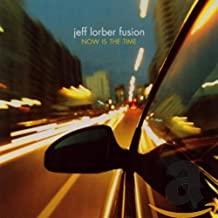
Jeff Lorber was born November 4, 1952 into a Jewish family in Cheltenham, Pennsylvania. He started to play the piano when he was four years old and after playing in a number of R&B bands as a teen, he attended Berklee College of Music, where he developed his love for jazz. There he met and played alongside guitarist John Scofield and for several years he studied chemistry at Boston University.
Moving to Vancouver, Washington in 1972, his first group, The Jeff Lorber Fusion, released their self-titled debut album in 1977 on Inner City Records. Recording five albums under his name, these early sessions showcased a funky jazz fusion sound, and his 1980 album, Wizard Island, introduced saxophonist Kenny G. In 1982, Lorber recorded his first solo album, It’s a Fact, which explored his R&B roots with a smoother, more synthesizer-heavy sound along with vocals.
Many of his songs have appeared on The Weather Channel segments as well as their compilation albums. He has had six Grammy Award nominations and his Prototype album won for Best Contemporary Instrumental Album in 2018. Keyboardist, composer and record producer Jeff Lorber continues to produce, compose and perform.

More Posts: bandleader,composer,history,instrumental,jazz,keyboard,music
Requisites
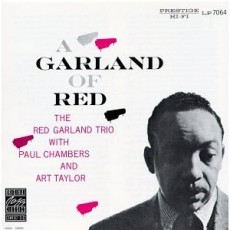
A Garland of Red was Red Garland’s debut release on Prestige, being signed to an exclusive recording contract after his performance in the Miles Davis Quintet brought awareness to his talent. The Dallas-born Philadelphian brought Davis alums to form the recording trio that brings a handful of standards, a blues and some rhythm. As a leader it is Garland’s beginning and an auspicious one at that.
Personnel: Red Garland – piano, Paul Chambers – bass, Arthur Taylor – drums
Supervised by: Bob Weinstock
Record Date: Hackensack, New Jersey, August 17, 1956
Cover: Hannan/Edwards
Songs: A Foggy Day, My Romance, What Is This Thing Called Love, Makin’ Whoopee, September In The Rain, Little Girl Blue, Constellation, Blue Red
More Posts: collectible,piano
Jazz In Film
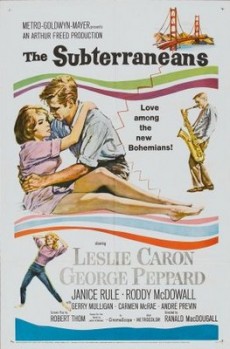
The Subterraneans is a 1960 film adaptation of Jack Kerouac’s book about the “new bohemians”, today’s young rebels who live and love in a world of their own. This is their story told to the hot rhythms of fabulous jazz!
Directed by Ranald MacDougall and stars Leslie Caron, George Peppard, Janice Rule, Roddy McDowell, Anne Seymour, Jim Hutton and Arte Johnson.
Music by Andre Previn with appearances by Carmen McRae, Gerry Mulligan, Bob Enevoldsen, Art Pepper, Art Farmer, Russ Freeman, Red Mitchell, Dave Bailey, Shelly Manne, Bill Perkins and Chico Hamilton.

#preserving genius
More Posts: film

Requisites
The Incredible Jazz Guitar Of Wes Montgomery is a dazzling display of the unorthodox technique and emotional power that combined to make Wes a literally “incredible” artist. Ever since its initial release in 1960, this album has been a consensus choice of musicians, critics and knowledgeable listeners as a matchless example of the talents of one of the finest jazz instrumentalists of all times.
Personnel: Wes Montgomery – guitar, Tommy Flanagan – piano, Percy Heath – bass, Albert “Tootie” Heath – drums
Producer: Orrin Keepnews
Record Date: New York City – January 26 & 28, 1960
Cover Art: Produced and designed by Paul Bacon, Ken Braren and Harris Lewine
Songs: Airegin, D-Natural Blues, Polka Dots & Moonbeams, Four On Six, West Coast Blues, In Your Own Sweet Way, Mr. Walker (Renie), Gone With The Wind
More Posts: collectible,guitar