


Daily Dose Of Jazz…
Joshua Redman was born February 1, 1969 in Berkeley, California to tenor saxophonist Dewey Redman and dancer Renee Shedroff. As a child he was exposed to various kinds of music at the Center for World Music in Berkeley and received early lessons in music and improvisation. Upon graduating from high school he matriculated through Harvard graduating summa cum laude. He then turned down an opportunity to study law at Yale to become a professional musician.
His career kicked into high gear after winning the Thelonious Monk International Jazz Saxophone Competition in 1991 and began focusing on developing his style beginning as a sideman alongside Javon Jackson on Elvin Jones’ Youngblood recording. He followed up with an appearance on his father’s 1992 album Choices. After a short apprenticeship period Redman began recording for Warner Brothers, first with his self-titled project and then Wish with Pat Metheny, Charlie Haden and Billy Higgins.
With successive albums from ’93 to ’96, Joshua briefly joined Chick Corea, recording and touring. From 1998 – 2002 he returned to recording as a leader bringing the world such albums as Beyond, Passage of Time and Elastic, the later bringing a more adventurous and playful Redman to the fore with the later including pianist/organist Sam Yahel and drummer Brian Blade.
Redman became the artistic director for San Francisco’s SF Jazz Collective from 2004-2007, made several television appearances including Reading Rainbow with Levar Burton and performed on the soundtrack for the Mia Farrow Story. On his album, Back East Redman paid tribute to Sonny Rollins 1957 album Way Out West, teaming up with musicians including Brian Blade, Christian McBride, Al Jackson, Joe Lovano, and his late father.
Joshua Redman is an inaugural member of the Independent Music Awards judging panel to support independent arts and continues to compose, tour and record.

Daily Dose Of Jazz…
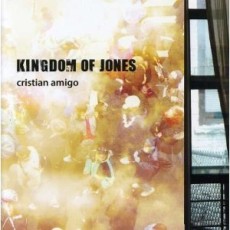
Cristian Amigo was born January 2, 1963 in Santiago, Chile. He emigrated with his family to the United States as a young child. At 12 years old, he began studying guitar seriously and two years later the family moved to Miami and began performing with a rock band he formed, Six Feet Under. He attended Hialeah-Miami Lakes Senior School and while a student there taught classes in guitar to his peers. During high school he took courses in music theory, classical guitar and jazz at Miami-Dade Community College.
Amigo entered the music program at Florida State University at age 17, studied classical guitar, then enrolled in the University of Miami and became an active recording session player. His first recording session at age 17 was with Narada Michael Walden prior to moving to Los Angeles to continue his education studying jazz with Kenny Burrell and composition with Wadada Leo Smith, earning a doctorate in Ethnomusicology.
Cristian would go on to become a film composer, bandleader, music producer, jingle producer, concert producer and music teacher at Plaza de la Raza and others. He has performed in African, Arabic, funk, hard rock, free jazz, jazz, and reggae groups working with Hans Zimmer, Wadada Leo Smith, David Ornette Cherry and Carlos Hayre.
His awards include Guggenheim and Van Leir Fellowships, he has been produced by Brooklyn Philharmonic, New York Foundation for the Arts, American Composers Forum, Danish Arts Council among numerous others. Amigo moved to New York City from Los Angeles in 2003 and quickly established himself on the Latin music, free improv, “new music”, and theater scenes, and continues to perform, record and produce.

More Posts: guitar
Daily Dose Of Jazz…
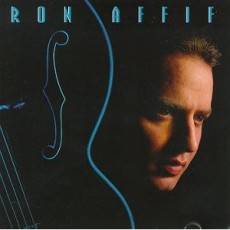
Ron Affif was born on December 30, 1965 in Pittsburgh, Pennsylvania of mixed Lebanese and Italian origin. His father, a jazz fan, initiated him in music and his uncle, renowned jazz guitarist Ron Anthony, with whom he would study from age 12. He also studied with Jerry Conderata and Joe Negri.
Moving to Los Angeles he took lessons from the jazz guitarist Joe Pass, then worked with everybody from Al Martino to Roger Williams and learned a ton of Gershwin tunes before moving to New York City in late 1989. By the late 1990s, he recorded five albums under the Fantasy record label, of which the best known is “52nd Street”. In 1998, he formed the Ron Affif Trio alongside fellow musicians bassist Essiet Okon Essiet and drummer Jeff “Tain” Watts.
Affif’s style is bop-based reminiscent of Wes Montgomery and George Benson. He has played with Dick Berk, Dave Pike, Pete Christlieb and Jack Sheldon. His singing quality is what distinguishes Ron from most of the other guitarists. He phrases with a sense of rhythm and pace allowing each note to blossom and recede with a breath-like purity and relaxation that belies his fiery chops. Hard bop guitarist Ron Affif continues to perform, compose, record and tour.

More Posts: guitar
Daily Dose Of Jazz…
George Colligan was born on December 29, 1969 in New Jersey and raised in Columbia, Maryland, a suburb of Baltimore. He attended the Peabody Institute, majoring in classical trumpet and music education. In high school he learned to play the drums and later switched to piano.
Moving to New York City he quickly became an in-demand sideman working with Phil Woods, Billy Higgins, Gary Bartz, Nicholas Payton, Buster Williams, Don Byron, Vanessa Rubin, Christian McBride and Cassandra Wilson and many others.
George’s eclectic style incorporates everything from show tunes to funk, from free improvisation to modern classical music. He performs at festivals all over the world, including the North Sea Jazz Festival, the Edinburgh Jazz & Blues Festival, Vancouver International Jazz Festival, and the Cancun Jazz Festival.
As an educator, Colligan has taught at the Juilliard School of Music, the University of Manitoba, was the songwriter-in-residence at Aqua Books and has taught jazz history, piano, drums, trumpet, and led many different master classes. Continuing to perform and record, George Colligan is currently an Assistant Professor and Jazz Ensembles Coordinator at Portland State University in Oregon.

Daily Dose Of Jazz…
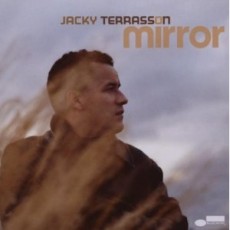
Jacky Terrasson was born Jacques-Laurent Terrasson on November 27, 1966 in Berlin, Germany to French and American parents, but grew up in Paris, France. He started learning piano at 5 years old and after studying classical piano in school, he studied jazz, in particular with Jeff Gardner. His encounter with Francis Paudras played an important role his initiation into jazz.
He studied at Berklee College of Music before playing in Chicago and New York clubs. He gained increased attention on winning the 1993 Thelonious Monk Piano Competition and began touring with Betty Carter. A year later he was named by the New York Times Magazine one of the 30 under 30 to change American culture in the next 30 years.
He has recorded for Blue Note, Venus, EMI, Concord and Universal France amassing a total of 15 records. He has worked with Dee Dee Bridgewater, Michael Brecker, Dianne Reeves, Jimmy Scott, Charles Aznavor, Cassandra Wilson, Ry Cooder, and his trios with Leon Parker and Ugonna Okegwo or Eric Harland, Ben Williams, Jamire Williams and Justin Faulkner.
Pianist Jacky Terrasson plays festivals all over the world and works regularly in Japan, South Korea and in China, as well as in Europe and the United States. He mingles and melts the colors and the inventions of the great pianists of yesterday and today creating his own style.
More Posts: piano