

Daily Dose Of Jazz…
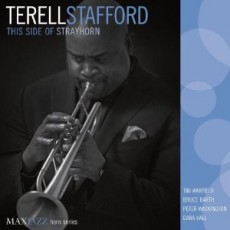
Terell Stafford was born in Miami, Florida on November 25, 1966 and raised in Chicago, Illinois and Silver Spring, Maryland. He went on to get a degree in music education from University of Maryland in 1988 branching out from classical trumpet to jazz with their jazz band. He went on to obtain a degree in classical trumpet performance from Rutgers University.
His career in jazz soon picked up and has played with McCoy Tyner, Shirley Scott, Christian McBride, John Clayton, Steve Turre, Stephen Scott, Bobby Watson, Dave Valentin, Lafayette Harris, Cecil Brooks III, Cornell Dupree, Ed Wiley, Victor Lewis, Melissa Walker, Herbie Mann and Russell Malone among others. He has graced the stages such as Carnegie Hall and The Tonight Show.
Stafford’s educator hat has him as the Director of Jazz Studies at Temple University and has also worked with the Juilliard School’s jazz program, at the Lincoln Center’s Essentially Ellington program, and with the 2006 All-Alaska Jazz Band. He has recorded eight albums to date and continues to perform and tour.
More Posts: trumpet
Daily Dose Of Jazz…
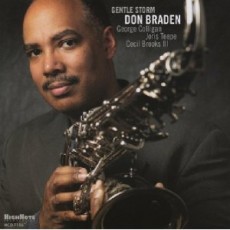
Don Braden was born November 20, 1963 in Cincinnati, Ohio and raised in Louisville, Kentucky. He began playing tenor sax at age 13 and started playing professionally at 15. As a high school student he played in the McDonald’s All-American High School Jazz Band. He went on to attend Harvard University, studying engineering but played in the school’s jazz ensemble.
Braden moved to New York City in 1984, where he played with The Harper Brothers, Lonnie Smith and Betty Carter. In 1986 he toured with Wynton Marsalis and followed this with Out of the Blue, Roy Haynes, Tony Williams, Freddie Hubbard, J. J. Johnson, Tom Harrell, Art Farmer and the Mingus Big Band.
Don has developed an extensive knowledge of every aspect of jazz performance and is an imaginative and soulful saxophonist. He has released 16 albums as a leader or co-leader, with his recording debut in 1991 with “The Time is Now”. His list of sidemen is extensive and includes Christian McBride, Joris Teepe, Benny Green, Julian Joseph, Kenny Werner, Darrell Grant, Carl Allen, Cecil Brooks III & Billy Hart, David “Fathead” Newman, Vincent Herring, Dave Liebman, Terell Stafford, Tom Harrell, Randy Brecker, Steve Turre, Conrad Herwig, Jack McDuff, Larry Goldings and Russell Malone among many others.
He spent four years as co-music supervisor/composer for Bill Cosby’s CBS sitcom, “Cosby”, co-wrote the theme song for Cosby’s CBS cartoon series, “Little Bill” and composed music for Nickelodeon’s “Fatherhood”. Braden is a passionate and highly experienced educator, having held the position of Coordinator of Jazz Studies at Montclair State University, served as Music Director of the Litchfield Jazz Camp, has been the Music Director of the New Jersey Performing Arts Center’s Well’s Fargo Jazz for Teens program and a visiting professor in the “New York Comes to Groningen” program at the Prins Claus Conservatoire, in Groningen, Netherlands. He continues to educate, perform, record and tour.

More Posts: saxophone
Daily Dose Of Jazz…
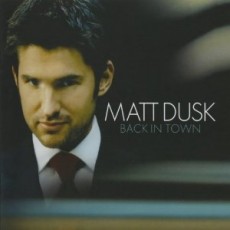
Matt Dusk was born Matthew-Aaron Dusk on November 19, 1978 in Toronto, Ontario, Canada and from an early age wanted to become a performer. At seven, he was accepted into St. Michael’s Choir School and for the next eleven years performed opera and classical music. It wasn’t until hearing Tony Bennett and Sarah Vaughan records at age 17 that he began to change his musical style and direction.
In 1998 Matt won the top spot in the Canadian National Exhibition Rising Star Competition, entered York University for economics but a year later change to music studying jazz theory and jazz vocal, graduating with honors in 2002.
Dusk recorded four independent CDs before his major record deal, making his mark on the MP3 web circuit. This was followed by a 2003 record deal with Decca Records, the next year played Las Vegas at the Golden Nugget, and became the house entertainer for the reality TV show Casino.
Matt has recorded with Capitol Records, worked with a 58-piece orchestra, is the first jazz artist in Japanese history to reach #1 on the pop radio charts, recorded the soundtrack for the TV series Call Me Fitz, and has shot a live DVD concert special with a 17-piece band and has six albums to his credit alongside his independent project. He currently performs, tours and records.
Daily Dose Of Jazz…
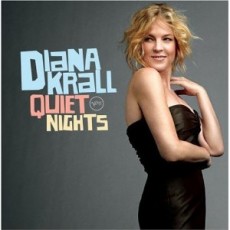
Diana Jean Krall was born on November 16, 1964 in Nanaimo, British Columbia, Canada. At age four she was playing piano and playing jazz in a local restaurant at 15. She went to the Berklee College of Music on scholarship before heading out to Los Angeles, California.
In 1993, Krall released her debut album, Stepping Out, with John Clayton and Jeff Hamilton. Her sophomore project hit the stands two years later followed by a third, a dedication to Nat King Cole in 1996. She teamed up with guitarist Russell Malone and bassist Christian McBride on her next release Love Scenes that quickly became a hit recording in 1997.
Diana has been on tour with Tony Bennett, teamed up with Claus Ogerman, incorporated orchestral arrangements by Johnny Mandel, performed closing credit music for the DeNiro film The Score, joined Ray Charles on his Genius Loves Company, featured in a Lexus ad campaign, produced Barbra Streisand’s Love Is The Answer album.
She has been awarded the Order of British Columbia, an honorary doctorate from the University of Victoria, inducted into the Canadian Walk of Fame, has had a plaza named after her, has won two Grammy and eight Juno awards. Pianist and contralto vocalist Diana Krall continues to perform, record and tour.

Daily Dose Of Jazz…
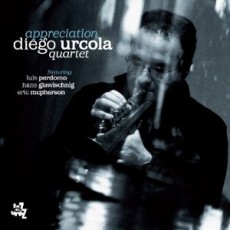
Diego Urcola was born on November 5, 1965 in Buenos Aires, Argentina and began his musical studies at age 9 in the Music Department of the Colegio Ward where his father Ruben served as director. He continued his studies and in 1988 he received the title of Profesor Nacional de Música from the Conservatorio Nacional de Musica.
Subsequently, having received a scholarship to study abroad, the trumpeter and flugelhorn player moved to Boston where he attended Berklee College of Music. In 1990 Diego graduated with an emphasis in Jazz Performance, and less than a year later moved to New York and established himself on the jazz scene.
Urcola toured with Slide Hampton, has been a member of the Paquito D’Rivera Quintet since 1991, toured with the United Nations Orchestra, has worked with Wynton Marsalis and the Lincoln Center Jazz Orchestra, plays steadily with the Caribbean Jazz Project since 2004, and performs regularly with the legendary saxophonist Jimmy Heath and the Dizzy Gillespie Alumni All Star Big Band.
Urcola has played with Joe Henderson, Steve Turre, Milt Jackson, Avishai Cohen, Edward Simon, Antonio Sanchez, Dave Samuels, Jimmy Heath, Conrad Herwig and the Calle 54 Band among others. He leads and records with his own group, has captured second place honors at the 1997 Thelonious Monk International Jazz Trumpet Competition, received a Latin Grammy as part of D’ Rivera’s band, and since has been nominated three times for a Grammy Award. The jazz trumpeter continues to perform, compose and record integrating the flavor of tango with jazz.

More Posts: trumpet