


Daily Dose Of Jazz…
Jane Monheit was born November 3, 1977 in Oakdale, New York on Long Island. As a child, Jane spent her summers as a student at the Usdan Center For the Creative and Performing Arts, and is a recipient of their distinguished alumna award.
She began singing professionally while attending Connetquot High School in Bohemia, N.Y. from which she graduated in 1995. As a student at the Manhattan School of Music she studied voice under Peter Eldridge, graduated with honors. Monheit was the first runner up to Teri Thornton in the 1998 Thelonious Monk Jazz Institute’s vocal competition.
An international artist, Jane has performed at most of the major concert halls, cabarets and jazz venues around the globe. She has released seven albums and two DVDs, and has appeared as a guest artist on many others, as well as soundtracks for the movie “Sky Captain and the World of Tomorrow” singing Over The Rainbow.
Monheit has appeared on numerous television shows and also been a featured performer in the nationally televised Christmas at the White House, the Capitol Fourth of July Celebration, and The National Memorial Day Celebration.
Vocalist Jane Monheit has collaborated with artists such as Michael Bublé, Ivan Lins, Terence Blanchard and Tom Harrell and has been nominated twice for her recordings. She spends most of the year on tour with her band but also performs with the major symphonic orchestras throughout the country.
More Posts: vocal
Requisites
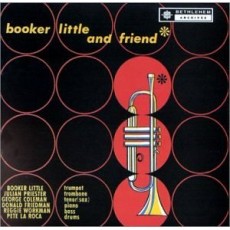
Booker Little and Friends: At the time of Booker Little’s death in 1963, he was just 23 years old, he was already far more than a promising trumpet talent. This reissue of his landmark fourth and final session as a leader, “Victory And Sorrow”, showcases his compositions with trumpet voiced against a backdrop of tenor and trombone. It demonstrates Little’s interest in a mix of complex moods and advanced harmonies, use of multiple keys to create simultaneous joy and mourning, and rhythmic shifts, flaring runs, and surprising intervals.
Personnel: Booker Little – trumpet, Julian Priester – trombone, George Coleman – tenor saxophone, Donald Friedman – piano, Reggie Workman – bass, Pete LaRoca – drums
Record Date: Bethlehem / August 1961 – September 1961
Songs: Victory And Sorrow, Forward Flight, Looking Ahead, If I Should Lose You, Calling Softly, Booker’s Blues, Matilde, plus two previously unreleased takes – Matilde (Alt. Take 4), Matilde (Alt. Take 7)

More Posts: collectible,trumpet
Requisites
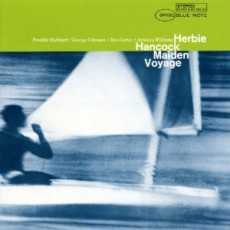
Maiden Voyage is a concept album aimed at creating an oceanic atmosphere. Many of the song titles refer to marine biology or the sea, and the musicians develop the concept through their use of space and almost tidal dynamics. Three of the albums tunes – Maiden Voyage, The Eye of the Hurricane and Dolphin Dance have become jazz standards. The album was presented with the Grammy Hall of Fame Award in 1999.
Personnel: Herbie Hancock – piano, Ron Carter – bass, Tony Williams –drums, Freddie Hubbard – trumpet, George Coleman – tenor saxophone
Supervised by: Rudy Van Gelder
Record Date: Blue Note / May 17, 1969
Cover: The sailboat lends to the nautical theme of a first outing.
Songs: Maiden Voyage, The Eye Of The Hurricane, Little One, Survival Of The Fittest and Dolphin Dance
More Posts: collectible,piano
Jazz In Film
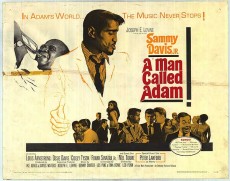
The Film: A Man Called Adam
The Year: 1966
The Director: Leo Penn
The Stars: Sammy Davis Jr., Ossie Davis, Cicely Tyson, Louis Armstrong, Frank Sinatra Jr., Peter Lawford, Mel Torme, Lola Falana, Jeanette Dubois, Johnny Brown, George Rhodes and Henry Silva.
The Music: Scored by Benny Carter with Sammy Davis ghosted by Nat Adderley. Performances by Louis Armstrong, Billy Kyle, Buster Bailey, Tyree Glenn, Kai Winding, Jo Jones, Frank Wes and Mel Torme.
The Story: Sammy Davis Jr. does a great job as the film’s central character Adam Johnson, a famous self-destructive, unlikable jazz trumpeter finds himself unable to cope with the problems of everyday life. He finds true love for the first time with a virginal bleeding heart: a sensible civil rights activist who wants to reform the hotheaded musician of his hard liquor and hard living. Adam, carrying around a multitude of shoulder-chips, lashes out at everybody and never seems to land on his feet; after burning all his bridges, he finds himself at the end of his professional rope; yet the faithful are still hopeful he can make a comeback. Much better are Ossie Davis as a friend with a strong center and endless patience, as well as love-interest Cicely Tyson. Mel Tormé stops the show with a terrific rendition of “All That Jazz”, while the superb soundtrack and Jack Priestley’s gleaming cinematography are first-rate throughout.
More Posts: film
Jazz In Film
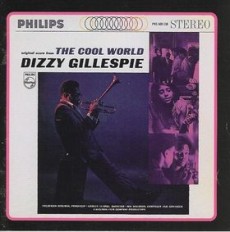
The Cool World
The Director: Shirley Clarke
The Writers: Shirley Clarke, Carl Lee, Warren Miller and Robert Rossen
The Actors: Rony Clanton, Carl Lee, Yolanda Rodriguez, Clarence Williams III, and Gloria Foster
The Music: The soundtrack of abstract jazz colorings was never officially released, however, this Dizzy Gillespie re-recording is the next best thing.
The Story: This 1964 film is a powerful, stark semi-documentary look at the horrors of Harlem ghetto slum life filled with drugs, violence, human misery and a sense of despair due to the racial prejudices of American society. There is no patronizing of the black race in this cinematic cry for justice. A fifteen-year-old boy called Duke is ambitious to buy a “piece” (a gun) from an adult racketeer named Priest, to become president of the gang to which he belongs, and to return them to active “bopping” (gang fighting) which has declined in Harlem. It is a clearly patent allegory of an attempt by Duke to attain manhood and identity in the only way accessible to him – the antisocial one.
More Posts: film