

The Quarantined Jazz Voyager
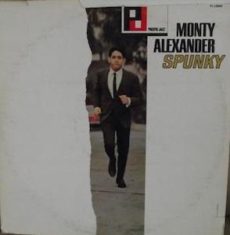
If you don’t know what to do by now to keep yourself and your family safe and healthy, there’s nothing else I can say to change your perspective. So, with that said, this week the Jazz Voyager is pulling from the stacks a 1965 hard bop studio album titled Spunky released by Monty Alexander. The session was produced by Richard Bock and recorded at World Pacific Studios in Los Angeles, California and Plaza Sound Studios in New York the year of its release. It was offered on Pacific Jazz LP record ST-20094 in stereo and PJ-10094 in mono.
- Monty Alexander: piano (all tracks)
- Victor Gaskin: bass (all but 4, 6)
- Bob Cranshaw: bass (tracks 4, 6)
- Paul Humphrey: drums (all but 4, 6)
- Bruno Carr: drums (tracks 4, 6)
- Gene Bertoncini: guitar (tracks 4, 6)
- Scott Turner: guitar (track 9)
- Cover design by Woody Woodward
- Cover Photography by Les McCann
- Back Cover Photography by Eddie Rio
- Liner Notes written by Paul Compton

- Spunky (Monty Alexander) ~ 2:39
- Naturally (Nat Adderley) ~ 3:35
- Jamaica Shake (Monty Alexander) ~ 2:25
- Heart Strings (Milt Jackson) ~ 3:33
- Taggie’s Tune (Junior Mance) ~ 4:14
- Rattlesnake (Monty Alexander) ~ 2:30
- Whisper Not ( Benny Golson) ~ 3:58
- I’m An Old Cowhand (Johnny Mercer) ~ 2:32
- Little Children Of Peru (Scott Turner) ~ 2:50
- Spirit Of Foo (Monty Alexander) ~ 4:45
- Monty Alexander: piano (all tracks)
- Victor Gaskin: bass (all but 4, 6)
- Bob Cranshaw: bass (tracks 4, 6)
- Paul Humphrey: drums (all but 4, 6)
- Bruno Carr: drums (tracks 4, 6)
- Gene Bertoncini: guitar (tracks 4, 6)
- Scott Turner: guitar (track 9)
- Cover design by Woody Woodward
- Cover Photography by Les McCann
- Back Cover Photography by Eddie Rio
- Liner Notes written by Paul Compton
Tracks | 33:10
- Spunky (Monty Alexander) ~ 2:39
- Naturally (Nat Adderley) ~ 3:35
- Jamaica Shake (Monty Alexander) ~ 2:25
- Heart Strings (Milt Jackson) ~ 3:33
- Taggie’s Tune (Junior Mance) ~ 4:14
- Rattlesnake (Monty Alexander) ~ 2:30
- Whisper Not ( Benny Golson) ~ 3:58
- I’m An Old Cowhand (Johnny Mercer) ~ 2:32
- Little Children Of Peru (Scott Turner) ~ 2:50
- Spirit Of Foo (Monty Alexander) ~ 4:45
- Monty Alexander: piano (all tracks)
- Victor Gaskin: bass (all but 4, 6)
- Bob Cranshaw: bass (tracks 4, 6)
- Paul Humphrey: drums (all but 4, 6)
- Bruno Carr: drums (tracks 4, 6)
- Gene Bertoncini: guitar (tracks 4, 6)
- Scott Turner: guitar (track 9)
- Cover design by Woody Woodward
- Cover Photography by Les McCann
- Back Cover Photography by Eddie Rio
- Liner Notes written by Paul Compton
More Posts: adventure,album,club,genius,jazz,museum,music,piano,preserving,restaurant,travel
Daily Dose Of Jazz…
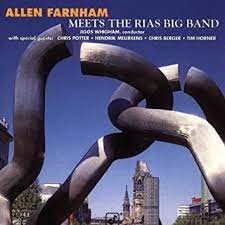
Allen Nicholas Farnham was born May 19, 1961 in Boston, Massachusetts and first played piano when he was 12. In 1983 he graduated from the Oberlin Conservatory of Music in Ohio.
Moving to New York City in the following year Allen freelanced before signing with Concord Records in 1986. Between 1986 and 1990 he led his own quartet, with either Joe Lovano or Dick Oatts on saxophone and Drew Gress and Jamey Haddad filling out the rhythm section and from 1990 he was pianist and music director for Susannah McCorkle.
He has produced more than fifty albums, is on the faculty of New Jersey City University and has recorded several albums under his own name. Pianist, record producer, educator, composer and arranger Allen Farnham continues to pursue all his musical endeavors.

More Posts: arranger,bandleader,composer,history,instrumental,jazz,music,piano,record producer
Daily Dose Of Jazz…
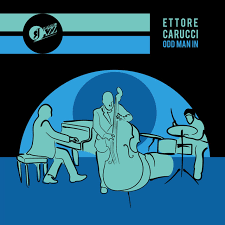
Ettore Carucci was born on May 18, 1969 in Taranto, Italy and began playing the piano at the age of four. Graduating in classical piano he went on to join a jazz band named Taras Jazz Forum in 1989 and played with a jazz quintet composed of experienced jazz musicians from his area. By 1993/94 he attended two workshops, Siena Jazz and Umbria Jazz, where he won two scholarships. He studied jazz with Danilo Rea, Ray Santisi, and Paul Schmelling.
Throughout his career Ettore has had the opportunity to perform with a who’s who list of American musicians not limited to Benny Golson, Jerry Bergonzi, Eric Marienthal, Dennis Chambers, Christopher Thomas, Greg Hutchinson, Mike Moreno, Tony Scott, Bob Mintzer, Sonny Fortune, and Rachel Gould, as well as Anne Ducros, Maria Pia De Vito, Massimo Moriconi, Maurizio Giammarco, Marco Tamburini, Philip Catherine, Massimo Manzi, Fabrizio Bosso, Tullio De Piscopo, the Jazz Studio Orchestra and numerous others.
By 2001 he was participating in the Umbria Jazz Festival workshops where he won a scholarship to the Berklee College of Music in Boston, Massachusetts. Ettore had the opportunity to perform with the Berkee College of Music Trio. In the same year he participated at the jazz festival in Orvieto with the Berklee Award Group during the edition of Umbria Jazz Winter.
2005 saw him playing at the Blue Note in Milan, Italy with the Sonny Fortune Quartet and two years later was playing with his peers in New York City. Pianist, composer and educator Ettore Carucci has recorded nine albums as a leader, thirty-eight as a sideman and has released twenty compilations. He continues to compose, teach, perform and work on various artistic projects..
More Posts: bandleader,composer,educator,history,instrumental,jazz,music,piano
The Quarantined Jazz Voyager
A simple statement: You know what to do to remain safe and healthy. The fat lady hasn’t begun to warm up because it’s not over.
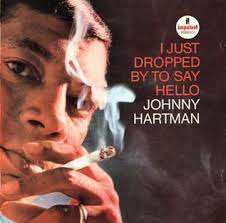
This week I am featuring an album by an understated vocalist who recorded some two dozen albums. I’ve selected from the library. I Just Dropped By To Say Hello is a studio album by jazz vocalist Johnny Hartman, released on Impulse! Records. It was his second and next-to-last album on the label, after his highly successful collaboration with John Coltrane which produced John Coltrane and Johnny Hartman, recorded a few months earlier.
Tracks 1 & 6 were recorded on October 9, 1963 and the balance of the songs were recorded on October 17, 1963 at Van Gelder Studios in Englewood Cliffs, New Jersey. It was produced by Bob Thiele, The album was mastered at Longwear Plating and released in 1964. Tracks 1~6 were on the A side of the album and 7~11, the B side of the original album.
Track List | 33:09- Charade (from Charade) (Henry Mancini, Johnny Mercer) ~ 2:38
- In the Wee Small Hours of the Morning (Bob Hilliard, David Mann) ~ 2:49
- A Sleepin’ Bee (Harold Arlen, Truman Capote) ~ 2:15
- Don’t You Know I Care (Or Don’t You Care To Know) (Mack David, Duke Ellington) ~ 4:14
- Kiss & Run (Rene Denoncin, William Engvick, Jack Ledru) ~ 3:35
- If I’m Lucky (Eddie DeLange, Josef Myrow) ~ 2:52
- I Just Dropped by to Say Hello (Sid Feller, Rick Ward) ~ 4:10
- Stairway to the Stars (Matty Malneck, Mitchell Parish, Frank Signorelli) ~ 3:09
- Our Time (Stanley Glick, Johnny Hartman) ~ 3:00
- Don’t Call It Love (Ronnell Bright) ~ 2:07
- How Sweet It Is to Be in Love (George Cardini, Danny DiMinno) ~ 2:20
- Johnny Hartman ~ vocals
- Illinois Jacquet ~ tenor saxophone
- Kenny Burrell ~ guitar (tracks 2-5, 7-11)
- Jim Hall ~ guitar (tracks 1, 6)
- Hank Jones ~ piano
- Milt Hinton ~ double bass
- Elvin Jones ~ drums
More Posts: adventure,album,club,genius,jazz,museum,music,preserving,restaurant,travel,vocal
Requisites
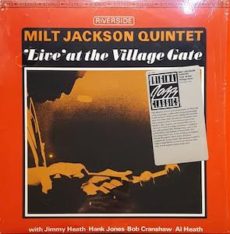
Live At The Village Gate ~ Milt Jackson Quintet | By Eddie Carter
I’ve been a huge fan of Milt Jackson ever since seeing him in concert with The 1972 Newport Jazz All-Stars at Music Hall in New York City. He swung effortlessly that evening with solos that were exciting and spirited, and I began collecting all his albums. A few nights ago, I was listening to this morning’s choice from the library and that’s what prompted this discussion. Live at The Village Gate (Riverside RM 495/RS-9495) is a 1967 release documenting the vibraphonist leading a wonderful quintet, Jimmy Heath on tenor sax, Hank Jones on piano, Bob Cranshaw on bass, and Albert “Tootie” Heath (Jimmy’s brother) on drums. My copy used in this report is the 1987 Original Jazz Classics Stereo reissue (Riverside OJC-309 – RLP-9495).
Side One starts with the first of three tunes by Bags, a nickname given to Milt by a Detroit bass player that he would be called the rest of his life. Bags of Blue is a tune that’ll have you tapping your toes from the quintet’s lively melody. Milt opens with a peppy first solo, then Jimmy takes a sprightly reading. Hank makes everyone feel good on the next statement. Milt and Jimmy split the finale with a few verses ahead of the ensemble’s ending and club’s applause. Little Girl Blue by Richard Rodgers and Lorenz Hart is one of their prettiest compositions from the Broadway musical, Jumbo (1935). Bags and Hank make a dainty introduction, then Bob and Albert come in for the tender theme. As the song’s only soloist, Milt gives a gorgeous performance complemented by the trio’s delicately sensitive support.
Up next is an upbeat original by Jimmy Heath, Gemini. It made its first appearance on his album, Triple Threat (1962). The group begins the melody briskly, then Milt leads off the opening statement with high-spirited energy. Jimmy applies some vigorous passion to the second presentation. Hank closes with a dazzling reading before the quintet takes their exit. Jackson’s light-hearted Gerri’s Blues begins Side Two with the first of two sparkling solos by Hank preceding the ensemble’s theme. Bags takes the first solo and constructs an infectious interpretation that’s perfectly suitable for dancing. Hank keeps the happy beat alive on the next reading, followed by Jimmy’s extremely nimble solo. The leader and saxophonist engage in a three-way conversation with Albert leading to a very satisfying conclusion.
Time After Time by Sammy Cahn and Jule Styne is a beautiful jazz standard and the second quartet presentation featuring Bags as the lone soloist. The quartet states a delicately pretty melody, then Milt seamlessly moves into a statement of great tenderness and intimacy capable of melting even the coldest heart. The quintet ends the set with Jackson’s Ignunt Oil that Bags first recorded on Plenty, Plenty, Soul (1957). The group struts their stuff on the opening chorus in unison. Milt starts off the solos with a joyous workout. Jimmy follows with some inspired ideas. Hank comes in next and cooks at a nice momentum. Bags leads toward the close with a few final thoughts preceding the quintet’s perfect ending to a great set.
Live at The Village Gate was originally recorded by Ray Fowler. The remastering by Phil DeLancie delivers a spacious soundstage transporting the listener to the club with all the intimacy and ambiance of being there in person. The result is a great recording of swinging jazz by one of the consummate musicians, Milt Jackson. It’s also a good place to discover his immense discography as a leader, sideman, and principal member of The Modern Jazz Quartet in an illustrious career lasting forty years. If you’re a fan of Bags, Jimmy Heath, or Hank Jones, I invite you to check out Live at The Village Gate by The Milt Jackson Quintet on your next vinyl hunt. It’s a nice way to unwind after a long day with your favorite drink and in my opinion, would make a great addition to any jazzophile’s library!
~ Plenty, Plenty, Soul (Atlantic 1269/SD 1269), Triple Threat (Riverside RLP 400/RLP 9400) – Source: Discogs.com ~ Little Girl Blue, Time After Time – Source: JazzStandards.com © 2022 by Edward Thomas Carter

More Posts: choice,classic,collectible,collector,history,instrumental,jazz,music,vibraphone