The Quarantined Jazz Voyager
Do what you desire to or not protect your health but be responsible for the health of your fellow man. This is my request. The children are spreading this far more than adults as I continue to hear reports from friends that they caught Covid from children who have greater exposure.
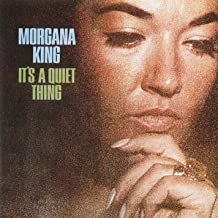
The album It’s A Quiet Thing from vocalist Morgana King is taken from the stacks representing the need for silence and reflection during this time of uneasiness. Produced by Jimmy Bowen, the album was recorded and released on the Reprise label in 1965 with arrangements by Torrie Zito brings us music reflective of the title.
Noise is not required to transport us to destinations that conjure memories. It’s class and sophistication that makes this an elegant compendium of songs. The arrangements and orchestration are equally soft and complimentary to her voice. Her incredible vocal range is backed by a menu of textured strings, guitar, French horn and bossa nova.
Artistry is something one has and when two purveyors connect we become privy to an excellent outcome. This happens to fill that order. So sit back, relax and listen.
Tracks | 31:27- It’s a Quiet Thing (Fred Ebb, John Kander) ~ 3:02
- Dindi (Ray Gilbert, Antonio Carlos Jobim, Aloysio de Oliveira) ~ 4:00
- Useless Landscape (Gilbert, Jobim, de Oliveira) ~ 3:12
- Gone with the Wind (Herbert Magidson, Allie Wrubel) ~ 2:58
- Little Girl Blue (Lorenz Hart, Richard Rodgers) ~ 3:35
- Mountain High, Valley Low (Bernie Hanighen, Raymond Scott) ~ 2:09
- How Insensitive (Norman Gimbel, Jobim, Vinícius de Moraes) ~ 3:14
- Here’s That Rainy Day (Johnny Burke, Jimmy Van Heusen) ~ 2:38
- Deep Song (George Cory, Douglass Cross) ~ 3:38
- If You Should Leave Me (E Se Domani) (Arthur Altman, Giorgio Calabrese, Al Stillman) ~ 3:01
- Morgana King ~ vocals
- Torrie Zito ~ arranger

More Posts: adventure,album,club,genius,jazz,museum,music,preserving,restaurant,travel,vocal
The Quarantined Jazz Voyager
I can only appeal to your sense of fair play that you quarantine, social distance and wear masks whenever you are out around people during this period of increased variants. It is a responsible person who takes the effort to protect others even when they do not have the desire to protect themselves.
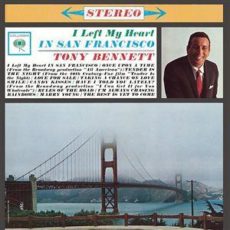
This week I’m pulling from the stacks one of Tony Bennett’s highest selling albums of his career I Left My Heart In San Francisco. Released in 1962 on Columbia Records, it peaked at #5 on the Billboard pop albums chart, and has been certified platinum by the RIAA. Tony Bennett won two 1962 Grammy Awards for the title song: Record of the Year and Best Solo Vocal Performance, Male.
The album was produced by Ernie Altschuler and assembled around unused singles from earlier sessions. The previously released songs included the Cy Coleman/Carolyn Leigh songs The Best Is Yet to Come/Marry Young as well as Close Your Eyes/Rules of the Road, which were A&B sides respectively. Candy Kisses and Have I Told You Lately? were recorded in 1961. Tender Is the Night was later used in the 1962 film, while Charlie Chaplin’s Smile from Modern Times peaked at #73 on the Billboard Hot 100. It was the only other single that charted with San Francisco.
Three additional tracks were taken from sessions spanning 1957 to 1960. Taking a Chance on Love from the musical Cabin in the Sky, Love for Sale from The New Yorkers, and I’m Always Chasing Rainbows” from Oh, Look!. Bennett’s rescue of Once Upon a Time from All American gave him San Francisco instead, his signature song.
Tracks | 32:20
Side 1
- I Left My Heart In SanFrancisco (Douglass Cross, George Cory) ~ 2:52
- Once Upon A Time (Charles Strouse, Lee Adams) ~ 2:57
- Tender Is The NIght ( Sammy Fain, Paul Francis Webster) ~ 2:38
- Smile (Charlie Chaplin, Geoffrey Parsons, John Turner) ~ 2:49
- Love For Sale (Cole Porter) ~ 3:09
- Taking A Chance On Love (Cy Coleman, Carolyn Leigh) ~ 2:28
Side 2
- Candy Kisses (George Coleman) ~ 2:25
- Have I Told You Lately (Harold Rome) ~ 2:39
- Rules Of The Road (Cy Coleman, Carolyn Leigh) ~ 2:42
- Marry Young ((Cy Coleman, Carolyn Leigh) ~ 2:20
- I’m Always Chasing Rainbows (Harry Carroll, Joseph McCarthy) ~ 2:40
- The Best Is Yet To Come ((Cy Coleman, Carolyn Leigh) ~ 2:28
- Tony Bennett ~ vocals
- Ralph Sharon ~ piano; arrangements on Love for Sale
- Candido Camero, Sabu Martinez, Billy Exiner ~ percussion on Love for Sale
- The Count Basie Orchestra ~ instruments and arrangements on Taking A Chance on Love
- Marty Manning ~ arrangements on San Francisco, Once Upon A Time, Tender is the Night, Candy Kisses, Have I Told You Lately?
- Cy Coleman ~ arrangements on Marry Young, The Best Is Yet to Come
- Ralph Burns ~ arrangements on Smile, Rules of the Road
- Frank De Vol ~ arrangements on I’m Always Chasing Rainbows
More Posts: adventure,album,club,genius,jazz,museum,music,preserving,restaurant,travel,vocal
The Quarantined Jazz Voyager
Life is full of choices and the choice not to protect yourself should only impact you. As another surge is underway it is your responsibility to protect others from your irresponsible choices. For those of us who remain vigilant I say well done. So with that in mind, I feel I am selecting the right choice to open up this 2022 year.
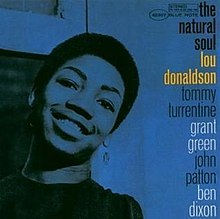
Out of the stacks comes the studio album The Natural Soul by alto saxophonist Lou Donaldson. It was recorded on May 9, 1962 at the Van Gelder Studios in Englewood Cliffs, New Jersey and released on Blue Note Records in March of 1963. The producer was Alfred Lion and the cover design was by Reid Miles of Capital Punishment. His use of lower case letters give this funky, greasy, soul jazz album suitably comfortable and informal.
Donaldson leaves his hard bop world to continue delving into the soul~jazz foray. He likes to groove and on this one he does just that. So sit back and enjoy the ride!
Tracks | Original LP ~ 41:54 w/CD Bonus Track ~ 49:07 All compositions by Lou Donaldson except where noted
- Funky Mama (Big John Patton) – 9:08
- Love Walked In (Gershwin, Gershwin) – 5:12
- Spaceman Twist – 5:38
- Sow Belly Blues – 10:13
- That’s All” (Alan Brandt, Bob Haymes) – 5:36
- Nice ‘n’ Greasy (John Adriano Acea) – 5:27
- People Will Say We’re in Love (Hammerstein II, Rodgers) – 7:53 (CD Bonus Track)
- Lou Donaldson – alto saxophone
- Tommy Turrentine – trumpet
- Grant Green – guitar
- Big John Patton – organ
- Ben Dixon – drums
More Posts: adventure,album,club,genius,jazz,museum,music,preserving,restaurant,saxophone,travel
Requisites
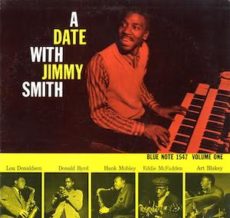
A Date With Jimmy Smith, Volume One~ Jimmy Smith | By Eddie Carter
Jimmy Smith steps into the spotlight for this morning’s discussion with his 1957 album, A Date With Jimmy Smith, Volume One (Blue Note BLP 1547/BST 81547). This is the first of three large group recordings the organist made for Blue Note, the other two were in 1958, producing the albums, Houseparty and The Sermon and 1960, resulting in Open House and Plain Talk. It’s also the only time he recorded with Donald Byrd (tracks: A1, B1) on trumpet and Hank Mobley (tracks: A1, B1) on tenor sax. Also featured is Lou Donaldson (tracks: A1, B1) on alto sax, Eddie McFadden on guitar, Art Blakey (tracks: A1, B1), and Donald Bailey (track: A2) on drums. The copy used in this report is a friend’s 1966 Liberty Mono reissue sharing the original catalog number.
Falling In Love With Love by Richard Rodgers and Lorenz Hart opens the album with the sextet’s collective uptempo melody. It was first heard in the musical, The Boys From Syracuse (1938). Hank leads off with a smokin’ opening solo, then Eddie puts together a swinging statement. Jimmy dispenses enthusiastic energy on the next presentation. Donald shifts into high gear on the fourth reading. Lou cooks on a delicious solo and Art shares a brief exchange with the front line ahead of the closing chorus. How High The Moon by Nancy Hamilton and Morgan Lewis is a gorgeous jazz standard from the Broadway revue, Two For The Show (1940). This is a trio tune with Bailey taking over the drum chair. Jimmy embraces the melody tenderly and gives two thoughtfully passionate solos. McFadden also has a very gentle reading and Bailey compliments both with elegant brushwork.
Funk’s Oats is a bluesy midtempo original by Jimmy beginning with the sextet stating the melody. Lou leads off this time with a joyously carefree interpretation. Donald extends the happy mood on the second statement. Hank delivers some excellent blowing with an easy swing next. Eddie unfolds the fourth reading as smooth as velvet, and Jimmy takes us into the ensemble’s reprise and exit with a delightful groove. A Date With Jimmy Smith, Volume One was recorded by Rudy Van Gelder, and this Liberty reissue has an outstanding soundstage. The vinyl is quiet for a pressing of this vintage and the instruments emerge from your speakers as if the group is in your listening room. If you’re a jazz fan who enjoys the swinging organ of Jimmy Smith, I offer for your consideration A Date With Jimmy Smith, Volume One. It’s a vibrant, inspired album with everyone in top form that’s sure to make a nice addition to any jazz library!
~ Houseparty (Blue Note BLP 4002/BST 84002), Open House (Blue Note BLP 4269/BST 84269), Plain Talk (Blue Note BST 84296), The Sermon (Blue Note BLP 4011/BST 84011) – Source: Discogs.com ~ Falling In Love With Love, How High The Moon – Source: JazzStandards.com © 2021 by Edward Thomas Carter
More Posts: choice,classic,collectible,collector,history,instrumental,jazz,music,organ
Hollywood On 52nd Street
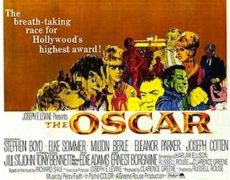
Maybe September is a 1965 song composed by Jay Livingston, Ray Evans and Percy Faith that was debuted by Tony Bennett in the 1966 drama The Oscar, a film written by Harlan Ellison, Clarence Greene, Russell Rouse and Richard Sale for Paramount Pictures.
The film was directed by Rouse and starred Stephen Boyd, singer Tony Bennett in his film debut, comedian Milton Berle in a dramatic role, Elke Sommer, Ernest Borgnine, Jill St. John, Eleanor Parker, Joseph Cotten, Edie Adams, Peter Lawford, Broderick Crawford, Ed Begley, Walter Brennan and Jack Soo. Appearing as themselves are Bob Hope, Hedda Hopper, Merle Oberon, Frank Sinatra and Nancy Sinatra.
Despite the film’s impressive cast and crew, the film did not win any Oscars, though Bennett did pick up the Golden Turkey Award for Wrost Performance By A Popular Singer. Jay Livingston, Ray Evans and Percy Faith
The StoryRising movie star Frankie Fane finds himself in Hollywood but has used and abused everyone around him, especially the two women who have loved him. Becoming box office poison, at his lowest point he unexpectedly receives an Oscar nomination, which his agent Kappy believes is the result of Fane’s portrayal of a man without morals, therefore portraying himself. To help insure a win, he hires a detective to spread sympathy rumors to influence the voters. The moment of truth comes at the Academy Awards, as the presenter announces the winner, stating the name Frank, whereupon Fane rises instantaneously to head to the stage, but then hears Sinatra, leaving him stunned and crestfallen. Clapping his hands weakly, everyone in the assemblage whom he has wronged enjoys the comeuppance for this wholly self-absorbed, unfeeling individual.