

The Quarantined Jazz Voyager
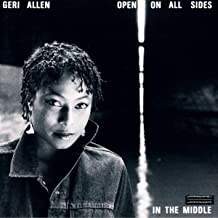
OPEN ON ALL SIDES IN THE MIDDLE
Having settled into a routine over the past year of wearing masks and social distancing life is so much easier for this jazz voyager. So continuing my uninterrupted time to kick back, relax and listen to music, I have selected the album Open On All Sides In The Middle, the 1986 recording by pianist Geri Allen. The recording session was in December 1986 at Sound Suite Recording Studio in Detroit, Michigan. The album was produced by Allen, who also composed all the songs, and released on the German Minor Music label.
Track List | 43:47
- “Open on All Sides / The Glide Was in the Ride…” – 6:45
- “Forbidden Place” – 4:24
- “The Dancer” – 2:33
- “In the Middle” – 4:01
- “Ray” – 4:17
- “I Sang a Bright Green Tear for All of Us This Year…” – 12:46
- “Drummer’s Song” – 2:24
- “In the Morning” – 5:03
- “The Dancer Part 2” 1:34
The Players
- Geri Allen – piano, keyboards, backing vocals
- Rayse Biggs – trumpet, flugelhorn
- Robin Eubanks – trombone
- David McMurray – soprano saxophone, flute
- Steve Coleman – alto saxophone
- Jaribu Shahid – bass
- Tani Tabbal – drums
- Shahida Nurullah – lead vocals
- Marcus Belgrave – flugelhorn (track 8)
- Mino Cinelu – cymbals, bells, congas, timbales, electronic drums, udu
- Lloyd Storey – tap dance
This pandemic is here for the long haul. In the meantime, stay vigilant, wear masks and remain healthy and we’ll all be jet setting sooner than we think.

More Posts: adventure,album,club,genius,jazz,museum,music,piano,preserving,restaurant,travel

Requisites
Dr. Jeckyle ~ Art Blakey & The Jazz Messengers | By Eddie Carter
Art Blakey’s impact on the jazz world as a bandleader and drummer offered a creative and unique perspective that helped shape the artistic style of Hard-Bop and Post-Bop for more than three decades. It was this vision that enabled The Jazz Messengers to become one of the greatest ensembles worldwide. Up next from the library is a recent acquisition titled Dr. Jeckyle (Paddle Wheel K28P 6462). Blakey and the band are performing the second of two performances that were recorded on the final two days of 1985 at Sweet Basil in Greenwich Village. Sharing the spotlight with the drummer is Terence Blanchard on trumpet, Tim Williams on trombone, Donald Harrison on alto sax, Jean Toussiant on tenor sax, Mulgrew Miller on piano, and Lonnie Plaxico on bass. My copy used in this report is the 1987 King Record Company Japanese Stereo album.
Fuller Love (also known as In Case You Missed It) by alto saxophonist Bobby Watson opens the album with an aggressive attack by Blakey preceding the speedy melody by the ensemble. Tim begins the solos with an exciting performance. Donald swings with a robust beat on the second statement. Jean takes the reins next for a rousing reading. Mulgrew charges into the last solo with an impeccably hip contribution before the ensemble takes the song out. Dr. Jeckyle comes next with the propulsive power of Blakey’s drums in full effect on the introduction leading to the melody. Blanchard sizzles on the lead solo, then Harrison gives an equally fierce statement. Williams heats things up on the following reading, then Toussiant contributes considerable energy on the fourth scintillating statement. Miller wraps it up with a tidal wave of compelling emotion.
81 by Ron Carter begins Side Two cooking at an easy groove during the ensemble’s opening chorus. Donald kicks off the solos laying down a lively rhythm. Tim moves into the second statement with an easy swing, followed by Jean who gives an intriguing improvisation. Mulgrew strolls into an enjoyable performance on the next reading. Lonnie takes the final spot with an exquisite solo before the close. One By One by Wayne Shorter picks up the pace one final time with the septet at an optimum level on the melody. Harrison flies right out of the gate with a speedy lead statement. Williams steps up next for a heated interpretation, then Toussiant responds with radiant intensity. Blanchard drives into the next reading ferociously, and Miller delivers a closing chorus of incandescent fury ahead of the ensemble’s finale and audience’s ovation.
Dr. Jeckyle was produced by Shigeyuki Kawashima and Horst Liepolt. It was recorded by Kazunori Sugiyama and the album was mixed at King Studio, Japan by Hatsuro Takanami and mastered by Akira Makino. This is a digital recording with a superb soundstage possessing a bright treble, vibrant midrange, and deep bass that’s fun to listen to. Though released three years before Art’s passing in 1990, Dr. Jeckyle is an exhilarating, exciting live album by Art Blakey & The Jazz Messengers that still stands up very well over three decades later and belongs in every jazz fan’s library!

More Posts: choice,classic,collectible,collector,drums,history,instrumental,jazz,music
The Quarantined Jazz Voyager
As we progress further into this new year with social distancing and self~quarantine from the madness of those who feel the need to live like it’s 2019 some of us have adapted to this new normal. For those of us who no longer consider this pandemic life interrupted, we kick back and relax and listen to music.
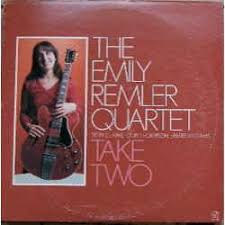
This week I chose the second studio album by guitarist Emily Remler titled Take Two. Credited to The Emily Remler Quartet, and she was joined on the recording session by pianist James Williams, bassist Don Thompson, and drummer Terry Clarke. Williams was best known at the time for his four years with The Jazz Messengers, and Thompson and Clarke frequently worked together as part of the Jim Hall Trio.
The hard bop album was produced by Carl E. Jefferson, recorded in June 1982 at Soundmixers, New York City and released on the Concord Jazz label the same month. Leonard Feather called the album a carefully planned and brilliant executed set of performances.
Track List | 42:24
- Cannonball (Cannonball Adderley) ~ 4:48
- In Your Own Sweet Way (Dave Brubeck) ~ 4:52
- For Regulars Only (Dexter Gordon) ~ 6:43
- Search For Peace (McCoy Tyner) ~ 5:17
- Pocket Wes (Emily Remler) ~ 6:45
- Waltz For My Grandfather (Emily Remler) ~ 6:35
- Afro Blue (Mongo Santamaría) ~ 2:24
- Eleuthra (Monty Alexander) ~ 6:20
- Emily Remler – electric guitar
- James Williams – piano
- Don Thompson – bass
- Terry Clarke – drums
I’m in this for the long run and we’re going to get through this pandemic, so when the world opens back up for international travel, I’m hitting the friendly skies to once again jet setting around the globe. In the meantime, stay vigilant, wear masks and remain healthy.
More Posts: adventure,album,club,genius,guitar,jazz,museum,music,preserving,restaurant,travel
Requisites
‘More’ Live ~ The Phil Woods Quartet | By Eddie Carter
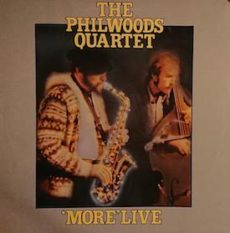
Alto saxophonist Phil Woods was one of the unsung heroes of jazz, he was equally adept at Cool Jazz, and Hard-Bop with a gorgeous tone, and speed of execution that never failed to please his fans. ‘More’ Live (Adelphi Records Inc. AD 5010) is the second live session that The Phil Woods Quartet performed at The Armadillo World Headquarters in Austin, Texas during 1978 and 1979. It hit the stores in 1981, following their 1980 album, The Phil Woods Quartet Live, Volume One, featuring Mike Melillo on acoustic piano, Steve Gilmore on acoustic bass, and Bill Goodwin on drums. My copy used in this report is the 1981 US Stereo album.
Side One opens with Miles Davis’ Milestones. Phil is excellent on the lead solo, backed only at first by Steve and Bill. Mike joins them, then takes over on the second interpretation. Steve’s bass dances brightly on the third reading and Bill has the last word in an exchange with Phil and Mike before the reprise and close. Eiderdown by Steve Swallow kicks off with a five-minute performance by Gilmore who solos impressively. Woods launches into the next statement with inspired exuberance and Melillo takes care of business on the closing chorus.
Horace Silver’s Strollin’ begins Side Two in a relaxed vein for the ensemble’s theme. Mike kicks off the solos with a vivaciously spirited interpretation. Phil moves into the spotlight next with a soulful tone and agility that builds to a compelling conclusion. Steve shines on the closing statement with a quiet intensity ahead of the foursome taking the song out. Mike Melillo’s See Hunt and Liddy begins with a lovely introduction by the pianist developing into the quartet’s sprightly mood on the melody. Melillo lays down a solid groove on the opening statement that delivers the goods. Gilmore’s bass takes a brisk trip through the next reading, and Woods turns up the heat with a vigorous, energetic closing chorus culminating with the group’s climax. The engineers for See Hunt and Liddy are Jim Finney, Mark LeBaron, and Hank Allrich. The men behind the dials of the remaining tracks are Cliff Carter, Fletcher Clark, and LeBaron. The ensemble is tight, the music is terrific, the album has an exceptionally good soundstage, and I’m very impressed with the sound quality.
In addition to playing the alto sax, Phil Woods was also proficient on the clarinet. Woods was married to Chan Parker for seventeen years, and Stepdad to her daughter, Kim. His discography is extensive with sixty records as a leader and many others as a sideman performing with some elite jazz musicians and pop vocalists. His final live performance was a tribute to Charlie Parker with Strings on September 4, 2015. He passed away from emphysema twenty-five days later on September 29 at the age of eighty-three. Now that I’ve found this one, I’ll certainly be on the lookout for its companion album. If you’re in the mood for some Post-Bop and are a fan of any LP’s by Phil Woods, I offer for your consideration, ‘More’ Live by The Phil Woods Quartet. An album of sumptuous jazz that’s sure to satisfy almost any jazz appetite!
~ The Phil Woods Quartet Live, Volume One (Clean Cuts CC 702) – Source: Discogs.com
~ Milestones – Source: JazzStandards.com © 2020 by Edward Thomas Carter
More Posts: choice,classic,collectible,collector,history,instrumental,jazz,music,saxophone
The Quarantined Jazz Voyager
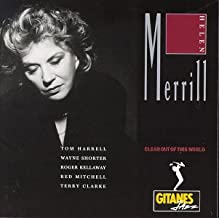
Continuing to social distance, this Quarantined Jazz Voyager has decided he requires some vocals and has selected an album by Helen Merrill titled Clear Out Of This World. Her haunting voice gives this cool vocal jazz album a consistent and memorable session full of subtle surprises.
The album was recorded in Manhattan, New York on August 1st, & 2nd and September 3, 1991 in Los Angeles, California. It was released in 1992 on Polygram’s French label Gitanes. Making appearances are Wayne Shorter on tracks 1, 9; and Tom Harrell on tracks 3, 4, 8.
The album was produced by Jean-Philippe Allard, engineered by Brian Scheubl, mixed by J. Newland. The cover photography was shot by Carol Friedman, the liner photography of Wayne Shorter was taken by Amy Cantrell, and the liner photography was by Cheung Ching Ming.
Track Listing | 49:19- Out Of This World | Harold Arlen/Johnny Mercer ~ 6:17
- Not Like This | Jeremy Lubbock ~ 3:03
- I’m All Smiles | Michael Leonard / Herbert Martin ~ 7:09
- When I Grow Too Old To Dream | Oscar Hammerstein II / Sigmund Romberg ~ 6:35
- Maybe | Shelton Brooks ~ 6:35
- Some Of These Days | Shelton Brooks ~ 3:58
- A Tender Thing Is Love | Torrie Zito ~ 4:16
- Soon It’s Gonna Rain | Tom Jones / Harvey Schmidt ~ 4:40
- Willow Weep For Me | Ann Ronell ~ 7:44
- Helen Merrill ~ vocals
- Roger Kellaway ~ piano, arrangements
- Red Mitchell ~ bass
- Terry Clarke ~ drums
- Wayne Shorter ~ tenor saxophone
- Tom Harrell ~ Trumpet, Flugelhorn
Listen and enjoy this wonderful addition to the jazz catalog, continue to social distance, and stay healthy. During this sabbatical from flying and investigating jazz around the globe, enjoy the listen and know that the world and I will be back.

More Posts: adventure,club,genius,jazz,museum,music,preserving,restaurant,travel,voyager