

Requisites
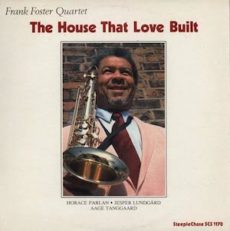
The House That Love Built ~ Frank Foster Quartet | By Eddie Carter
Frank Foster steps into the spotlight this morning with an underrated, exceptional album titled The House That Love Built (SteepleChase Records SCS-1170). Frank was adept as an arranger, bandleader, composer, and multi-instrumentalist. Horace Parlan on piano, Jesper Lundġard on bass, and Aage Tanggaard on drums complete the quartet. Foster wrote all five selections and my copy used in this report is the 1982 Danish Stereo album. Frank was born in Cincinnati, Ohio and educated at Central State College, and Wilberforce University. He led his own big band in the fifties and was a member of The Count Basie Orchestra. Several of his songs became huge hits for the band and are now jazz standards, and his resume reads like a Who’s Who of Jazz.
>Side One takes off with I Remember Sonny Stitt, an uptempo tribute to the saxophonist that gets underway with an enthusiastic melody by the foursome. Frank kicks off the solos with a vibrant statement of pure jubilation. Aage engages in a brisk exchange with Foster fueled by Horace and Jesper’s lively foundation preceding the closing chorus. The House That Love Built is a tender ballad with a quaint melody and the tenor sax providing a lead solo of graceful elegance. Horace marks the beginning of a beautiful romance on the next reading with an intimate conversation of beauty and warmth. The saxophonist returns, expressing a few final moments of thoughtfulness over the rhythm section’s delicate support into the soft climax.
A neatly paced toe-tapper titled John R and Garfield closes Side One with the quartet’s opening chorus in a light groove with everyone swinging easy. Horace opens with an exemplary performance on the lead solo. Frank is completely carefree on the second statement and Aage keeps perfect time with an impeccable swing on the closer. A concise drum introduction by Aage grows into a collective melody march to begin Side Two with Lightly Stroking. Jesper gets the first spot this time and executes an invigorating interpretation. Frank has the last word plenty to say on the next with a light, effervescent work that flows along efficiently. Horace gets the last word and ends with an exceptionally relaxing finale before the quartet’s exit.
Dunbar’s Delight cooks from the opening notes of the quartet’s vigorous theme and allows Foster a lengthy energetic first reading. Parlan meets the challenge with some high-voltage on the next solo followed by Tanggaard who supplies sharp brushwork for a propulsive showcase into ends on an upbeat note. The album was produced by Nils Winther and engineered by Niels Erik Lund. The album has a breathtaking soundstage with each instrument possessing remarkable clarity. If you’re in the mood for Hard-Bop on your next vinyl hunt, I invite you to check out The House That Love Built by The Frank Foster Quartet. It’s a very satisfying session from one of jazz’s best musicians and worthy of a spot in any library!
© 2021 by Edward Thomas Carter
More Posts: choice,classic,collectible,collector,history,instrumental,jazz,music,saxophone
Requisites
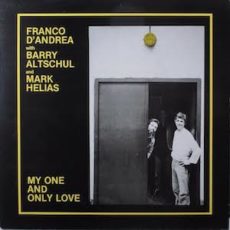
My One And Only Love ~ Franco D’Andrea | By Eddie Carter
This morning’s choice from the library is My One and Only Love (Red Record NS 201), a recent acquisition introducing me to the Italian pianist, Franco D’Andrea. His career began in 1963 with bandleader Nunzio Rotondo. He’s also played with Franco Ambrosetti, Gato Barbieri, Conte Candoli, Dave Douglas, Johnny Griffin, Lee Konitz, Steve Lacy, Max Roach, Frank Rosolino, Phil Woods, and other Italian musicians. D’Andrea is one of Italy’s most famous pianists and has an extensive discography of two hundred albums as a leader and sideman. Franco also taught at Conservatorio “F.A. Bonporti” from 1994 to 2006 and currently teaches at Mitteleuorpean Jazz Academy and Siena Jazz. On this date, he’s joined by Mark Helias on bass and Barry Altschul on drums. My copy used in this report is the 1983 Italian Stereo pressing.
Side One begins with the first of three tunes from the pianist’s pen, Nord E Sud is a pretty composition that starts slowly but grows to a medium tempo with Franco displaying fine finger work on the opening chorus. He continues holding our attention on an enchanting performance with consummate pacing ascending to a gorgeous climax. Mark takes over for a brief display of creative imagination on the closing solo before the threesome concludes exhibiting a simple lyrical beauty. The pace picks up for the medium-fast blues, Slalom Speciale beginning with a quick introduction by Altschul segueing into a brisk theme and superbly crafted, adventurous first reading by D’Andrea. The pianist and Altschul share a spirited interchange of ideas next, then the drummer breaks loose with a majestic interpretation ahead of the trio’s return to the theme.
Quiet Children, a delicately gentle ballad describing boys and girls at their most peaceful, when they’re sleeping starts Side Two. The ensemble embarks upon a lovely melody transmitting their joy collectively. The leader delves deeply into each child’s dreams with elegant warmth on the first solo. Mark follows with a thoughtful interpretation culminating with the threesome’s serene ending. My One and Only Love by Guy Wood and Robert Mellin is a 1953 jazz standard allowing each member ample solo space. The opening statement by D’Andrea provides an ideal setting to display his talents with delightful humor as it unfolds. Helias follows with a neatly paced reading expressing fervent admiration for the beautiful woman the lyrics describe. Altschul adds some marvelous energy to the final statement before the group’s reprise ends with a bit of collective free jazz improvisation.
The man behind the dials on My One and Only Love is Italian engineer, composer, and multi-instrumentalist, Giancarlo Barigozzi. His work has created a beautiful pressing with stunning stereo separation where the instruments come alive in your listening room crystal clear. Now that I’ve been introduced to this superb pianist, I’ll be looking for some of his other releases for my library. If you’re in the mood for some contemporary jazz, I submit for your consideration, My One and Only Love by Franco D’Andrea. The trio is strong in all three positions with bass and drums participating equally with the piano and their interplay working seamlessly. This album scores on all counts, and in my opinion, should not be overlooked on your next vinyl hunt!
~ My One and Only Love – Source: JazzStandards.com © 2020 by Edward Thomas Carter
More Posts: choice,classic,collectible,collector,history,instrumental,jazz,music,piano
The Quarantined Jazz Voyager
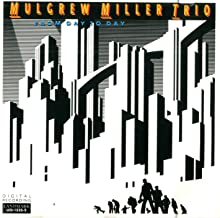
Remaining vigilant as the city and country are open to unmasking and an honor system that I don’t trust, this week I’m pulling out the seventh album by pianist Mulgrew Miller titled From Day To Day.
The trio album was recorded on March 14~15, 1990 at BMG Studios in New York City. It was released the same year on Landmark Records. It was produced by Orrin Keepnews and engineered by Paul Goodman.
Track List | 55:00- La Chambre ~ 7:35
- What A Diff’rence A Day Made ~ 8:08
- Four ~ 7:53
- From Day To Day ~ 7:26
- Playthang ~ 7:01
- Farewell To Dogma ~ 5:06
- One Notch Up ~ 4:50
- More Than You Know ~ 6:15
- Mulgrew Miller ~ piano
- Robert Hurst ~ double bass
- Kenny Washington ~ drums

More Posts: adventure,album,club,genius,jazz,museum,music,piano,preserving,restaurant,travel
The Quarantined Jazz Voyager
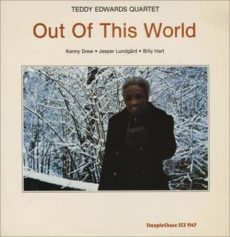
As social distancing and wearing masks continues to be our current state of affairs I had this thought of how this much we have seen in our lifetime, especially those of us who were born in the middle of the 20th century. So going into my music room I pulled down from the stacks Out of This World, a studio album by saxophonist Teddy Edwards. The album was recorded in Denmark on December 5, 1980 for the SteepleChase label. It was originally released with six tracks in 1981, however, the 1995 compact disc reissue added a seventh track. The session was produced by Nils Winther.
Track List: 57:30 All compositions by Teddy Edwards except where noted.
- No Name No. 1 ~ 6:00
- April Love ~ 6:47
- Out of This World (Harold Arlen, Johnny Mercer) ~ 11:07
- Summertime (George Gershwin, DuBose Heyward) ~ 8:29
- That’s All (Bob Haymes, Alam Brandt) ~ 8:00
- Cheek to Cheek (Irving Berlin) ~ 6:05
- Summertime [alternate take] (Gershwin, Heyward) ~ 10:48 Bonus track on CD reissue
- Teddy Edwards – tenor saxophone
- Kenny Drew – piano
- Jesper Lundgaard – bass
- Billy Hart – drums
More Posts: adventure,album,club,genius,jazz,museum,music,preserving,restaurant,saxophone,travel
The Quarantined Jazz Voyager
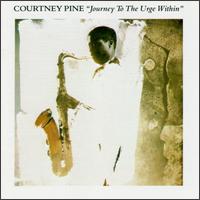
As the new year of the pandemic and moving forward remaining steadfast in our social distancing, I pulled an album out of the stacks that was recorded by British saxophonist Courtney Pine. The album was recorded on July 21-23, 1986 and was released later that year on Verve Records. It was his debut titled Journey to the Urge Within that heralded the arrival of Courtney Pine at the head of a new generation of British jazz musicians.
A pied piper who led British jazz out of the doldrums after its brilliant flowering in the 1960s. Courtney Pine, who was appointed Officer of the Order of the British Empire (OBE) in 2000, and Commander of the Order of the British Empire (CBE), led a new breed of accomplished young jazz lions in Britain. His music was powerful, intense and in the tradition of the great tenor saxophonists such as Coltrane and Rollins. Figuring in the Top 40, an unprecedented achievement for a British jazz album, it went silver, helping to trigger the 1980s jazz boom.
Track List | 43:44 All compositions by Courtney Pine except where noted.- Miss Interpret ~ 4:15
- Believe ~ 4:36
- Peace (Horace Silver) ~ 5:20
- Dolores (Wayne Shorter) ~ 3:29
- As We Would Say ~ 3:19
- Children of the Ghetto (Chris Amoo, Eddie Amoo) ~ 7:02
- When, Where, How and Why ~ 5:20
- C.G.C. ~ 3:31
- Seen ~ 4:28
- Sunday Song ~ 1:27
- E.F.P. ~ 3:45
- Big Nick (John Coltrane) ~ 4:35
Personnel
- Courtney Pine – tenor and soprano saxophones, bass clarinet
- Ray Carless – baritone saxophone
- Kevin Robinson – trumpet
- Julian Joseph – piano
- Roy Carter – keyboards
- Orphy Robinson – vibraphone
- Martin Taylor – guitar
- Gary Crosby – bass guitar
- Mark Mondesir – drums
- Susaye Greene – vocals
- Cleveland Watkiss – vocals
More Posts: adventure,album,club,genius,jazz,museum,music,preserving,restaurant,saxophone,travel