

Daily Dose Of Jazz…
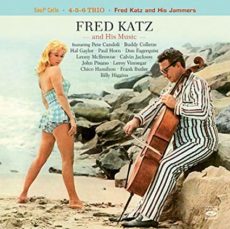
Frederick Katz was born on February 25, 1919 in the Williamsburg section of Brooklyn, New York City and was classically trained. He studied under Pablo Casals and performed with several symphony orchestras. He was a child prodigy on both the cello and piano and performed in public as a teenager and was drawn to the music of Manhattan nightclubs and to folk music. During World War II he conducted concerts and wrote musical revues for the U.S. Seventh Army. He was a member of the National Symphony Orchestra.
Katz was a member of drummer Chico Hamilton’s quintet, one of the most important West Coast jazz groups of the 1950s. His arco cello defined the chamber jazz focus of Chico Hamilton’s Quintet and the group quickly gained popularity. The Chico Hamilton Quintet, including Katz, appeared in the film noir The Sweet Smell of Success in 1957, starring Burt Lancaster and Tony Curtis, where Katz was described in passing as the Quintet’s primary composer. Katz and Hamilton wrote a score for the film which was ultimately rejected in favor of one by Elmer Bernstein.
As a leader Fred recorded several albums, wrote and conducted the arrangements for singer Carmen McRae’s 1958 album Carmen For Cool Ones, and recorded with Dorothy Ashby, Pete Rugolo, Ken Nordine and Paul Horn. He scored nineteen films and television shows including A Bucket of Blood, The Wasp Woman, Creature from the Haunted Sea and The Little Shop of Horrors. Later in his career, Katz became a professor of ethnic music in the Anthropology Department at California State University, Fullerton and California State University, Northridge, where he taught world music, anthropology and religion for over 30 years. One of his students was John Densmore, drummer of The Doors.
Cellist and composer Fred Katz, who was one of the earliest jazz musicians to establish the cello as a viable improvising solo instrument, passed away on September 7, 2013, in Santa Monica, California.

Daily Dose Of Jazz…
Baby Laurence was born Laurence Donald Jackson on Feb 24, 1921 in Baltimore, Maryland. He was a boy soprano at age twelve, singing with McKinney’s Cotton Pickers. When the bandleader Don Redman came to town and heard Jackson, he asked his mother if he could take the boy on the road. She agreed, providing her son traveled with a tutor. Touring on the Loewe’s circuit, his first time in New York City was marked by a visit to the Hoofers Club in Harlem, where he saw the tap dancing of Honi Coles, Raymond Winfield, Roland Holder, and Harold Mablin.
>Returning home sometime later he discovered both his parents had died in a fire. He and his brother formed a vocal group called The Four Buds and tried to establish themselves in New York. He worked in the Harlem nightclub owned by the retired dancer Dickie Wells, who nicknamed him “Baby” and encouraged his dancing. He frequented the Hoofers Club, absorbing ideas and picking up steps from Eddie Rector, Pete Nugent, Toots Davis, Jack Wiggins, and Teddy Hale, who became his chief dancing rival. Baby worked after-hour sessions, danced around Harlem, Washington, D.C., and Cincinnati, and began playing theaters such as Harlem’s Apollo in the late 1930s. He performed with a group called The Six Merry Scotchmen or the Harlem Highlanders, who dressed in kilts, danced, and sang Jimmie Lunceford arrangements in five-part harmony.
By 1940 Baby was focused on tap dancing and became a soloist. Through the decade, he danced with the big bands of Duke Ellington, Count Basie and Woody Herman, and in the Fifties danced in small Harlem jazz clubs. Under the influence of jazz saxophonist Charlie Parker and other bebop musicians, Laurence expanded tap technique into jazz dancing. He performed with Art Tatum, duplicating in his feet what Tatum played with his fingers. Through listening hard to Parker, Dizzy Gillespie, and Bud Powell as well as drummers like Max Roach, he developed a way of improvising solo lines and variations as much as a horn man as a percussionist.
Beset by drugs, alcohol, and financial troubles, Laurence stopped performing in the late fifties. After a long illness, he returned to Harlem in the early sixties to work again in small jazz clubs. Baby began a long time engagement with Charlie Mingus, danced with Max Roach, and would go on to tap dance sessions at the Jazz Museum, dance with Josephine Baker, did some television and gave one of his triumphant performances at the Newport-New York Jazz Festival.
Regarded as an authentic jazz dancer, he further developed the art of tap dancing by treating the body as a percussive instrument. Baby Laurence, an extraordinary jazz tap dancer who had a profound influence on rhythm dancers in the second half of the twentieth century, passed away on Apr 2, 1974.
More Posts: dance,history,instrumental,jazz,music
Requisites
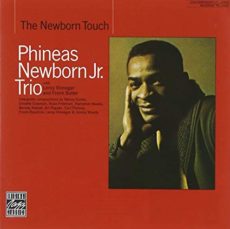
The Newborn Touch is an album by American jazz pianist Phineas Newborn Jr. recorded on April 1, 1964 at the Contemporary Records Studio in Hollywood, California but wasn’t released by the Contemporary label until 1966.
Track List | 39:34- A Walkin’ Thing (Benny Carter) – 4:37
- Double Play (Russ Freeman) – 3:59
- The Sermon (Hampton Hawes) – 2:40
- Diane (Art Pepper) – 4:17
- The Blessing (Ornette Coleman) – 3:08
- Grooveyard (Carl Perkins) – 3:07
- Blue Daniel (Frank Rosolino) – 3:18
- Hard to Find (Leroy Vinnegar) – 4:04
- Pazmuerte (Jimmy Woods) – 3:30
- Be Deedle Dee Do (Barney Kessel) – 4:04
- Phineas Newborn Jr. – piano
- Leroy Vinnegar – bass
- Frank Butler – drums
Submitted for your consideration this morning is an excellent album titled The Newborn Touch (Contemporary S7615). He’s working alongside two of the best rhythm men in jazz, Leroy Vinnegar on bass and Frank Butler on drums and my copy used in this report is the original 1966 Mono LP (M3615).
Side One opens with A Walkin’ Thing by multi-instrumentalist Benny Carter that originally appeared on his 1958 album, Jazz Giant featuring Mr. Vinnegar. The trio performs this tune at midtempo with a strong rhythm throughout featuring the pianist as the lone soloist. Leroy’s bass and Frank’s drums provide the power with a steady beat fitting perfectly into a luxurious finale. Pianist Russ Freeman’s beautiful composition Double Play made its debut as the title selection of Freeman’s 1957 album with fellow pianist André Previn. Newborn introduces the song with an enticingly haunting melody, then creates a reading tastefully applied with great beauty sustained by the thoughtful accompaniment by Vinnegar and Butler. The trio takes on pianist Hampton Hawes’ The Sermon next and the most remarkable thing about this performance is Phineas plays the entire song with just his left hand. Hampton originally recorded this midtempo blues on the 1956 album, Everybody Loves Hampton Hawes, Volume 3: The Trio. A very short introduction by Newborn evolves into an irresistible melody flowing along in a happy, relaxed frame of mind. Phineas turns in a very passionate interpretation gliding gently and serenely with personal touches added by Leroy and Frank in the background.
Diane is a very pretty ballad from the pen of alto saxophonist Art Pepper who wrote it for his wife. He first performed it on his 1957 album, The Art Pepper Quartet for the West Coast jazz label, Tampa Records and would later reprise it three years later on Getting Together. The trio opens with a slow treatment of the melody in unison preceding Phineas’ voluptuously lush delivery on a sensually appealing interpretation leading to a tender coda. The first side ends with an uptempo rendition of Ornette Coleman’s The Blessing that he wrote in 1952 but didn’t record until his 1958 debut album, Something Else-The Music of Ornette Coleman. After a pleasingly tangy melody by the trio, Phineas springs into an aggressive opening statement that moves like a musical twister through each verse. Frank gets his first opportunity to share solo space with the leader in an exchange of hard-driving explosiveness before the closing chorus.
Grooveyard, the midtempo blues by pianist Carl Perkins starts Side Two. It originally appeared on the 1958 LP, Harold In The Land of Jazz by tenor saxophonist Harold Land. Perkins who played alongside Vinnegar and Butler on that album began recording professionally at the age of twenty-one in 1949. He was on track to a promising career before a drug overdose ended his life in 1958 at age twenty-nine, leaving the jazz world with an irreplaceable loss of great talent. The infectious melody is taken at a very relaxing tempo and the lone reading by Phineas effectively conveys a carefree feeling that’s simple and straightforward. This tune was Carl’s final composition before his passing on March 17th that year and for the Stereo release, the title of the album was changed to Grooveyard as a dedication and tribute to Perkins.
Blue Daniel by trombonist Frank Rosloino first appeared on the 1960 album, Shelly Manne and His Men at The Black Hawk, Volume 1. This is a jazz waltz that opens with an easy groove on the melody, piano-led by Newborn with Vinnegar and Butler providing the rhythmic backing. The gorgeous solo by Phineas swings with a good driving beat. The only flaw of the song occurs on the closing chorus when the pianist hits one wrong note, but even that doesn’t take away from the remarkable interplay all three members exhibit as the song unfolds. Alto saxophonist Jimmy Woods is the composer of Pazmuerte, a hauntingly lovely original he recorded for his 1963 album Conflict. The title, he describes is “a combination of the Spanish words for peace (Paz) and death (Muerte), the ultimate alternatives in all situations of conflict”. The pianist provides a brief solo introduction that evolves into an elegant melody by the trio, followed by a dainty presentation of graceful tenderness by Phineas concluding with a delicately subtle fadeout. The finale Be Deedle Dee Do is a down-home medium-paced blues by guitarist Barney Kessel who recorded it on a tremendous 1958 trio session titled The Poll Winners Ride Again. The trio introduces the song with a concise talk developing into a formal discussion during the opening chorus. Phineas as the only soloist lays down a finger-snapping, toe-tapping groove with exhilarating execution into a vivacious finale.
Lester Koenig, founder of Contemporary Records produced and engineered The Newborn Touch with one of the label’s top engineers, Howard Holzer. Together their work results in a superbly mastered LP with marvelous sound quality that’s absolutely clear, placing the listener’s favorite chair in the studio surrounded by the trio with excellent definition across the treble, midrange, and bass spectrum. The album is well balanced with a great mix of tunes from nine of the elite jazz musicians worldwide. You can also feel the energy from Phineas, Leroy, and Frank giving you an abundant dose of jazz one would hear in a nightclub with friends or that special someone. If you’re a fan of piano jazz, trio jazz or are just discovering his music, I happily offer for your consideration to audition, The Newborn Touch by The Phineas Newborn, Jr. Trio. It’s an exceptional example of his genius, every track shines brilliantly and once heard, I believe it will become a favorite album in your jazz library that you can enjoy repeatedly! The 1986 Original Jazz Classics Stereo reissue (OJC-270) and 1977 Contemporary Jazz 1500 Series Japanese Stereo reissue (LAX 3133) adds one additional track that was omitted on the Mono LP, Hard To Find by Leroy Vinnegar.
Source: Album liner notes by Lester Koenig © 2020 by Edward Thomas Carter

More Posts: choice,classic,collectible,collector,history,instrumental,jazz,music
Daily Dose Of Jazz…
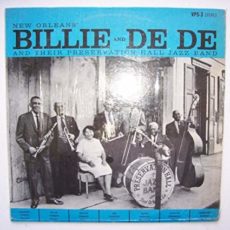
Josiah “Cie” Frazier was born on February 23, 1904 in New Orleans, Louisiana. He studied drums under several New Orleans jazz musicians, including Louis Cottrell, Sr., Red Happy Bolton, and Face-O Woods. He joined the Golden Rule Band with cousin Lawrence Marrero in 1921, and played in Marrero’s Young Tuxedo Orchestra in the 1920s.
He recorded with Papa Celestin’s Tuxedo Brass Band in 1927 and played with A.J. Piron and Sidney Desvigne in the late 1920s and early 1930s. During the Great Depression, Frazier played in WPA bands and in Navy dance bands. In 1945, he recorded with Wooden Joe Nicholas and worked in the 1950s with Celestin, Percy Humphrey, George Williams, and the Eureka Brass Band. He played in the Preservation Hall Jazz Band in the 1960s, working there into the 1980s, and recorded in his last few decades with Kid Howard, De De Burke, George Lewis, Emile Barnes, Captain John Handy, and Don Ewell.
He appeared in the Steve McQueen film The Cincinnati Kid and drummed on a Helen Reddy session. Drummer Cie Frazier passed away on January 10, 1985 in New Orleans.
More Posts: drums,history,instrumental,jazz

Daily Dose Of Jazz…
George Haslam was born February 22, 1939 in Preston, Lancashire, England and performed around the London free improvisational scene from the late 1960s, but did not begin recording until the 1980s. His first recording was issued in 1984, having been recorded while on tour in Hungary. He put together an ensemble called the Siger Band, included Paul Rutherford, Pete McPhail, Tony Moore, and Nigel Morris.
He played in Mexico in 1986 and in Cuba soon after he was the first British jazz ensemble to play in the latter country. He won the same distinction in Argentina before the end of the decade and has returned repeatedly to this country to perform and record. He founded Slam Records in 1989 to issue his own music; the label also releases material by Steve Lacy and Mal Waldron, among others. During this time his collaborations included work with Lol Coxhill, Paul Hession, Laszlo Gardony, Ruben Ferrero, and Evan Parker.
Haslam founded the British Saxophone Quartet in 1992, with Paul Dunmall, Elton Dean, and Simon Picard rounding out the membership. He also founded an ensemble called Meltdown in 1997, which issued its first record in 2001. Baritone saxophonist George Haslam who also plays the tárogató continues to perform in the avant-garde jazz idiom.
More Posts: history,instrumental,jazz,music,saxophone