

Requisites
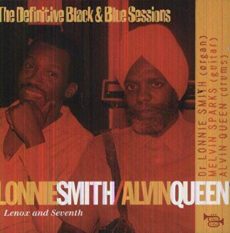
Lenox And Seventh: The Definitive Black and Blue Sessions is a 1985 album led by Alvin Queen and Dr. Lonnie Smith. The sessions were recorded in a studio in Paris, France on May 28 1985. The recording engineer was Dominique Samarcq, with liner notes provided by Alain Antonietto.
Track Listing
- L.S. Blues ~ 6:20
- Slightly Monkish ~ 5:49
- Who Can I Turn To ~ 8:00
- Billie’s Bounce ~ 5:58
- There Is No Greater Love ~ 9:09
- Minor Chant ~ 4:55
- Oleo ~ 4:27Chopstick ~ 6:51
- Dr. Lonnie Smith ~ Organ
- Alvin Queen ~ Drums
- Melvin Sparks ~ Guitar

More Posts: choice,classic,collectible,collector,drums,history,instrumental,jazz,music

Requisites
Abbey Is Blue is the fourth album by jazz vocalist Abbey Lincoln featuring tracks recorded in the Spring and Fall of 1959 in New York City for the Riverside label. The album was produced by Bill Grauer and Orrin Keepnews, the latter also writing the liner notes The album was mastered by Jack Matthews and the cover photograph was taken by Lawrence N. Shustak. The design of the cover was created by Harris Lewine, Ken Braren and Paul Bacon.
Abbey Lincoln had mastered Billie Holiday’s skill at inhabiting the lyrics of a song and projecting its emotional content outward, and these songs, all of which deal with sorrow, are stark and harrowing accounts of loss and injustice.
Track Listing | 39:19- Afro Blue (Mongo Santamaría) – 3:20
- Lonely House (Langston Hughes, Kurt Weill) – 3:40
- Let Up (Abbey Lincoln) – 5:32
- Thursday’s Child (Elisse Boyd, Murray Grand) – 3:31
- Brother, Where Are You? (Oscar Brown) – 3:10
- Laugh, Clown, Laugh (Ted Fio Rito, Sam M. Lewis, Joe Young) – 5:24
- Come Sunday (Duke Ellington) – 5:13
- Softly, as in a Morning Sunrise (Oscar Hammerstein II, Sigmund Romberg) – 2:46
- Lost in the Stars (Maxwell Anderson, Kurt Weill) – 4:11
- Long as You’re Living” (Oscar Brown, Julian Priester, Tommy Turrentine) – 2:33
- Abbey Lincoln – vocals
- Kenny Dorham (tracks 2, 4 & 7-9), Tommy Turrentine (tracks 1, 3, 6 & 10) – trumpet
- Julian Priester – trombone (tracks 1, 3, 6 & 10)
- Stanley Turrentine – tenor saxophone (tracks 1, 3, 6 & 10)
- Les Spann – guitar (tracks 2, 4 & 7-9), flute (track 5)
- Wynton Kelly (tracks 2, 4, 5), Cedar Walton (tracks 3 & 6), Phil Wright (tracks 7-9) – piano
- Bobby Boswell (tracks 1, 3, 6 & 10), Sam Jones (tracks 2, 4, 5 & 7-9) – bass
- Philly Joe Jones (tracks: 2, 4, 5 & 7-9), Max Roach (tracks: 1, 3, 6 & 10) – drums
More Posts: choice,classic,collectible,collector,history,instrumental,jazz,music,vocal
Requisites
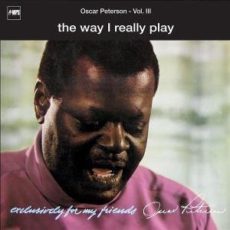
The Way I Really Play is a 1968 album by pianist Oscar Peterson. Recorded at the private studio of Hans Georg Brunner-Schwer in Villingen-Schwenningen, West Germany on November 12, 1967. The 44:50 minute sessions was produced by Brunner-Schwer.
Track Listing- Waltzing Is Hip (Ray Brown, Johnny Wayne) – 6:11
- Satin Doll (Duke Ellington, Johnny Mercer, Billy Strayhorn) – 10:05
- Love Is Here to Stay (George Gershwin, Ira Gershwin) – 4:54
- Sandy’s Blues (Oscar Peterson) – 9:34
- Alice In Wonderland (Sammy Fain, Bob Hilliard) – 4:46
- Noreen’s Nocturne (Oscar Peterson) – 9:20
- Oscar Peterson – piano
- Sam Jones – double bass
- Bobby Durham – drums
- Recording director and engineer – Hans Georg Brunner-Schwer
- Liner notes – Gene Lees
- Liner notes translated – Dr. B. Falk
- Cover photography – Sepp Werkmeister
- Reverse side photography – Sepp Werkmeister
- Graphic work – Hans B. Piltzer
- Action (Vol. 1)
- Girl Talk (Vol. 2)
- The Way I Really Play (Vol. 3)
- My Favorite Instrument (Vol. 4) solo piano
- Mellow Mood (Vol. 5)
- Travelin’ On (Vol. 6)
The Way I Really Play was also released as The Great Oscar Peterson on Prestige!
More Posts: choice,classic,collectible,collector,history,instrumental,jazz,music,piano
Requisites
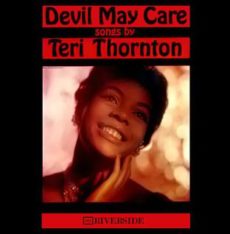
Devil May Care is the debut album released in 1961 by American jazz vocalist Teri Thornton featuring tracks recorded on December 23, 1960 and January 10, 1961 in New York City for the Riverside label.
>Norman Simmons was the arranger for the sessions that elapsed for 39 minutes and 19 seconds and was produced by Orrin Keepnews.
Track Listing- Lullaby Of The Leaves
- Devil May Care
- Detour Ahead
- The Song Is You
- My Old Flame
- What’s Your Story, Morning Glory
- Dancing In The Dark
- Left Alone
- Blue Champagne
- I Feel A Song Coming On
- What’s New
- Blue Skies
- Teri Thornton – vocals
- Clark Terry – flugelhorn, trumpet
- Britt Woodman – trombone
- Earle Warren – alto saxophone
- Seldon Powell – tenor saxophone
- Wynton Kelly – piano
- Freddie Green (tracks 1, 3, 5, 7, 9 & 12) – guitar
- Sam Herman (tracks 2, 4, 6, 8, 10 & 11) – guitar
- Sam Jones – bass
- Jimmy Cobb – drums
More Posts: choice,classic,collectible,collector,history,instrumental,jazz,music,vocal
Requisites
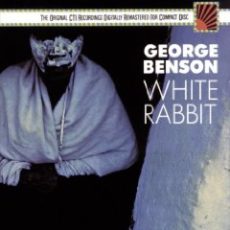
White Rabbit is the 1972 CTI Records album recorded by George Benson on November 23, 24 & 30, 1971. The title track is a cover of the famous Great Society/Jefferson Airplane song by Grace Slick. The album was produced by Creed Taylor, arranged by Don Sebesky and engineered by Rudy Van Gelder at his studios in Englewood, New Jersey. The album was designed by Bob Ciano and the photograph used on the cover was of a South African Pondo tribes woman was taken by Pete Turner in 1970.
This album was the recording debut of guitarist Earl Klugh featured on El Mar, was only seventeen years old then. White Rabbit was the first Grammy Award nomination to George Benson in 1972 for Best Jazz Performance by a Group.
Tracks
- White Rabbit ( Grace Slick)
- The From Summer of ‘42 (Michel Legrand)
- Little Train (from Bachianas Brasileiras No. 2) (Heitor Villa-Lobos)
- California Dreaming (John Phillips)
- El Mar (The Sea) (George Benson)
- George Benson – guitar
- Jay Berliner – Spanish guitar
- Earl Klugh – acoustic guitar (only on 5)
- Ron Carter – double bass, electric bass (on 1 and 3)
- Herbie Hancock – electric piano
- Billy Cobham – drums
- Airto Moreira – percussion, vocals
- Phil Kraus – vibes, percussion
- Gloria Agostini – harp
- Phil Bodner – flute, alto flute, oboe, English horn
- Hubert Laws – flute, alto flute, piccolo. (Flute solo on 1)
- George Marge – flute, alto flute, clarinet, oboe, English horn
- Romeo Penque – English horn, oboe, alto flute, clarinet, bass clarinet
- Jane Taylor – bassoon
- Wayne Andre – trombone, baritone horn
- Jim Buffington – French horn
- John Frosk – trumpet, flugelhorn. (Trumpet solo on 1 and 5)
- Alan Rubin – trumpet, flugelhorn
More Posts: choice,classic,collectible,collector,guitar,history,instrumental,jazz,music