

Daily Dose Of Jazz…
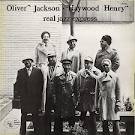
Haywood Henry: The Baritone Voice Behind a Thousand Hits
Born Frank Haywood Henry on January 10, 1913, in Birmingham, Alabama, this future jazz great started his musical journey on clarinet before discovering his true calling in the rich, resonant tones of the baritone saxophone. Though the baritone became his signature voice, Henry never abandoned the clarinet entirely, keeping both instruments close throughout his remarkable six-decade career.
From College Band to the Big Time
In 1930, Henry joined the Bama State Collegians, getting his first taste of professional music-making. When he returned to the group in 1934, now led by the dynamic Erskine Hawkins, it marked the beginning of a musical partnership that would last into the 1950s. Hawkins’ orchestra became Henry’s proving ground, where his big-toned baritone work became an essential part of the band’s sound.
A Journeyman’s Journey
After his years with Hawkins, Henry became one of those invaluable musicians who could fit into any setting. He worked with guitarist Tiny Grimes, saxophonist Julian Dash, and the Fletcher Henderson Reunion Band. Perhaps most notably, he occasionally substituted for the legendary Harry Carney in Duke Ellington’s Orchestra—a testament to his skill, given that Carney was widely considered the greatest baritone saxophonist in jazz history.
The 1960s found Henry in equally distinguished company: Wilbur DeParis, Max Kaminsky, Snub Mosley, Louis Metcalf, Earl Hines, Sy Oliver, and the New York Jazz Repertory Company all benefited from his steady presence and warm sound.
The Secret Session King
Here’s where Henry’s story takes a fascinating turn: during the 1950s and ’60s, he became one of the anonymous giants of the recording industry, playing on over 1,000 rock and roll records. While teenagers danced to the latest hits, few knew that a Birmingham-born jazz baritone saxophonist was helping create the sound they loved. In the 1970s, he brought that same professionalism to Broadway pit orchestras, proving once again his remarkable versatility.
Coming Full Circle
In 1971, Henry joyfully participated in an Erskine Hawkins reunion ensemble—a chance to reconnect with old friends and relive the glory days. He continued performing well into the 1980s, his passion for music undiminished by age.
A Leader at Last
Though Henry spent most of his career supporting others, he did step forward as a leader on three occasions: recording for Davis Records in 1957, Strand in the early 1960s, and finally Uptown in 1983. These albums offer rare glimpses of Henry unchained—his baritone taking center stage rather than anchoring the ensemble.
A Well-Earned Honor
In 1978, Alabama recognized one of its own when Haywood Henry was inducted into the Alabama Jazz Hall of Fame. When he passed away on September 15, 1994, the jazz world lost one of its most reliable, versatile, and underappreciated voices—a master musician who made everyone around him sound better, whether on a jazz bandstand, a rock and roll session, or in a Broadway pit.
Haywood Henry may not be a household name, but his baritone saxophone spoke to millions, often without them ever knowing it. That’s the mark of a true professional.
More Posts: clarinet,history,instrumental,jazz,music,saxophone
Daily Dose Of Jazz…
Jimmy Maxwell: The Trumpet Master You’ve Heard a Thousand Times
Born on January 9, 1917, in Stockton, California, Jimmy Maxwell was practically born with a trumpet in hand—he picked up the instrument at the remarkable age of four. Even as a child prodigy, he understood the value of serious training, studying throughout the 1930s with a roster of legendary brass teachers, including the renowned Herbie Clarke.
A Young Gun in the Swing Era
During the vibrant 1930s, Maxwell’s precocious talent found him working alongside some of the biggest names in jazz: Gil Evans, Jimmy Dorsey, vocalist Maxine Sullivan, and bandleader Skinnay Ennis. His big break came when he joined the prestigious Benny Goodman Orchestra—a gig that announced his arrival as a world-class player.
The Golden Age of Television
In 1943, Maxwell transitioned to what would become a legendary three-decade run as a studio musician for NBC. Night after night, his trumpet graced America’s living rooms through The Perry Como Show, The Patti Page Show, The Pat Boone Show, and The Tonight Show. While many musicians might have settled into such comfortable work, Maxwell’s restless talent demanded more.
A Secret Weapon on Countless Sessions
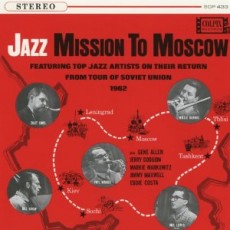
Maxwell’s studio work was merely the foundation. In 1962, he toured the Soviet Union during the height of the Cold War—music as cultural diplomacy. He appeared on hundreds of recordings and commercials, becoming one of those invisible giants whose sound defined an era. As a sideman, he lent his brilliant tone to sessions with Woody Herman, Count Basie, Duke Ellington, Oliver Nelson, Gerry Mulligan, Maynard Ferguson, Quincy Jones, the New York Jazz Repertory Company, and Chuck Israels’ National Jazz Ensemble.
That Haunting Solo
Perhaps Maxwell’s most iconic moment came when he played the unforgettable trumpet solo for The Godfather soundtrack—that lonely, haunting theme that perfectly captured the film’s operatic melancholy. Millions heard it; few knew the master behind it.
Full Circle
Later in life, Maxwell returned to his roots, working with Dixieland jazz and swing ensembles and even reuniting with Benny Goodman for nostalgic performances. In 1977, he finally stepped into the spotlight as a leader, recording a session for Circle Records—a rare glimpse of Maxwell unfiltered.
Though he eventually retired from recording and performing, Maxwell never stopped teaching. From 1950 until 2001—an astonishing fifty-one years—he passed on his knowledge to new generations of brass players. When he passed away on July 20, 2002, the world lost not just a brilliant musician, but a patient mentor who had helped shape the sound of American music for over seven decades.
If you’ve watched television, heard a commercial, or listened to jazz from the mid-20th century, you’ve almost certainly heard Jimmy Maxwell’s trumpet—even if you never knew his name.
More Posts: history,instrumental,jazz,music,trumpet

Daily Dose Of Jazz…
Dave Weckl: The Drummer Who Redefined Fusion
Born on January 8, 1960, in St. Charles, Missouri, Dave Weckl discovered his calling early. During his years at Francis Howell High School, he was already making heads turn behind the drum kit. His passion led him to the University of Bridgeport in Connecticut, where he immersed himself in jazz studies and refined the technical prowess that would soon make him one of the most sought-after drummers in the world.
Conquering the Big Apple
Fresh out of college, Weckl plunged into New York City’s electric fusion scene—and the city immediately took notice. His combination of precision, power, and musicality quickly caught the attention of major artists. Before long, he was laying down grooves for an eclectic mix of superstars: Paul Simon, Madonna, George Benson, Michel Camilo, Robert Plant, and bassist Anthony Jackson. Each collaboration showcased a different facet of his versatility.
The Chick Corea Years
Weckl’s profile skyrocketed when he joined forces with keyboard legend Chick Corea in 1985. Over the next seven years, he became an integral voice in both Corea’s groundbreaking Elektric Band and the more intimate Akoustic Band. These weren’t just gigs—they were masterclasses in contemporary jazz fusion that cemented Weckl’s reputation as a drummer’s drummer.
During this prolific period, Weckl somehow found time to maintain a busy session schedule, appear with the star-studded GRP All-Star Big Band, and record four albums with the Manhattan Jazz Quintet. His calendar was a testament to both his work ethic and his universal appeal.
Finding His Own Voice
After departing from Corea’s band in the early 1990s, Weckl embarked on new adventures—recording and touring with the brilliant guitarist Mike Stern while simultaneously launching his solo career. Since 1990, he has released ten albums as a leader, seven of them featuring his own Dave Weckl Band, each one pushing the boundaries of contemporary jazz and fusion.
Evolution and Education
Never content to rest on his laurels, Weckl has also shared his knowledge through a popular series of instructional videos that have influenced countless aspiring drummers. But perhaps his most dramatic transformation came around 1996, when his studies with the legendary teacher Freddie Gruber prompted a radical reimagining of both his playing style and drum setup—proof that even masters never stop learning.
Still Behind the Kit
Today, Dave Weckl continues to perform, record, and tour, bringing his distinctive blend of technical brilliance and musical sensitivity to audiences around the world. For anyone who loves the sound of perfectly executed rhythm married to genuine artistry, a Dave Weckl performance remains an essential experience.
More Posts: drums
Daily Dose Of Jazz…
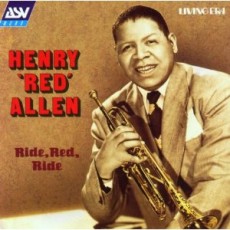
Henry “Red” Allen: The Trumpet Voice That Defined an Era
Born Henry James Allen on January 7, 1906, in the storied Algiers neighborhood of New Orleans, Louisiana, Red Allen grew up surrounded by the very birthplace of jazz. With a trumpet in hand from early childhood, he seemed destined to become one of the instrument’s most distinctive voices.
A New Orleans Beginning
By his late teens, young Henry was already turning heads, performing with Sidney Desvigne’s Southern Syncopators. The education continued: by 1924, he was playing professionally with the legendary Excelsior Brass Band and various jazz dance bands that kept New Orleans swinging. Like so many musicians of his generation, Allen honed his craft aboard the Mississippi riverboats—floating conservatories where the music never stopped and every night brought new challenges.
The Journey North
In 1927, Allen’s talent took him to Chicago, where he joined the great King Oliver and began recording as a sideman with Clarence Williams. But the real prize lay further east. A move to New York City brought him a coveted recording contract with Victor Records—a major breakthrough for any young musician.
The year 1929 marked a pivotal moment: Allen joined Luis Russell’s Orchestra, where he became a featured soloist and remained until 1932. His fiery, inventive playing began appearing on recording sessions with Eddie Condon, and by late 1931, he was making a series of memorable recordings with Don Redman.
A Who’s Who of Jazz Collaborations
From 1933 to 1934, Allen brought his sound to Fletcher Henderson’s celebrated Orchestra. What followed was a dizzying roster of collaborations that reads like a jazz history textbook: he played with the orchestras of Lucky Millinder and Luis Russell, toured Europe with Kid Ory, and worked or recorded with Coleman Hawkins, Tommy Dorsey, Fats Waller, Jelly Roll Morton, Victoria Spivey, and the incomparable Billie Holiday.
Leading from the Front
As a bandleader in his own right, Allen recorded for virtually every major label of the era—ARC, Decca, Okeh, Vocalion, Brunswick, and Apollo. He led his own ensemble at iconic New York venues like the Famous Door and the Metropole Café, toured extensively across the United States and Europe, and even graced television screens with an appearance on “The Sound of Jazz.”
A Courageous Final Chapter
When Allen was diagnosed with pancreatic cancer in late 1966, he faced the news with characteristic determination. Even after surgery, he insisted on one final tour of England—a testament to his lifelong dedication to the music and the audiences who loved him. That tour concluded just six weeks before his death on April 17, 1967, in New York City.
Henry “Red” Allen left behind more than recordings and memories—he left a trumpet legacy marked by innovation, passion, and an unmistakable sound that still resonates through jazz history today.
More Posts: trumpet
On The Bookshelf
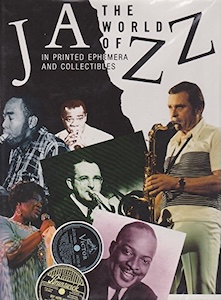
The World of Jazz | Jim Godbolt
This book is exciting and interesting in so many ways. It is filled with amazing pictures from the Jazz Age that make history feel real and alive. The images tell the story of how jazz began in New Orleans and traveled all over the world, growing into the music we know today.
The author, jazz historian Jim Godbolt, clearly loves jazz, and his passion shines through every page. He doesn’t just show photos of musicians and famous places. He also shares colorful artwork from record covers, posters, magazines, and record labels. Some of these designs are legendary, especially posters for Dizzy Gillespie and Jazz at the Philharmonic, as well as jazz magazines like Record Changer.
The story of jazz is told through old newspapers, posters, books, reviews, and rare photographs. Many of these items are hard to find, which makes the book feel like a treasure chest of history. You learn that jazz is not only about music, but also about how it was shared, recorded, advertised, and turned into a business.
The book shows how jazz started with young, self-taught musicians who had very little, and how it slowly became a huge, worldwide industry. It is a book you can read again and again. Every time you look at the pictures, you notice something new—from poor neighborhoods and riverboats to exciting nightclubs and beautiful concert halls around the world.
With its big pages and powerful images, this book is fun to explore, easy to enjoy, and full of inspiration. I highly recommend it.
The World Of Jazz: 1990 | Jim Godbolt
