

Daily Dose Of Jazz…
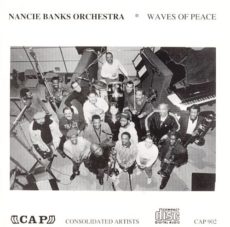
Nancie Banks was born Nancie Manzuk on July 29, 1951 in Morgantown, West Virginia and as a child sang in a church choir with her father. She learned piano from her mother beginning at age four. For a while she lived in Pittsburgh, then relocated to New York City in the Eighties where she studied with Edward Boatner, Barry Harris, and Alberto Socarras.
Performing with both small ensembles and big bands, during the late 1980s she joined Charlie Byrd’s band, met and married bandmate and trombonist Clarence Banks. Among the musicians she worked with were Lionel Hampton, Dexter Gordon, Walter Davis Jr., Bob Cunningham, Duke Jordan, Diane Schuur, George Benson, Woody Shaw, Jon Hendricks, Walter Booker, Bross Townsend, Charlie Persip, Walter Bishop, Jr., and Sadik Hakim.
In 1989 she founded her own big band and recorded four albums between 1992 and 2001. She also worked on film soundtracks, including Mo’ Better Blues and Housesitter, and in Broadway musicals such as Swingin’ On a Star. During the 1990s, she taught jazz at the City University of New York.
Vocalist, bandleader and educator Nancie Banks passed away in New York City in November 2002. Her body was discovered in her home and the precise day she died is unknown.
Sponsored By

Voices From The Community

#preserving genius
More Posts: vocal
Daily Dose Of Jazz…
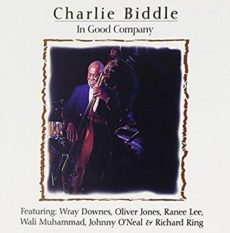
Charles Reed “Charlie” Biddle, CM was born and raised in West Philadelphia, Pennsylvania on July 28, 1926. After completing military duties in the US Armed Forces during World War II, serving in China, India and Burma, he returned home and went on to study music at Temple University, where he started playing bass. In 1948, he arrived in Montreal while touring with Vernon Isaac’s Three Jacks and a Jill. Fascinated by the lack of racism among musicians in Canada, particularly Quebec, where he saw black jazz musicians playing alongside white jazz musicians as the best of friends, he settled in Montreal.
Employed as a car salesman from 1954 to 1972, he performed with pianists Charlie Ramsey, Milt Sealey, Alfie Wade, Sadik Hakim, and Stan Patrick in local Montreal nightclubs. As a promoter, Charlie booked musicians Johnny Hodges, John Coltrane, Pepper Adams, Bill Evans, Art Farmer, Tommy Flanagan and Thad Jones to perform in Montreal.
He performed off and on with guitarist Nelson Symonds between 1959 and 1978, changing leadership and performing as a duo. He was an important supporter and promoter of jazz in Montreal, organizing outdoor festivals of local jazz musicians, particularly Jazz Chez Nous, a 3-day jazz festival in 1979 and another in 1983 which laid the foundation for the Montreal International Jazz Festival, now the world’s largest jazz festival.
In 1981 he lent his name to a jazz club in downtown Montreal that became Biddle’s, now known as House of Jazz. It was featured in the Bruce Willis film The Whole Nine Yards with his daughter Stephanie Biddle on vocals, and he was featured in The Moderns and the French-Canadian film Les Portes Tournantes.
Biddle’s remained at the heart of jazz culture in Montreal during his lifetime. When performing at the club he would use the title, ‘Charlie Biddle on the fiddle‘, led trios at the club on a regular weekly basis, along with pianists Oliver Jones, Steve Holt, Wray Downes, and Jon Ballantyne, and recorded albums with Jones, Milt Sealey and Ted Curson.
Bassist Charlie Biddle was awarded the Oscar Peterson Prize, was made a member of the Order of Canada, was honored with the Prix Calixa-Lavallée and became a Canadian citizen three years prior to his passing away on February 4, 2003 in his Montreal home surrounded by family.
Sponsored By

www.whatissuitetabu.com
#preserving genius
More Posts: bass
Daily Dose Of Jazz…
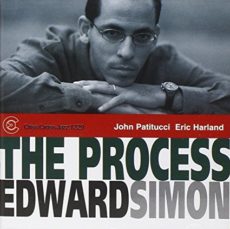
Edward Simon was born July 27, 1969 in Punta Cardón, Venezuela into a musical family as both his brothers, Marlon and Michael Simon are also noted professional musicians. Sent to the United States by his father at the age of fifteen to the University of the Arts in Philadelphia, he studied classical piano with Susan Starr. After that, beginning in 1989 he studied with Harold Danko at the Manhattan School of Music and played with Kevin Eubanks and Greg Osby.
His stay in New York City saw Simon playing with Herbie Mann, Paquito D’Rivera, Bobby Hutcherson, Jerry Gonzalez, John Patitucci, Arturo Sandoval, Manny Oquendo, and Don Byron. He was a member of Bobby Watson’s band Horizon from 1989 to 1994, and since 2002 has been a member of the Terence Blanchard Group.
Recording his debut album as a bandleader in 1994, that same year Edward was a finalist in the Thelonious Monk International Jazz Piano Competition. The following year he composed his Rumba Neurotica for the Relache Ensemble and composed his Venezuelan Suite on behalf of Chamber Music America.
He has since performed on several Grammy-nominated jazz albums. Besides his trio he also leads the Sexteto Venezuela, the Afinidad Quartet, and the group Simon, Simon & Simon, with his brothers, he teaches at the New School for Jazz and Contemporary Music in New York. Pianist Edward Simon is currently an artist in residence at Western Michigan University and continues to compose, record and perform.
Sponsored By

#preserving genius
More Posts: piano
Daily Dose Of Jazz…
Natsuki Tamura 田村 夏 樹 was born on July 26, 1951 in Ōtsu, Shiga Prefecture, Japan. He played in a wind band during his school days and after his graduation he became a professional musician performing with the World Sharps Orchestra, Consolation, the Skyliners Orchestra, the New Herd Orchestra, the Music Magic Orchestra and in different band configurations with his future wife, pianist Satoko Fujii .
He appeared in various Japanese television shows from 1973 to 1982, such as The Best Ten, Music Fair and Kirameku Rhythm. In 1986 he moved to the United States to study at Berklee College of Music in Boston, Massachusetts. After returning to Japan, Tamura taught at the Yamaha Music School and gave at private trumpet studios in Tokyo and Saitama.
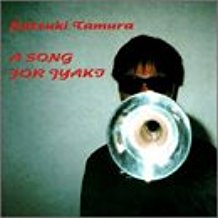
Back in the United States, he worked with among others, the improvisation quartet Gato Libre, led his own groups, performed in the duo with his wife and as a soloist. Signed to Leo Records he released four albums, A Song for Jyaki, Buzz, Libra and NatSat. He also worked with Masahiko Satō, the Roca Saxophone Quartet, Larry Ochs, the Juggernaut Jug Band, Misha Mengelberg, Angelo Verploegen, Chris Brown, Jimmy Weinstein, Elliott Sharp, Paul Bley, Takayuki Katō, Takaaki Masuko, Ryōjirō Furusawa and the band Junk Box.
Trumpeter and composer Natsuki Tamura, whose influences have been Hugh Ragin, Roy Campbell, Wadada Leo Smith, Toshinori Kondo, Don Cherry and Lester Bowie, continues to perform, record and compose.

More Posts: trumpet
Daily Dose Of Jazz…
Fletcher Allen was born on July 25, 1905 in Cleveland, Ohio and began his career in the mid-’20s as a member of Lloyd Scott’s Band in New York City. In 1927, he was off to Europe for the first time in a group under the direction of Leon Abbey, a bandleader whose pioneering efforts with jazz eventually led to a 1936 tour of India which he also participated in. In between, he went to Budapest with the Benny Peyton group in 1929 and hung out in Europe the following decade. While in Europe he performed on several collaborations with guitarist Django Reinhardt, among others.
Reinhardt recorded some of his arrangements and compositions, including the intoxicating Viper’s Dream. Allen also took advantage of the European base to take part in several tours involving top American performers such as Louis Armstrong, Freddy Taylor and Leon Abbey in the ’30s. It was during this time that he began leading his own band.
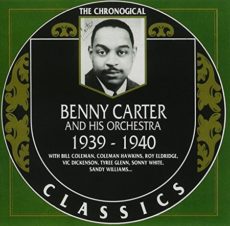
By 1938, he began performing with Benny Carter, something of a doppelgänger in that both men played alto saxophone and clarinet and had excellent reputations as arrangers and shows up several times in the extensive Carter discography. He went on to Later that year, Allen went to Egypt as a member of the Harlem Rhythmakers group during an era when American jazz musicians held court at swank Cairo hotels, a situation that would be quite inconceivable in modern times.
As World War II escalated Fletcher returned home to the States and at first found little work but eventually left the docks when he found that his new skills on baritone sax meant work filling in the sections of various New York big bands. His last job of any notoriety began in the early 70s with the big band of Fred “Taxi” Mitchell, meaning he was one New Yorker who always managed to find a taxi.
Saxophonist, clarinetist and composer Fletcher Allen, whose composition Viper’s Dream has become a jazz staple, passed away on August 5, 1995.
Sponsored By

#preserving genius