


Daily Dose Of Jazz…
Cedric Wallace was born August 3, 1909 in Miami, Florida. He moved to New York City in the 1930s, where he first started playing in a band led by Reggie Johnson at the Saratoga Club.
Later in the decade Wallace worked with Jimmie Lunceford before joining Fats Waller’s band from 1938-1942, the association for which he is best known. He played with Waller at the peak of his popularity and plays on many of his biggest hits.
He also recorded with Una Mae Carlisle, Maxine Sullivan, Champion Jack Dupree, Pat Flowers, Gene Sedric, and Dean Martin. Cedric led his own ensemble in New York in the 1940s which featured Eddie Gibbs on bass for a time, and continued to perform well into the 1970s.
Double-bassist Cedric Wallace passed away on August 19, 1985 in New York City.
Sponsored By


#preserving genius
More Posts: bass

Daily Dose Of Jazz…
David Binney was born on August 2m 1961 in Miami, Florida and was raised in Carpenteria, California. Through his parents love of music he grew up listening to albums by John Coltrane, Miles Davis, Wayne Shorter, and Jimi Hendrix. He took saxophone lessons in Los Angeles, California and at nineteen moved to New York City and studied with saxophonists George Coleman, Dave Liebman, and Phil Woods.
With a grant from the National Endowment for the Arts he recorded his first album, Point Game in 1991 on the Owl label, that led to him starting his own label, Mythology Records before the turn of the century.
He has been of several bands, including Lost Tribe, Jagged Sky, Lan Xang, the Gil Evans Orchestra, the Maria Schneider Orchestra, and Medeski Martin & Wood. Binney has also worked with Adam Rogers, Alex Sipiagin, Ben Monder, Ben Perowsky, Bill Frisell, Bobby Previte, Brian Blade, Cecil McBee, Craig Taborn, David Gilmore, Edward Simon, Eivind Opsvik, Jacob Sacks, James Genus, Jim Black, Jim Hall, Kenny Wollesen, John Escreet, Leni Stern, Lonnie Plaxico, Mark Turner, Marvin “Smitty” Smith, Nate Wood, Scott Colley, Steven Bernstein, Thomas Morgan, Tim Lefebvre, Uri Caine and Wayne Krantz.
Alto saxophonist and composer David Binney has recorded more than two-dozen albums as a leader, has recorded a half-dozen as a sideman, currently resides in New York City and continues to compose, perform and record.
Sponsored By

#preserving genius
More Posts: saxophone
Daily Dose Of Jazz…
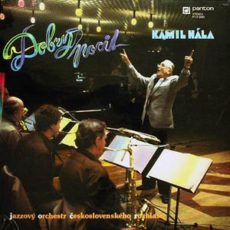
Kamil Hála was born on August 1, 1931 in Most, Bohemia, Czechoslovakia and during his musical career he worked as a pianist and arranger with a number of renowned jazz and dance orchestras, among them he starred in the Zdeněk Barták Orchestra.
As a composer and arranger he spent time collaborating with the Karel Vlach Orchestra and also directed his own jazz big band. Together with Josef Vobruba, they worked as conductors at the Czechoslovak Radio Dance Orchestra and the Jazz Orchestra of Czechoslovak Radio .
Pianist, composer, conductor and arranger Kamil Hála, brother of trumpeter and music composer Vlastimila Hala, passed away on October 28, 2014 in Prague, Czechoslovakia.
More Posts: piano
Daily Dose Of Jazz…
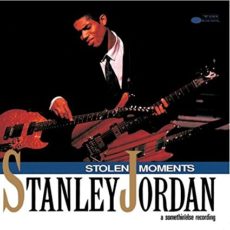
Stanley Jordan was born July 31, 1959 in Chicago, Illinois and when he was six, he started on piano, then switched to guitar at eleven. He began his career playing in rock and soul bands, however in 1976, he won an award at the Reno Jazz Festival. AIt was while attending Princeton University that he studied music theory and composition with Milton Babbitt, computer music with Paul Lansky, and performed with Benny Carter and Dizzy Gillespie.
In 1985, Bruce Lundvall became president of Blue Note Records and Stanley was the first person he signed. They released his album Magic Touch, which sat at No.1 on Billboard ‘s jazz chart for 51 weeks, setting a record. He has worked with Quincy Jones, Onaje Allan Gumbs, Michal Urbaniak, Richie Cole, The Dave Matthews Band, The String Cheese Incident, Phil Lesh, Moe, and with Umphrey’s McGee, among others.
A favorite at festivals he has played Kool Jazz Festival, Concord Jazz Festival, and the Montreux International Jazz Festival to name a few. He has released fourteen albums as a leader, another seventeen across musical genres as a sideman, released three videos, more than a dozen television appearances, has written seven papers and presentations on guitar and technique, and has been nominated for an NAACP Image Award and four Grammy Awards.
Guitarist Stanley Jordan, whose technique involves tapping his fingers on the fretboard of the guitar with both hands, has appeared in the film Blind Date with Bruce Willis and Kim Basinger, has scored short film and tv specials and continues to compose, perform and record.
Sponsored By

#preserving genius
More Posts: guitar
Daily Dose Of Jazz…
Roy Lee Porter was born on July 30, 1923 in Walsenburg, Colorado and moved from Walsenburg to Colorado Springs when he was eight years old and began playing drums in rhythm and blues bands while a teenager. He attended Wiley College in Texas briefly, where trumpeter Kenny Dorham was a fellow student. He joined Milt Larkin’s band in 1943, replacing Joe Marshall.
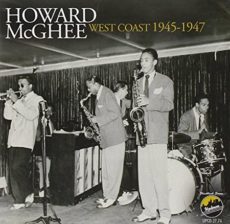
After military service Porter settled in Los Angeles, California and his talents were soon in demand by some of the pioneers of bebop. He worked with Teddy Bunn and Howard McGhee, making his first recordings with the latter. In 1946 he backed Charlie Parker on such Dial classics as A Night In Tunisia, Yardbird Suite, Ornithology and the unfortunate recording of Lover Man.
Playing on Los Angeles’ Central Avenue afforded him opportunities to perform with with Dexter Gordon, Wardell Gray and Teddy Edwards. In San Francisco, California he performed with Hampton Hawes and Sonny Criss. In 1949 Roy organized and went on the road with a big band that included Art Farmer, Jimmy Knepper and Eric Dolphy.
During the 1950s he was inactive as a jazz musician due to drug problems and only returned to music infrequently afterwards. Drummer Roy Porter never led a recording session and passed away on January 24 or 25, 1998 in Los Angeles.

More Posts: drums