

Daily Dose Of Jazz…
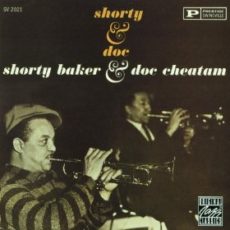
Shorty Baker was born Harold Baker on May 26, 1914 in St. Louis, Missouri and began playing drums, but switched to trumpet during his teens.
He started his career on riverboats with Fate Marable, then with Erskine Tate before playing with Don Redman in the mid-1930s. He went on to work with Teddy Wilson and Andy Kirk before joining Duke Ellington. Shorty married Kirk’s pianist Mary Lou Williams and though the two separated shortly thereafter, they never officially divorced.
Baker worked on and off in Duke Ellington’s Orchestra from 1942 to 1962 alongside Ray Nance, Clark Terry, Taft Jordan, Willie Cook and Cat Anderson among others. He also worked with Billy Strayhorn and Johnny Hodges’ group in the early Fifties during the period when Hodges was not a member of Ellington’s orchestra. During the latter years of his career he worked with Bud Freeman and Doc Cheatham.
Trumpeter Shorty Baker passed away on November 8, 1966 in New York City.
Sponsored By

www.whatissuitetabu.com

More Posts: trumpet
Daily Dose Of Jazz…
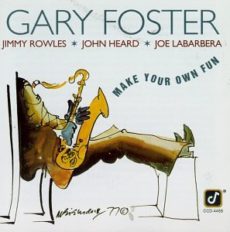
Gary Foster was born May 25, 1936 in Leavenworth, Kansas and started on the clarinet at age 13. His first personal musical inspiration was Olin Parker, his Jr. High School music director and private teacher who introduced him to Woody Herman, Count Basie and many other types of music. He listened closely to the Woody Herman orchestra recording of “Four Brothers” from the late 1940s which featured jazz saxophonists Stan Getz, Zoot Sims and Serge Chaloff and for him, Getz stood out on the tenor saxophone because of his tone. but Lester Young and Charlie Parker were also major influences.
His earliest professional experience was at age of 15 playing Leavenworth VFW Hall dances with bassist Harold Stanford. After high school Gary studied at Central College in Fayette, Missouri, he then transferred to the University of Kansas studying classical clarinet, music education, musicology and conducting. While there he met and played with Kansas City jazz trumpet great Carmell Jones.
In 1961 at age 26 Foster moved to Los Angeles, California to join the West Coast jazz scene, teaching privately and studying the flute but finding little work for a saxophonist to make a living only playing jazz he turned to studio work as a woodwind doubler to support his family. His initial associations and friendships with Clare Fischer and Warne Marsh were vital to Foster’s artistic approach to music and jazz improvisation.
He joined at its inception in 1973 he was a member of the Grammy Award winning Toshiko Akiyoshi – Lew Tabackin Big Band, worked with the big bands of Clare Fischer, Louis Bellson, Mike Barone, Ed Shaughnessy, and the Marty Paich Dek-tette, as well as with Cal Tjader, Poncho Sanchez, Sammy Nestico, Shelly Manne, and Rosemary Clooney and numerous others.
For over 45 years he has made his studio work has included television, movies, recordings, media and soundtracks such as Monsters, Inc., Ice Age, Elf, Meet The Fokkers, and Haunted Mansion to name a few. Foster has been in the Academy Awards Television Orchestra for 30 different broadcasts of the show, performed regularly with the Los Angeles Philharmonic, the Los Angeles Chamber Orchestra, the Los Angeles Opera Orchestra and the Hollywood Bowl Orchestra.
Saxophonist, clarinetist and flutist Gary has taught at Pasadena City College, University of Missouri, University of California, Los Angeles and California State University and founded Nova Music Studios. He has co-authored educational materials and conducts clinics at colleges and performs and lectures at professional music symposiums.

Dose A Day-Blues Away
Daily Dose Of Jazz…
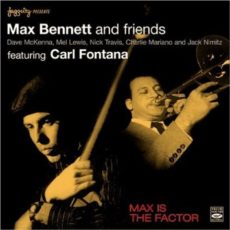
Max Bennett was born May 24, 1928 in Des Moines, Iowa and grew up in Kansas City, Missouri and Oskaloosa, Iowa. Attending college in Iowa and studying guitar, his first professional gig was with Herbie Fields in 1949, then played with Georgie Auld, Terry Gibbs and Charlie Ventura.
After serving in the Army during the Korean War from 1951 to 1953, Max played with Stan Kenton before moving to Los Angeles, California where he played regularly at the Lighthouse Cafe with his own ensemble. During this period played behind Peggy Lee, Ella Fitzgerald, Joni Mitchell, Joan Baez through the Seventies and recorded with Charlie Mariano, Conte Candoli, Bob cooper, Bill Holman, Stan Levey, Lou Levy, Coleman Hawkins and Jack Montrose.
Bennett recorded under his own name from the late 1950s, and did extensive work as a composer and studio musician in addition to playing jazz. His session works is a who’s who list playing bass on sessions with The Monkees,The Partridge Family, Frank Zappa, With Lalo Schifrin on the soundtrack of Bullitt, Marvin Gaye, Barbra Streisand, Anthony Newley, Paul Anka, Elvis Presley, Four Tops, Nelson Riddle, Frank Sinatra, Ray Charles, Cleo Laine, Joe Williams, Quincy Jones, Kenny Rogers, The Beach Boys, Carol King, The Temptations, The Crusaders, Henry Mancini, Johnny Mandel and the list goes on.
Bennett continued with his own band, L.A. Express, which included the late Joe Sample, Larry Carlton and John Guerin under the leadership of Tom Scott. After this band, Bennett formed his own group Freeway, and continued to perform with his most recent band, Private Reserve, until he passed away on September 14, 2018 in San Clemente, California.
Take A Dose On The Road
More Posts: bass
Daily Dose Of Jazz…
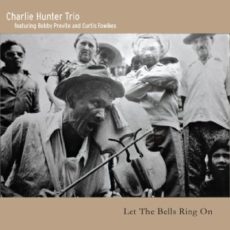
Charlie Hunter was born on May 23, 1967 in Rhode Island but by age four his mom packed him and his younger sister in an old yellow school bus and headed west. After several years living on a commune in Mendocino County they settled in Berkeley, California and graduating from Berkeley High School and taking lessons from guitar teacher Joe Satriani. At eighteen he moved to Paris, becoming a professional busker, working 8 to 12 hours a day to make ends meet.
Returning to the Bay area, he played a seven-string guitar and organ in Michael Franit’s political rap group, The Disposable Heroes of Hiphoprisy. Since the 1993 debut of his self-titled Charlie Hunter Trio with John Ellis on sax and Jay Lane on drums, he has recorded seventeen albums. He co-founded Garage A Trois, a jazz fusion band with Stanton Moore and Sherik, has collaborated with Bobby Previte on the ongoing project Groundtruther, and has recorded and toured with Previte’s The Coalition of the Willing.
Charlie has recorded with Christian McBride, has played in the band T.J. Kirk, that merged the music of Thelonious Monk, James Brown and Rahsaan Roland Kirk. He is an inaugural member of the Independent Music Awards judging panel to support independent artists, and over the years has performed and recorded with Erik Deutch, Tony Mason, Eric Kalb, Ben Goldberg, Ron Miles, Scott Amendola, and Curtis Fowlkes, continuing to perform, compose and tour.
Give The Gift Of Knowledge
More Posts: guitar
Daily Dose Of Jazz…
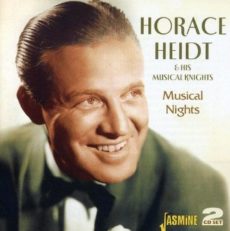
Horace Heidt was born on May 21, 1901 in Alameda, California, He went on to attend the University of California Berkeley as a guard on the football team. But a broken back dashed those dreams and he turned his attention to music, forming The Californians with some classmates.
From 1932 to 1953, he became one of the more popular radio bandleaders beginning on NBC’s Blue Network with Shell Oil’s Ship of Joy and Answers by the Dancers and Horace Heidt’s Alemite Brigadiers. He broadcasted from CBS from 1937-1939.
Horace would employ singer Matt Dennis and singing comedian Art Carney. His recordings were highly successful with Gone With The Wind and Ti-Pi-Tin going to No. 1 and The Man With The Mandolin hitting No. 2 on the charts. His 1941 song, The Hut-Sut Song is heard in the movie A Christmas Story.
He returned to NBC to perform on Pot o’ Gold radio show from 1939-194, portraying himself in the film of the same name starring James Stewart and Paulette Goddard. From 1940 to 1944 he did Tums Treasure Chest, followed by 1943–45 shows on the Blue Network. Lucky Strike sponsored The American Way on CBS in 1953.
On December 7, 1947, NBC launched The Horace Heidt Youth Opportunity Program and accordionist Dick Cortino the first winner of the $5,000 prize, soon had his own show. Heidt’s talent search catapulted a number of performers such as Carney, Frankie Carle, the King Sisters, Alvino Rey, Gordon McRae, Frank DeVol, Johnny Standley and Al Hirt. When the program expanded from radio to television in 1950, it was one of the first talent shows.
Pianist and bandleader Horace Heidt passed away on December 1, 1986 in Los Angeles, California. For his contribution to radio and television he has two stars on the Hollywood Walk of Fame and a Golden Palm Star on the Palm Springs Walk of Stars.
Uplift Someone’s World
More Posts: piano