

Daily Dose Of Jazz…
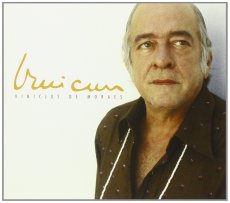
Vinicius de Moraes was born Marcus Vinicius de Moraes on October 19, 1913 in Rio de Janiero, Brasil. As a child he was exposed to various musicians and composers and in high school he was writing his first compositions. He went on to graduate college at twenty and published two books of poetry.
Over the next several years he held a variety of banking, government and diplomatic positions while still writing and publishing his poetry. But it wasn’t until the ‘50s that he moved into the realm of pop culture. He studied film festival management, wrote his first samba, contributed lyrics to several classical pieces and in 1956 Vinicius staged his musical play Orfeu da Conceicao that would later become Orfeu Negro or Black Orpheus and win an Academy Award for Best For Language Film in 1959, a British Academy Award and the French Palm d’Or at Cannes.
Collaborating with Antonio Carlos Jobim, Moraes was at the fore when the bossa nova movement began with the release of Elizete Cardoso’s album Cancao do Amor Demais that consisted of the pairs music and a then unknown Joao Gilberto. They went on to compose Garota de Ipanema, Insensitez and Chega de Saudade. Vinicius’ songs would go on to be included in another Cannes winner Un Homme et une Femme (A Man and A Woman) in 1966.
In the 1960s and 1970s, Vinicius continued collaborating with many renowned Brazilian singers and musicians, in particular with Baden Powell venturing into Afro-Brazilian influences that came to be known as collectively as Afro-Sambas. A known bohemian and diplomat, Vinicius also had a problem with alcohol that ultimately had him drummed out of the diplomatic corps by the military regime. But with his new partner, guitarist and singer Toquinho, he continued to realize success on both music and literary landscapes releasing several popular and influential albums.
Vinicius de Moraes, composer, playwright and diplomat nicknamed O Poetinha (The Little Poet), passed away on July 9, 1980 in Rio de Janiero after a long spell of poor health. Hundreds of jazz musicians and performers worldwide have recorded more than 400 of his songs. In 2006 he was reinstated into the diplomatic corps and in 2010 was posthumously promoted to the post of Ambassador by the Brazilian Chamber of Deputies.

Give A Gift Of Jazz – Share
Hollywood On 52nd Street
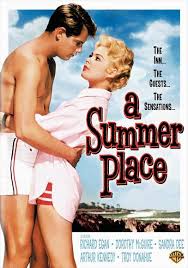
A Summer Place was adapted from the Sloan Wilson novel into a 1959 film of the same name, at a time when divorce, adultery and teenage sexuality were taboo subjects and very controversial. The theme song which became a jazz standard was composed by Mack Discant and Max Steiner.
The Story: Focuses on the adult lives of two one-time teenage lovers, Ken and Sylvia, who were from different social strata. Ken was self-supporting, working as a lifeguard at a Maine island resort, while Sylvia’s family stayed as guests of the owners, one summer between years at college. After their summer love affair, they married other people, but rediscovered each other later in life. At that time, Sylvia has a son, Johnny, and Ken a daughter, Molly. While Ken and Sylvia renew their love affair, their children begin a romance.
Sponsored By

www.whatissuitetabu.com
More Posts: comedy,dance,drama,hollywood,instrumental,jazz,musical,suite ta bu,vocal
Daily Dose Of Jazz…
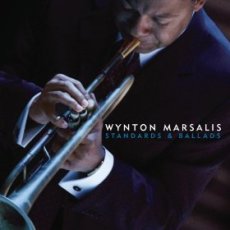
Wynton Learson Marsalis was born October 18, 1961 in New Orleans, Louisiana, the son of a jazz pianist. At an early age he exhibited an aptitude for music and by age eight he was performing traditional New Orleans music in the Fairview Baptist Church band. At 14, he performed with the New Orleans Philharmonic and during high school played with the New Orleans Symphony Brass Quintet, the New Orleans Community Concert Band, the New Orleans Youth Orchestra, the New Orleans Symphony, various jazz bands and with a local funk band, the Creators.
At age 17, Wynton was the youngest musician admitted to Tanglewood’s Berkshire Music Center where he won the school’s Harvey Shapiro Award for outstanding brass student. Moving to New York City he attended Julliard in 1979 and picked up gigs around town. He joined the Jazz Messengers led by Art Blakey in 1980 and in the years that followed he would perform with Sarah Vaughan, Dizzy Gillespie, Sweets Edison, Clark Terry, Sonny Rollins, Ron Carter, Herbie Hancock, Tony Williams and countless other jazz legends.
Marsalis has written, produced and hosted Marsalis On Music, an educational television series on jazz and classical music, National Public Radio aired the first of Marsalis’ 26-week series, titled Making the Music, was awarded a Peabody Award, has written five books, co-founded the jazz program at Lincoln Center that evolved into Jazz at Lincoln Center, opened Frederick P. Rose Hall, the first ever institution for jazz with three performance halls, recording, broadcast, rehearsal and education facilities.
Wynton Marsalis, jazz trumpeter, bandleader, composer and educator is currently the Artistic Director for Jazz at Lincoln Center and Music Director for the Jazz at Lincoln Center Orchestra. He was won nine Grammy Awards in both jazz and classical genres, and received the first ever Pulitzer Prize for Music.
Jazz Is Global – Share
More Posts: cornet,flugelhorn,flumpet,trumpet
Daily Dose Of Jazz…
Jimmy Harrison was born on October 17, 1900 in Louisville, Kentucky and began on trombone at age 15, playing locally in the Toledo, Ohio area. He also played semi-pro baseball but chose music over a career in sports when he joined a traveling minstrel show in the late 1910s.
By 1919 Harrison was leading his own jazz ensemble in Atlantic City, New Jersey and played in the bands of Charlie Johnson and Sam Wooding. Moving to Detroit he played with Hank Duncan and Roland Smith. After returning to Toledo, he played gigs with June Clark and James P. Johnson. He followed this period with a stint in New York City with Fess Williams.
Giving leadership of his ensemble to June Clark in 1924, Jimmy continued to play with the group, worked with Duke Ellington during this period and in 1925 was working with Billy Fowler then with Elmer Snowden, Fletcher Henderson and Benny Carter’s Chocolate Dandies. While on tour with Henderson he took ill with a stomach ailment and though he continued to play for several months with Chick Webb. Trombonist Jimmy Harrison passed away on July 23, 1931 in New York City at the age of 30.
Put A Dose In Your Pocket
More Posts: trombone
Daily Dose Of Jazz…
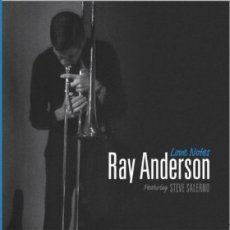
Ray Anderson was born on October 16, 1952 in Chicago, Illinois. An independent jazz trombonist and trumpeter he began training with the Chicago Symphony trombonists then spent time studying in California. By 1973 he was in New York freelancing and four years later joined Anthony Braxton’s group, then with Barry Altschul.
By the late ‘70s his influence was growing, he was leading his own groups, working with George Gruntz’s Concert Jazz Band and over the next twenty years began taking an occasional good-humored vocal singing two notes at the same time.
Anderson also plays the sousaphone, is a master at multiphonics and a supportive sideman has recorded and performed with David Murray, Charlie Haden, Dr. John, Bennie Wallace, Henry Threadgill, John Scofield and Sam Rivers among others. He also received a grant from the National Endowment For The Arts for a series of solo trombone concerts.
While pushing his sound into the future, Anderson has frequently returned to his early love of New Orleans music for inspiration as he continues to perform, record and tour. Since 2003 he has taught and conducted at Stony Brook University.
Give The Gift Of Knowledge
More Posts: sousaphone,trombone,trumpet