

Daily Dose Of Jazz…
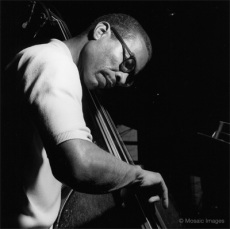
Wendell Marshall was born into a musical family on October 24, 1920 in St. Louis, Missouri. He took up the bass in emulation of and receiving his first lessons from his cousin Jimmy Blanton. He began playing professionally around his hometown in the late ‘30s and played with Lionel Hampton in ’42. Graduating from Lincoln University, he then served in the Army during World War II.
After his discharge, Marshall played and recorded with Stuff Smith, relocated to New York City and played with Mercer Ellington prior to his tenure with Duke Ellington from 1948 to 1955, appearing in several films with the orchestra.
Departing from Duke, Wendell played in pit orchestras on Broadway, freelanced with Mary Lou Williams, Art Blakey, Donald Byrd, Milt Jackson and Hank Jones among others. He was the house bassist for Prestige Records known for his rich tone, reliable sense of time and fine technique making him a popular collaborator.
It is estimated that he recorded with a prodigious list of musician with albums numbering over 150 including his own in 1955 as a leader, Wendell Marshall with the Billy Byers Orchestra. He was also a part of the Jazz Lab quintet led by Donald Byrd and Gigi Gryce.
However, by 1968 he retired from music and returned to St. Louis where he set up his own insurance business. Double bassist Wendell Marshall passed away of colon cancer on February 6, 2002 in his hometown of St. Louis.

Put A Dose In Your Pocket
More Posts: bass
Daily Dose Of Jazz…
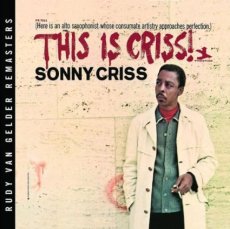
William “Sonny” Criss was born on October 23, 1927 in Memphis, Tennessee and at the age of 15 moved to Los Angeles. Developing a concise, bluesy tone he easily fit into the bands he drifted between such as Howard McGhee’s playing alongside Charlie Parker, Johnny Otis and Billy Eckstine.
As his ability continued to increase his first major break came in 1947 with Norman Granz, playing on a number of jam sessions. In 1956 he was signed to Imperial Records, recorded a number of underground classics like “Jazz U.S.A.”, “Go Man” and “Sonny Criss Play Cole Porter” that featured Sonny Clark on piano.
He would go on to record for Muse, Impulse and Prestige record labels, worked with Wynton Kelly, rooted himself in the hard bop tradition recording charts by Horace Tapscott and also several well-acclaimed albums like Sonny’s Dream.
Alto saxophonist Sonny Criss settled in Los Angeles and continued to perform and record but by 1977 had contracted stomach caner. Unable to bear the pain, he committed suicide by gunshot on November 19, 1977. after contracting stomach cancer earlier that year and unable to bear the painful condition he was experiencing.
Give The Gift Of Knowledge
Daily Dose OF Jazz…
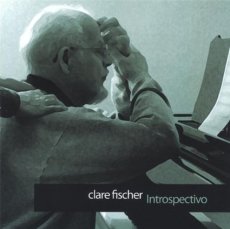
Clare Fischer was born October 22, 1928 in Durand, Michigan and started general music study in grade school with violin and piano as his first instruments. By age 7 he was picking out four-part harmony on the piano and by 12 was composing classical music and creating instrumental arrangements for dance bands.
In high school he added cello, clarinet and saxophone to his arsenal of instruments and studied music theory, harmony and orchestration privately. He started his own band at 15, writing all the arrangements, went on to college studying music composition and theory as a piano major. After graduation and a stint in the Army as the arranger for the U.S. Military Academy Band at West Point, N.Y., he returned to Michigan State and received his Masters in 1955.
He went on to arrange for the vocal quartet Hi-Lo’s that would later become a major influence on Herbie Hancock, would record under his own name in 1962 for Pacific Jazz, play with Bud Shank, Joe Pass and Cal Tjader among others, arrange for Sergio Mendes and Willy Ruff, began playing organ and composed his most famous compositions, Pensativa and Morning.
By the mid-‘70s Fischer was pioneering the electric keyboard, reconnected with Tjader started his group Salsa Picante, won a Grammy for his album 2+2 and Free Fall, forayed into R&B doing orchestral sweeteners, worked with Rufus with Chaka Khan, The Jacksons, Earl Klugh, The Debarges, Shot-gun and Atlantic Starr and pop artists such as Paul McCartney, Prince, Celine Dion and Robert Palmer, picking up numerous gold records.
From the Eighties on Clare has been commissioned to score symphonic work using Duke Ellington and Billy Strayhorn themes, working with Branford Marsalis, the Netherlands Metropole Orchestra, arranged for Spike Lee’s Girl 6, has conducted clinics and master classes at numerous universities, and continued to record in small group and orchestral settings until his death in Los Angeles, California on January 26, 2012 at age 82..
Take A Dose On The Road
More Posts: arranger,bandleader,composer,keyboard,piano,saxophone,synthesizer
Daily Dose Of Jazz…
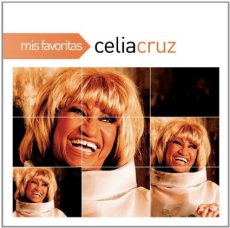
Celia Cruz was born Úrsula Hilaria Celia de la Caridad Cruz Alfonso on October 21, 1925 in Havana, Cuba, the second of fourteen children. Growing up in Cuba’s diverse 1930s musical climate, she listened to many musicians that later influenced her adult career, such as Paulina Alvarez, Fernando Collazo and Abelardo Barroso. She started singing backup on many recordings by santaria singers.
As a teenager she sang in cabarets contrary to her father’s wishes of her becoming a teacher. Ironically one of her teachers told her she could make in one day what a teacher made in a month. Cruz began singing in Havana’s radio station Radio Garcia-Serra’s popular “Hora del Té” daily broadcast, won 1st prize, entered and won more contests, recorded for radio stations and made her debut album in Venezuela in 1948.
In 1950, Cruz made her first major breakthrough when she filled in with the Sonora Matacera and was hired permanently. Soon she was famous throughout Cuba and during her 15-year tenure toured throughout Latin America. Leaving Cuba upon Castro assumption of control she emigrated and became a U.S. citizen where she would team with Tito Puente and an eight record deal with Tico Records in the ‘60s that eventually led to joining pianist Larry Harlow and a headlining concert at Carnegie Hall.
Her 1974 album with Johnny Pacheco, Celia y Johnny, was very successful, and Cruz found herself in the Fania all-Stars and toured Europe, the Congo and Latin America. She went on to record in the film Soul Power, Eastern Airlines commercials, radio spots, star in the films Salsa and Mambo Kings, received the National Medal of Arts from President Clinton, and won a Grammy Award for Best Tropical Latin Performance.
On July 16, 2003, Celia Cruz, one of the most successful and influential Salsa performers of the 20th century, earning twenty-three gold albums, internationally renowned as the “Queen of Salsa” as well as “La Guarachera de Cuba” and worked predominately in the U.S and Latin America, died of a cancerous brain tumor. She has posthumously been honored with an exhibit celebrating her life in the National Museum of American History in Washington, D.C. and an off-Broadway play titled Celia at the New World Stages that won four 2008 HOLA awards from the Hispanic Organization of Latin Actors.
Dose A Day – Blues Away
More Posts: vocal
Daily Dose Of Jazz…
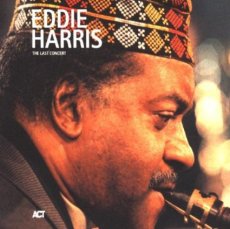
Eddie Harris was born on October 20, 1934 in Chicago, Illinois to a Cuban father and New Orleans mother. He studied music at DuSable High School, then Roosevelt University becoming proficient on piano, vibraphone and tenor saxophone and playing professionally with Gene Ammons.
After graduating and a stint in the 7th Army Band playing alongside Leo Wright, Don Ellis and Cedar Walton, he worked in New York City prior to his Chicago return. He signed with Vee Jay Records and released his debut “Exodus To Jazz” and his jazz arrangement of the theme to Exodus was so heavily played on radio, it became the first jazz record ever to be certified gold.
Throughout his career he recorded for Columbia and Atlantic Records, ventured into electric piano and Varitone saxophone mixing jazz with funk on albums like “The Electrifying Eddie Harris” and crossing into rhythm and blues markets. By 1969 he would perform with Les McCann at Montreux with an unrehearsed band that produced the seminal work Swiss Movement that became one of the best selling jazz albums ever.
In the early to mid ‘70s Harris experimented with altering instruments like his reed trumpet with a sax mouthpiece, saxobone with a trombone mouthpiece and guitorgan, a guitar/organ combination. He also forayed into singing blues, played with jazz-rock, and comic R&B consisting of mostly stand-up comedy all of which ultimately declined his popularity.
He would work with Horace Silver in the ‘80s, record regularly well into the 1990s, tour and perform in Europe and return to hard bop. His move to Los Angeles in the mid-1970s allowed him the opportunity to provide much of the music for The Bill Cosby Show.
Eddie Harris, tenor saxophonist and multi-instrumentalist and composer of “Freedom Jazz Dance” popularized by Miles Davis in the Sixties and also the tune “Listen Here”, passed away from bone cancer and kidney disease at the age of 62 on November 5, 1996.
Inspire A Young Mind
More Posts: organ,piano,saxophone,vibraphone