

Daily Dose Of Jazz…
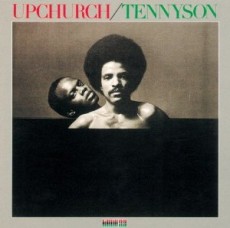
Phil Upchurch was born July 19, 1941 in Chicago, Illinois where he learned to play the guitar and bass. He stared his career in the ‘50s working with Jerry Butler before becoming house guitarist for Chess Records. He also worked with The Kool Gents, The Dells, Gene Chandler, Howlin’ Wolf, Muddy Waters and The Spaniels before going on to work with Curtis Mayfield, Otis Rush and Jimmy Reed.
Returning to Chicago he played and recorded with Woody Herman, Stan Getz, Groove Holmes, B.B. King and Dizzy Gillespie. In 1961, when billed as the Philip Upchurch Combo, his recording of “You Can’t Sit Down” sold over one million copies, and was awarded a gold record.
In the mid-Sixties he was house guitarist for labels such as Sue and Cadet and after a tour in the Army, in 1967 Phil he recorded with Richard Evans, John Lee Hooker, Grover Washington, Jr. and Cannonball Adderley.
In the 70s he worked with Ramsey Lewis and Quincy Jones, led his own quartet with Tennyson Stephens, through the Eighties played with George Benson, Mose Allison, Gary Burton, Joe Williams, Natalie Cole, Carmen McRae and Michael Jackson.
By the 1990s he was working with Jimmy Smith and Jack McDuff, recorded for Ichiban, Palladium and Ridgetop labels and remains an active session musician and bandleader.

Inspire A Young Mind
More Posts: guitar
Daily Dose Of Jazz…
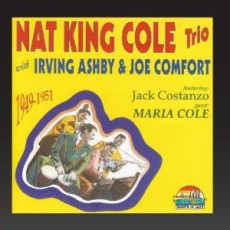
Joe Comfort was born on July 18, 1917 in Los Angeles, California into a musical family. Influenced by Jimmy Blanton, Paul Chambers and Ray Brown, he taught himself to play the bass and began performing with Lionel Hampton’s orchestra in the late Twenties. Later he would perform with Nat King Cole, a partnership that would endure until the early 1950s.
Comfort participated in numerous studio dates in the late fifties and early 1960s, with such luminaries as Sammy Davis Jr., Benny Carter, Nancy Wilson and Frank Sinatra but his fear of flying kept him grounded in and around Los Angeles.
According to Mingus’ biography, Joe taught Charles Mingus how to play in Watts where he grew up. His studio credits include working with Nelson Riddle, as well as pop and vocal projects. He was also a part of the M Squad band that highlighted jazz on television.
His beautiful wife, Mattie, was the inspiration for Billy Strayhorn’s “Satin Doll.” Joe Comfort, jazz bassist, passed away on October 29, 1988.
Give A Gift Of Jazz – Share
More Posts: bass
Daily Dose Of Jazz…
Jimmy Scott was born JamesVictor Scott on July 17, 1925 in Cleveland, Ohio into a family of ten. As a child Jimmy got his first singing experience by his mother’s side at the family piano, and later, in church choir. At thirteen, he was orphaned after a drunk driver killed his mother.
He first rose to prominence as “Little Jimmy Scott”, a moniker given by Hampton when he was in the Lionel Hampton Band when he sang lead on the late 1940s hit “Everybody’s Somebody’s Fool”, recorded in December 1949, and which became a top ten R&B hit in 1950, though label credit went to “Lionel Hampton. This omission of credit was not only a slight to Scott’s talent but a huge blow to his career. A similar professional insult occurred several years later when his vocal on “Embraceable You” with Charlie Parker, on the album One Night in Birdland, was credited to female vocalist Chubby Newsome.
By 1963 it looked as though Scott’s luck had changed: he signed to Ray Charles’ Tangerine Records label, under the supervision of Charles himself, creating what is considered by many to be one of the great jazz vocal albums of all time, Falling in Love is Wonderful. However, owing to obligations on an earlier contract that Scott had signed with Herman Lubinsky, the record was withdrawn in a matter of days, while Scott was on honeymoon. The album was not re-released for forty years. His career subsequently faded by the late 1960s and he returned to his native Cleveland to work as a hospital orderly, shipping clerk and as an elevator operator in a hotel.
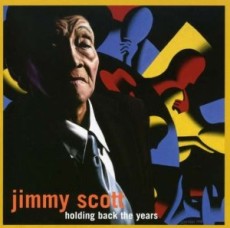
In 1991 Scott eventually resurfaced when he sang at the funeral of his long-time friend Doc Pomus, an event that single-handedly sparked his career renaissance. Afterwards Lou Reed recruited him to sing backup on the track “Power and Glory” from his 1992 album Magic and Loss, which was inspired, to an extent, by Pomus’s death. That same year Sire Records released the album All The Way with Kenny Barron, Ron Carter and David “Fathead” Newman for which he was nominated for a Grammy. He followed this up with Dream, Heaven, Holding Back The Years, and in 1999, his early Decca and Savoy recordings were re-released on CD.
Scott’s career spanned sixty-five years and during that time he performed at the inaugurations of President Dwight D. Eisenhower (1953) and President Bill Clinton (1993) performing the same song, “Why Was I Born?”. He has received an NEA Jazz Master Award, the Kennedy Center’s Jazz In Our Time Living Legend Award, Lifetime Achievement Award from the Jazz Foundation of America, Inducted into the R&B Hall of Fame and conducted a “two-day video interview with the Smithsonian Institute for the National Archives.
Though he looked so young, and was short and of slight build, it was his extraordinary phrasing and romantic feeling that made him a favorite singer of fellow artists such as Billie Holiday, Ray Charles, Frankie Valli, Dinah Washington, and Nancy Wilson. The list of luminaries he performed with is extensive but includes Quincy Jones, Sarah Vaughan, Fats Navarro, Bud Powell and numerous others. Vocalist Jimmy Scott passed away of cardiac arrest on June 12, 2014 at the age of 88. He was sleep at his home in Las Vegas.
Jazz Is Global – Share
More Posts: vocal

Daily Dose Of Jazz…
Anton Schwartz was born July 16, 1967 in New York City. He attended the Dalton School, studied jazz privately with Warne Marsh and Eddie Daniels, and went on to pursue a degree in advanced mathematics from New York and Columbia Universities, and computer science at Stanford University where he pursued research in artificial intelligence. He soon left academia to become a full-time musician.
The saxophonist and composer has released five CDs as a leader on his Antonjazz label that has garnered notoriety amongst jazz enthusiasts. His 2006 release, Radiant Blue, landed in the Top Five on the U.S. jazz radio charts and featured sidemen Peter Bernstein and Taylor Eigsti. His most recent release “Flash Mob” has trumpeter Dominick Farinacci and pianist Taylor Eigsti joining him.
Anton performs periodically at Yoshi’s, has been a guest on NPR’s JazzSet and has been a soloist with the Boston Pops Orchestra. He returned to academia and has held artist-in-residence at Harvard University and The Brubeck Institute. He is currently a faculty member of the Jazzschool at the California Jazz Conservancy in Berkeley, California and The Stanford jazz Workshop.
Put A Dose In Your Pocket
Daily Dose Of Jazz…
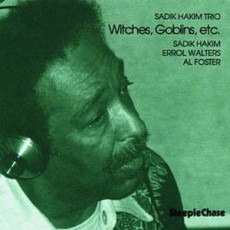
Sadik Hakim was born Argonne Thornton on July 15, 1919 in Duluth, Minnesota and was taught piano by his grandfather and started playing professionally about 1939. In 1944 he moved to New York City and was hired by Ben Webster. A participant in the emergence of bebop, he shared piano duties with Dizzy Gillespie on Charlie Parker’s famous “Ko-Ko” session.
He recorded with Dexter Gordon and Lester Young, heard on the latter’s I’m Confessin’, also credited with co-writing Thelonious Monk’s standard “Eronel” and is rumored to have written a few famous bop tunes credited to other composers. He adopted his Muslim name in 1947.
Hakim moved to Montreal after visiting in 1949 and was a big fish on the small bebop scene there, working with Louis Metcalf’s International Band. Compelled to leave Canada following a drug bust in 1950 he returned to New York and through the decade worked with James Moody and George Holmes Tate.
He returned to Montreal from 1966 to 1976, leading bands and recording with Charles Biddle. He led a few recording dates from 1976–1980 and cut an album with Sonny Stitt in 1978. Hakim played “Round Midnight” at Monk’s funeral in 1982, and the pianist and composer passed away himself the following year on June 20, 1983.
Give The Gift Of Knowledge