

Daily Dose Of Jazz…
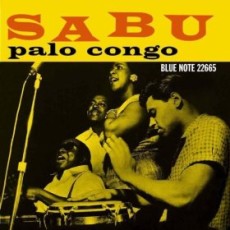
Louis “Sabu” Martinez was born on July 14, 1930 in New York City and made his professional debut in 1941 at age 11. He replaced Chano Pozo in Dizzy Gillespie’s orchestra in 1948, and began performing with Benny Goodman’s Bebop Orchestra in 1949.
Over the next 15 years, Martinez worked with jazz luminaries Charlie Parker, Duke Ellington, Count Basie, J.J. Johnson, Mary Lou Williams, Horace Silver, Thelonious Monk, Charles Mingus and Lionel Hampton; vocalist Tony Bennett, Sammy Davis Jr. and Harry Belafonte as well as Latin favorites Noro Morales, Marcelino Guerra, Tito Rodriguez and the Lecuona Cuban Boys.
A prominent conguero and percussionist in the Cubop movement in the 1950s, Martinez appeared on many important recordings and live performances during that period. Martinez also recorded several Latin jazz albums, now recognized as classics of the genre.
Martinez first recorded with Art Blakey in 1953, and contributed to his Orgy in Rhythm and Holiday for Skins projects from 1957–58. Martinez became a bandleader in 1957, recording his debut album, Palo Congo for Blue Note Records. He followed it up with releases on Vik and Alegre Records.
Martinez moved to Sweden in 1967 and recorded with the Francy Boland-Kenny big band, releasing two albums. Subsequently he led the group Burnt Sugar, which was active into the mid ’70s, but, on January 13, 1979, he died in Sweden at the age of 48.

Take A Dose On The Road
More Posts: conga,percussion
Daily Dose Of Jazz…
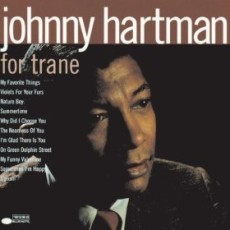
Johnny Hartman was born John Maurice Hartman on July 13, 1923 in Chicago, Illinois. Possessing a beautiful voice, good looks and an engaging stage presence, his lush bass, similar to Billy Eckstine’s, was less mannered. He always cited Frank Sinatra and Nat “King” Cole as his primary influences, audible in his naturalistic phrasing and attention to the narrative detail of a lyric.
Briefly a member of Dizzy Gillespie’s group, over the next four decades Hartman recorded infrequently over a four-decade career but left as his legacy exquisite albums such as Songs From the Heart and I Just Dropped By to Say Hello. Johnny’s well-known collaboration with the saxophonist John Coltrane in 1963 called “John Coltrane and Johnny Hartman” was chosen by Esquire Magazine as the greatest album ever made.
While the crossover fame he richly deserved eluded him during his lifetime, he recorded through much of his career as a solo artist. By the late-1960s Hartman was working primarily in Japan and Australia, performing starring in his own TV specials. By the late-’70s Hartman was working back in the States, where he earned a Grammy nomination in 1980. Then, just as his career was taking off again, he developed cancer, passing away on September 15, 1983.
Johnny Hartman’s resurgence in popularity In the mid-’90s came when Clint Eastwood included a handful of his songs in his adaptation of The Bridges of Madison County, introducing him to a whole new generation of listeners. The resulting soundtrack CD, as well as two re-issued Hartman albums, quickly sold more than any of his work had during his lifetime.
Dose A Day – Blues Away
More Posts: vocal
Hollywood On 52nd Street
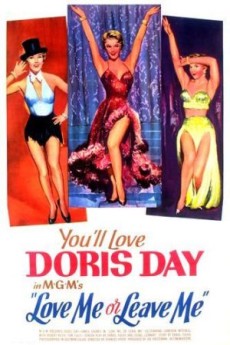
I’ll Never Stop Loving You, composed by Nicholas Brodzsky and Sammy Cahn wrote the lyrics for the 1955 film Love Me or Leave Me. The film is a biographical romantic musical drama that retells the life story of Ruth Etting, a singer who rose from dancer to movie star.
Doris Day stars as Etting, James Cagney as gangster Martin “Moe the Gimp” Snyder, her first husband and manager, and Cameron Mitchell as pianist/ arranger Myrl Alderman, her second husband.
Sponsored By

www.whatissuitetabu.com
Daily Dose Of Jazz…
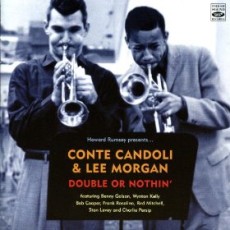
Secondo “Conte” Candoli was born on July 12, 1927 in Mishawaka, Indiana. Following in the footsteps of his older brother Pete, he learned to play the trumpet at a young age. By the summer of 1943 just before entering his junior year he sat in for the first time with the Woody Herman First Herd.
After graduation in 1945, he joined the band full-time where he sat side by side with brother Pete in the trumpet section. Conte immediately went on the road, where he stayed for the next ten years, with Woody as well as with the legendary bands of Stan Kenton, Benny Goodman and Dizzy Gillespie.
In 1954, after leaving Stan Kenton, Candoli formed his own group with sidemen Chubby Jackson, Frank Rosolino and Lou Levy. Moving to Los Angeles and for four years was a member of the Lighthouse All-Stars with Shorty Rogers, Bud Shank and Bob Cooper.
His Dizzy-inspired playing brought him many performing and recording opportunities with major jazz names and the top names in show business, such as Gerry Mulligan, Shelly Manne, Terry Gibbs, Teddy Edwards, Frank Sinatra, Bing Crosby, Sammy Davis Jr. and Sarah Vaughan.
Conte’s long relationship with The Tonight Show began in 1967 and he became a permanent fixture in the orchestra’s trumpet section when Johnny Carson moved the show to Burbank, California in 1972.
Trumpeter Conte Candoli was inducted into The International Jazz Hall of Fame in 1997. He died at the age of 74 on December 14, 2001 at Monterey Palms Convalescent home in Palm Desert, California following a long battle with prostate cancer.
Inspire A Young Mind
More Posts: trumpet
Daily Dose Of Jazz…
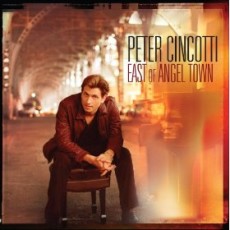
Peter Cincotti was born July 11, 1983 in New York City. The singer, songwriter and pianist started playing a toy piano at the age of three and attended the Horace Mann School. While in high school, he regularly performed at clubs throughout Manhattan and performed at the White House.
At the 2000 Montreux Jazz Festival he won an award for a rendition of Dizzy Gillespie’s “A Night In Tunisia” and in 2002 Peter reached No. 1 on the Billboard Traditional jazz Charts, the youngest solo artist to do so to date.
Cincotti appeared in a small role and contributed to the soundtrack of the 2004 Bobby Darin biopic Beyond The Sea, had a small role as the Piano Player in Spider-Man 2, and his song “December Boys” is featured in the 2007 film of the same name.
His self-titled debut album is a compilation of traditional jazz songs, while his second album, “On The Moon” featured some of the artist’s own songs, that was followed by his third “East of Angel Town”. Combining pop, jazz, rock and dance, Peter created his fourth studio album, “Metropolis” and released worldwide in the spring of 2012.
That same year, Peter and his sister Pia Cincotti wrote and produced an original full-length musical titled “How Deep Is The Ocean?” that debuted at The New York Musical Theater Festival to sold out audiences in New York. He continues to perform, compose, record and tour.
Inspire A Young Mind