

Daily Dose Of Jazz…
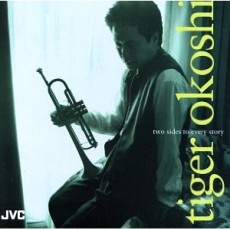
Toru “Tiger” Okoshi was born in Ashiya, Japan on March 21, 1950. An autodidact on trumpet, he studied at Kwansei Gakuin University prior to moving to the United States in 1972. He then matriculated through the Berklee School of Music.
Okoshi first gained attention with his collaboration in the Seventies with Gary Burton, then played with the Mike Gibbs Orchestra at Carnegie Hall in 1974. Following this came a tour with Buddy Rich and in the early 90s he played in George Russell’s Living Time Orchestra and recorded with Rakalam Bob Moses.
Tiger has recorded regularly as a leader and sideman with Jay Anderson, Peter Erskine, Bela Fleck, Gil Goldstein, Mike Stern, Jack DeJohnette, Kenny Barron, Mino Cinelu and Bernard Purdie among others. He is currently a professor at Berklee.
More Posts: trumpet
Daily Dose Of Jazz…
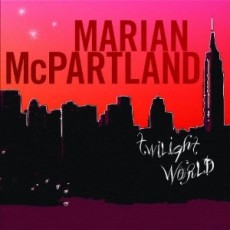
Marian McPartland was born Margaret Marian Turner on March 20, 1920 in Windsor, England. A musical prodigy from the time she could sit at a piano at age three, she pursued classical studies on piano and violin at the Guildhall School of Music and Drama in London. However, much to the dismay of her family, she developed a love for American jazz and musicians such as Duke Ellington, Fats Waller, Teddy Wilson, and Mary Lou Williams among many others.
By 1938, despite her family’s efforts to keep her at Guildhall, Marian left to join Billy Mayerl’s Claviers, a four-piano vaudeville act, performing under the stage name of Marian Page. The group toured throughout Europe during WWII entertaining Allied troops where she met and performed with Jimmy McPartland, and later married, moving to the United States.
1944 saw the McPartlands in New York with Marian forming her own trio and enjoying an 8-year engagement at the Hickory House bringing drummer Joe Morello into the fold. After many years of recording for labels such as Capitol, Savoy, Argo, Sesac, Time, and Dot, in 1969 she founded her own record label, Halcyon Records, before having a long association with the Concord Jazz label.
Marian launched a weekly radio program that featured recordings and interviews with guests in 1964 on WBAI-FM in New York City. This series paved the way for the NPR program Marian McPartland’s Piano Jazz that began on June 4, 1978 and is the longest-running cultural program on NPR as well as being one of the longest-running jazz programs ever produced on public radio.
A master at adapting to her guest’s musical styles and having a well-known affinity for beautiful and harmonically rich ballads, McPartland also has recorded many tunes of her own. Her compositions include “Ambiance”, “There’ll Be Other Times”, “With You In Mind”, “Twilight World”, and “In the Days of Our Love”.
Marian a participated in 60 years of jazz evolution, was awarded a Trustees’ Lifetime Achievement Award Grammy for her work as an educator, writer, and host of Piano Jazz, and was appointed Officer of the Order of the British Empire (OBE) in 2010. Pianist and composer Marian McPartland passed away on August 20, 2013 of natural causes at her home in Port Washington, New York. She was 95 years old.
More Posts: piano
Daily Dose Of Jazz…
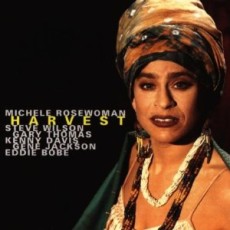
Michele Rosewoman was born on March 19, 1953 in Oakland, California. She began playing the piano at age six and as a teenager studied with organist/pianist Ed Kelly. After extensive work locally leading several jazz groups she also played with Baikida Carroll, Julius Hemphill and Julian Priester. In 1977 Michele moved to New York where she involved herself in the avant-garde scene playing and recording as a sidewoman with Oliver Lake, Billy Bang, Greg Osby, Ralph Peterson and the members of M Base among others.
Rosewoman is most notable for her work and recordings with her Quintessence ensemble as well as several trio and quartet sessions. Steeped in Cuban percussion and African music and since the early 80s for her Afro Cuban jazz big band “New Yor-Uba Ensemble” featuring Orlando “Puntilla” Rios.
Michele has played with such jazz masters as Freddie Waits, Rufus Reid, Billy Hart, Reggie Workman and Latin music greats such as Celia Cruz, Chocalate, Nicky Marrero, Paquito D’Rivera, and Daniel Ponce among others. She continues to perform and record around the world.
More Posts: piano
Daily Dose Of Jazz…
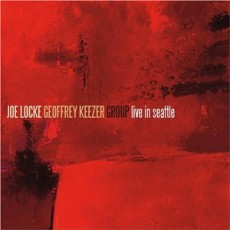
Joseph Paul Locke was born on March 18, 1959 in Palo Alto, California but grew up in Rochester, New York. A self-taught improviser, he benefited from his early studies in classical percussion and composition at the Eastman School of Music and played with Mongo Santamaria, Pepper Adams, and Dizzy Gillespie before graduating from high school.
Since moving to New York City in 1981, Locke has performed with Grover Washington, Jr., Kenny Barron, Dianne Reeves, Eddie Daniels, Jerry Gonzales’ Fort Apache Band, Rod Stewart, Beastie Boys, Eddie Henderson, Hiram Bullock, Bob Berg, Ron Carter, Jimmie Scott, Geoffrey Keezer, The Mingus Big Band and Randy Brecker among many others.
Joe has toured extensively throughout the world, both as leader and guest soloist. In 2006, 2008 and 2009 Joe Locke received the “Mallet Instrumentalist of the Year” Award, presented by the Jazz Journalist Association. His ability to play cool and funky, heady and relaxed has had him voted the #1 vibist in Down Beat Magazine’s Critic’s Poll and Brazil’s International Jazz Poll.
Locke has recorded nearly 36 projects as a bandleader, including a tribute to the music of Henry Mancini and since 2012 has released a symphonic album, an orchestra project Wishing On A Star, and Lay Down My Heart: Blues & Ballads, Vol. 1. As a producer and sideman, Joe appears on more than 65 recordings and continues to compose, perform and record.
More Posts: vibraphone
Daily Dose Of Jazz…
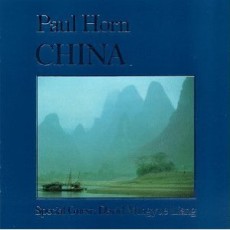
Paul Horn was born March 17, 1930 in New York City and began playing piano at the age of 4 and the saxophone at 12. He studied the flute in 1952 at the Oberlin Conservatory of Music in Ohio and then earned a master’s degree from the Manhattan School of Music.
Moving to Los Angeles in 1956 Paul played with Chico Hamilton’s Quintet till 1958 and two years later recorded his debut album “Something Blue”. By now an established West Coast session player he played on the Duke
Ellington Orchestra’s Suite Thursday and during this period worked with Nat King Cole, Tony Bennett and others. In 1970, he moved Vancouver Island, formed his own and has recorded film scores for the National Film Board of Canada.
Widely known for his innovations on both metal and traditional wood flutes, Horn has recorded some truly exotic albums. Perhaps most famous of these are his “Inside” recordings, which feature airy, echoing sounds created in places of spiritual importance. While he is undoubtedly a jazz musician, many of his works defy categorization. As well as the Inside series, he has recorded other albums of jazz with musicians from a range of cultures and backgrounds including China and Africa. He continues to perform and record.