

Daily Dose Of Jazz…
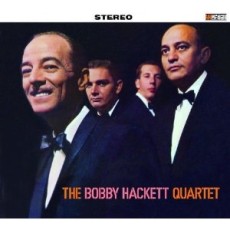
Bobby Hackett was born January 31, 1915 and raised in Providence, Rhode Island. At an early age he played the ukulele and by the time he was twelve, he was playing guitar, violin and had bought his first cornet. Leaving high school after his freshman year he took a steady job with a band that performed seven days a week at the Port Arthur and playing guitar regularly at the Rhodes and Arcadia ballrooms that often broadcasted on Providence radio and when Cab Calloway arrived short-handed and invited him to fill in.
In the fall of 1932 Bobby was recruited by The Herbie Marsh Orchestra, spent the summer of 1933 playing with Payson Re’s band, met Pee Wee Russell, by 1934, and playing college gigs with his band The Harvard Gold Coast Orchestra on weekends between Providence and Boston throughout 1935 and 36.
He worked with a new band at Nick’s in Greenwich Village, with Benny Goodman, Eddie Condon, Jack Teagarden and Teddy Wilson, played the new York World’s Fair in 1939, did the club circuit in New York, toured, recorded with his own band on MCA, took a seat with the Horace Heidt Musical Knights and recorded on the soundtrack of Fred Astaire vehicle “Second Chorus”.
After a dental surgery Bobby’s lip was in bad shape making it difficult for him to play, however, Glenn Miller offered him a job as a guitarist with the Miller Band and playing short trumpet solos. During the 1950s, he made a series of albums of ballads with a full string orchestra, produced by Jackie Gleason, in the Sixties toured with singer Tony Bennett, and by the early 1970s, Hackett performed separately with Dizzy Gillespie and Teresa Brewer. In his later years, he continued to perform in a Dixieland style even as trends in jazz changed.
Trumpeter Bobby Hackett passed away on June 7, 1976 from a heart attack. In 2012, he was selected to be inducted into the Rhode Island Music Hall of Fame.
More Posts: bandleader,cornet,guitar,trumpet
Daily Dose Of Jazz…
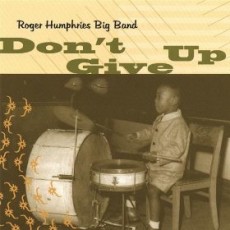
Roger Humphries was born January 30, 1944 in Pittsburgh, Pennsylvania and began playing drums at age four, and went professional at age 14. He led an ensemble at Carnegie Hall at age 16. Early in the 1960s, he began touring with jazz musicians; one of his more prominent gigs was in a trio with Stanley Turrentine and Shirley Scott in 1962.
In 1964, he played with Horace Silver on Song For My Father, following this Humphries drummed for Ray Charles. He led his own band “R. H. Factor” in the 1970s, and led ensembles under other names into the Nineties, recording under his own name in 1993, 2003 and 2011. He held teaching positions at the University of Pittsburgh and the Pittsburgh High School for the Creative and Performing Arts.
Humphries’s list of credits in jazz, R&B, and pop is extensive playing with Lee Morgan, Grant Green, Billy Taylor, Benny Green, Coleman Hawkins, Clark Terry, Dizzy Gillespie, Jack McDuff, Jon Faddis, Joe Williams, Herbie Mann, Gene Harris, Milt Jackson, Slide Hampton and the list goes on. Drummer and big band leader Roger Humphries continues to perform.
More Posts: drums
Daily Dose Of Jazz…
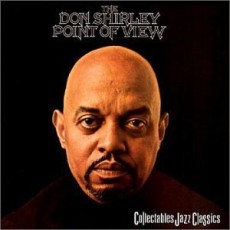
Don Walbridge Shirley was born January 29, 1927 in Kingston, Jamaica and under the tutelage of his mother began playing piano at 2½ and made his first public performance at the age of 3. By nine he was invited to study theory with Mittolovski at the Leningrad Conservatory of Music, later studying with organist Conrad Bernier, followed by study of advanced composition with both Bernier and Dr. Thaddeus Jones at Catholic University in Washington D. C.
Don’s music is hard to categorize treating every arrangement as a new composition, playing standards in a non-standard way, and playing everything from show tunes, to ballads, to his personal arrangements of Negro spirituals, to jazz, and always with the overtone of a classically-trained musician who has utmost respect for the music.
He has performed at the Exposition International du Bi-Centenaire De Port-au-Prince, with Arthur Fiedler and the Boston Pops, with the Detroit, Chicago, Cleveland and National Symphony Orchestras, in concert with his own trio for about 95 dates annually. During the 1950s and 60s he cut some 16 albums for Cadence Records, played around New York City, performed at Basin Street East, appeared on the Arthur Godfrey Show and his career was launch nationwide.
As an educator, Don holds a Doctorate of Music, Doctorate of Psychology (and Doctorate in Liturgical Arts, speaks eight languages fluently, and is considered an expert painter as well. The jazz pianist and composer continued to perform and record until his death of heart disease on April 6, 2013 in Manhattan, New York at the age of 86.
Daily Dose Of Jazz…
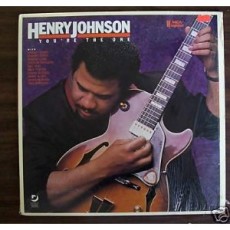
Henry Johnson was born January 28, 1954 in Chicago, Illinois and began playing at age twelve. While spending some formative time in Memphis, he started playing gospel music at age thirteen. By fourteen, Johnson was playing in R&B groups and although Johnson’s parents brought him up hearing the music of Duke Ellington, Count Basie, Joe Williams, and other artists of that era, it was not until 1967 that Johnson was formally introduced to jazz by hearing Wes Montgomery.
In 1969, his family moved back to Chicago where Henry’s reputation on the south side as a good local jazz guitarist flourished. In 1976, he went on the road with jazz organist Jack McDuff, and then he got the call to work with Donny Hathaway in 1977.
In 1979, Johnson began playing with Ramsey Lewis and some six years later Joe Williams added Johnson to his regular group. Henry’s musical roots run deep into gospel, blues, and jazz with his strongest and earliest influences were along with Wes Montgomery, guitarists Kenny Burrell and George Benson but also the music of Herbie Hancock, Oscar Peterson, Freddie Hubbard, Miles Davis, big bands, and jazz orchestras were integral forces to shape his sound and style.
His debut album “You’re The One” went #1 for two months on two charts, received a five star rating from Downbeat magazine, and was nominated for a Grammy. His follow-up albums also received wide recognition and in addition to his other projects, Henry has recorded and/or performed with Vanessa Ruben, Richie Cole, Nancy Wilson, Marlena Shaw, Angela Bofill, Dizzy Gillespie, the Boston Pops, Sonny Stitt, Freddie Hubbard, Grover Washington Jr., Stanley Turrentine, Dr. Billy Taylor, Jimmy Smith, James Moody, David “Fathead” Newman, Terry Gibbs, Bobby Watson, Nicholas Payton, Javon Jackson, Donald Harrison, and many other great jazz artists.
Guitarist Henry Johnson continues to re-invent himself as he records performs and tours worldwide.
More Posts: guitar
Daily Dose Of Jazz…
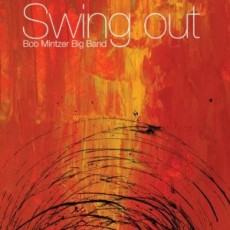
Bob Mintzer was born January 27, 1953 in New Rochelle, New York. After graduating from the Interlochen Arts Academy in 1970, he made his mark as a soloist, mainly on the tenor saxophone and bass clarinet but is also proficient on flute and the EWI (electronic wind instrument).
He is a member of the jazz-rock band the Yellowjackets but among jazz fans is even better known for his inspiring big band work since the early 1980s in the Word of Mouth Big Band and then as the leader of the Bob Mintzer Big Band. Before starting his own big band, Bob was a featured soloist and arranger with the Buddy Rich big band.
In 2008, Bob succeeded pianist Shelly Berg to hold the Bowen H. “Buzz” McCoy and Barbara M. McCoy Endowed Chair in Jazz Studies at the University of Southern California Thornton School of Music.
Mintzer has been nominated for thirteen Grammy Awards both for his solo work and big band recordings an his Homage to Count Basie won him a Grammy for the Best Large Ensemble in 2001. He has performed and/or recorded with a wide variety of artists ranging from Tito Puente, Buddy Rich, Thad Jones/Mel Lewis Big Band, James Taylor, The New York Philharmonic, National Symphony, American Saxophone Quartet, Art Blakey, Donald Fagan, Bobby McFerrin, Nancy Wilson, Kurt Elling, to Jaco Pastorius, Mike Manieri, and Randy Brecker.
Saxophonist, clarinetist, composer, arranger and bandleader Bob Mintzer continues to perform, tour and record as he explores funk and Latin domains with his big band.