

Daily Dose Of Jazz…
Waymon Reed was born on January 10, 1940 in Fayetteville, North Carolina and attended the Eastman School of Music. He went on to play with trumpeter/saxophonist Ira Sullivan. Joining James Brown’s band from 1965 to 1969, he played on It’s a Man’s Man’s Man’s World.
Reed worked with the big bands of Frank Foster and Thad Jones-Mel Lewis. He became a member of the Count Basie Orchestra in 1969, staying until 1973. He returned to play with Basie again in 1977–78.
He married Sarah Vaughan and worked with her from 1978–80, but shortly afterwards they divorced. He played on B.B. King’s album There Must Be A Better World Somewhere in 1981. In 1977, Reed recorded his one album as leader, 46th and 8th, featuring tenor saxophonist Jimmy Forrest, pianist Tommy Flanagan, bassist Keter Betts and drummer Bobby Durham.
Trumpeter Waymon Reed, who was principally a bebop soloist, transitioned from cancer on November 25, 1983 in Nashville, Tennessee.

More Posts: bandleader,history,instrumental,jazz,music,trumpet
Daily Dose Of Jazz…
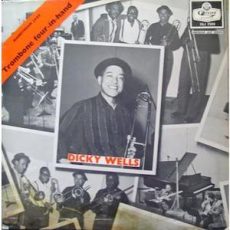
George Matthews was born on September 23, 1912 in Dominica, British West Indies and received classical training in New York City and played with local dance and jazz bands. In the early 1930s he joined Tiny Bradshaw’s group, being adept on tuba, trumpet, and trombone.
Later in the decade he worked with Willie Bryant, Louis Armstrong, Chick Webb, and in the Forties he recorded with Ella Fitzgerald, Lucky Millinder, and Sister Rosetta Tharpe. After World War II, Matthews worked extensively with Count Basie, then joined Erskine Hawkins’s group in the early 1950s, while recording with Dizzy Gillespie, and Dicky Wells. In the 1960s he played with Lucille Dixon, Clark Terry, and recorded with Cannonball Adderley and Ray Charles in the Sixties.
Trombonist George Matthews, who never led a recording session, transitioned on June 28, 1982.
More Posts: bandleader,history,instrumental,jazz,music,trombone
Daily Dose Of Jazz…
Meredith Irwin Flory, was born on August 27, 1926 in Logansport, Indiana and was encouraged by his organist mother to learn clarinet as a child. During World War II he was an Army Air Force pilot and after his discharge went on to matriculate through Indiana University, graduating with a degree in philosophy.
Known professionally as Med Flory, in the early 1950s he played in the bands of Claude Thornhill and Woody Herman, before forming his own ensemble in New York City. 1955 saw him relocating to California and starting a new group, which played at the 1958 Monterey Jazz Festival. In the late 1950s, he played with Terry Gibbs, Art Pepper, and Herman again, playing both tenor and baritone saxophone. He was cast in twenty-nine episodes from 1956 to 1957 of the ABC variety show, The Ray Anthony Show.
In the 1960s Med turned his attention away from music and concentrated on acting and screenwriting in television and film. His long list of credits include mostly westerns and crime dramas, which were popular at the time.
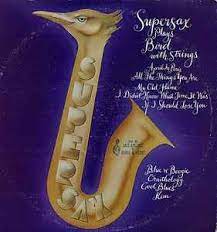
By the mid Sixties Flory returned to music and worked with Art Pepper and Joe Maini on transcriptions and arrangements of Charlie Parker recordings. In 1972, he co-founded Supersax, an ensemble devoted to Parker’s work. Supersax’s debut album, Supersax Plays Bird, won a Grammy Award.
Tenor and baritone saxophonist, bandleader, and actor Med Flory transitioned on March 12, 2014 in North Hollywood, Los Angeles, California.
Bestow upon an inquiring mind a dose of a Logansport saxophonist to motivate the perusal of the genius of jazz musicians worldwide whose gifts contribute to the canon…

More Posts: history,instrumental,jazz,music,saxophone

Daily Dose Of Jazz…
Bryan Spring was born on August 24, 1945 in London, England. A self-taught drummer beginning at the age of six, he later studied with Philly Joe Jones. He led and co-led his own trios and quartets from the mid-1970s to the early 1990s with Don Weller and also Art Themen.
The new millennium saw Bryan collaborating with Mark Edwards and Andy Cleyndert. He has been a member of Bill Le Sage’s Bebop Preservation Society, Alan Skidmore’s Quartet, Klaus Doldinger’s Passport, and various line-ups led by Stan Tracey.
He has worked with other leading British jazz musicians, including Tubby Hayes, Dick Morrissey, Bobby Wellins, as well as accompanying American musicians, notably George Coleman and Charlie Rouse, when they were visiting the UK.
Drummer Bryan Spring, who is sometimes credited as Brian and has led/co-led two recording sessions and played on eighteen as a sideman, continues to be active on the jazz scene.
More Posts: bandleader,drums,history,instrumental,jazz,music
Daily Dose Of Jazz…
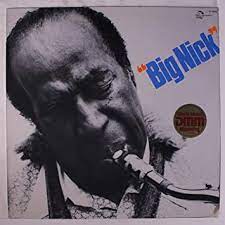
George Walker “Big Nick” Nicholas was born August 2, 1922 in Lansing, Michigan. Picking up the tenor saxophone during his teen years, he was strongly influenced by his hero, Coleman Hawkins. He started playing professionally during the 1940s with Hank and Thad Jones, Earl Hines, and Tiny Bradshaw prior to military service.
Once discharged from the Army late in the decade he went on to work with bands led by Sabby Lewis, J. C. Heard, and Lucky Millinder. He would go on to play with Duke Ellington, Cab Calloway, Charlie Parker, and Charlie Mingus.
Nicholas contributed the 16-bar solo to Dizzy Gillespie’s classic 1947 African-Cuban jazz composition Manteca. At that time, he also started playing with Hot Lips Page, a working relationship that continued until 1954. He then joined Buck Clayton in 1955.
Big Nick influenced a young John Coltrane to compose his tribute Big Nick, included on the 1962 album Duke Ellington & John Coltrane.
Saxophonist and singer Big Nick Nicholas transitioned from heart failure in Queens, New York on October 29, 1997 at the age of 75.
More Posts: bandleader,history,instrumental,jazz,music,saxophone