

Daily Dose Of Jazz…
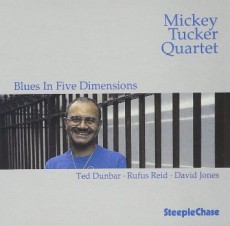
Mickey Tucker was born on April 28, 1941 in Durham, North Carolina and began on piano at age six, playing in church when he was young. By the 1960s he was doing studio work with R&B musicians such as Little Anthony & The Imperials, Damita Jo, and accompanying comedian Timmie Rogers, switching to jazz music late in the decade.
In the late ’60s and ’70s Mickey played with Bill Harman, Junior Cook, James Moody, Frank Foster, Roland Kirk, Eric Kloss, Thad Jones, Mel Lewis, Roy Brooks, Eddie Jefferson, Billy Harper, Philly Joe Jones, George Benson,, Willis Jackson and Final Edition.
The 1980s saw Tucker performing with the Art Farmer and Benny Golson group The Jazztet, and with Richie Cole, Phil Woods and Louis Hayes. He would work with Junior Cook, and the Jazztet again in the Nineties as well as with Bob Ackerman.
Pianist Mickey Tucker has released eleven albums as a soloist or leader, and another 10 as a sideman. He moved to Sydney, Australia and is currently pursuing his musical endeavors in jazz as a pianist and organist.

Put A Dose In Your Pocket
More Posts: piano
Daily Dose Of Jazz…
Karl Curtis George was born on April 26, 1913 in St. Louis, Missouri. Early in his career he played with McKinney’s Cotton Pickers in 1933, and Cecil Lee. in the 1930s he spent time in the Jeter Pillars Orchestra and then in the orchestras of Teddy Wilson from 1939–40, followed by a year-long stint with Lionel Hampton in 1941.
George served in the Army from 1942 to 1943, then moved to California and played with Stan Kenton, Benny Carter, spent a spring with Count Basie and in Los Angeles with Happy Johnson, his final collaboration of note.
He also played in sessions led by Charles Mingus, Slim Gaillard, Oscar Pettiford, Dinah Washington and Lucky Thompson. During years1945-1946 Karl led his own group on record the track “Peek-A-Boo” by the Karl George Octet, originally released on Melodisc, has been reissued on a Topnotch compilation.
Jazz trumpeter Karl George retired back in his hometown once his health got the better of him, while recordings he had played on continued to be stocked on record store shelves. He lived out the rest of his life in almost total obscurity until passing away in May 1978.
Dose A Day – Blues Away
More Posts: trumpet
Daily Dose Of Jazz…
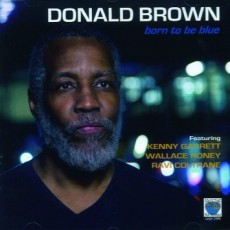
Donald Ray Brown was born on March 28, 1954 in Hernando, Mississippi but was raised in Memphis, Tennessee where he learned to play trumpet and drums in his youth. From 1972 to 1975 he studied at Memphis State University by which time he had made piano his primary instrument.
Donald was inducted into Art Blakey’s Jazz Messengers from 1981 to 1982, then took teaching positions at Berklee College of Music from 1983 to 1985. He went on to accept a position at the University of Tennessee in 1988.
Brown has recorded extensively as a leader amassing eighteen albums for Evidence, Muse, Sunnyside Records and since 1996 for the Space Time record label. As a sideman he was a part of the recording sessions for three Art Blakey albums – Killer Joe, Keystone 3 and Feeling Good. Jazz pianist Donald Brown continues to perform, record and tour.
Give The Gift Of Knowledge
More Posts: piano
Daily Dose Of Jazz…
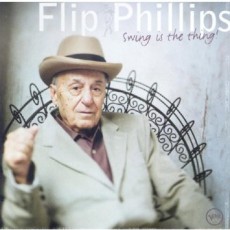
Flip Phillips was born Joseph Edward Filipelli on March 26, 1915 in Brooklyn, New York. In the mid-1940s, he was one of the anchors of the Woody Herman band, and also played with the Woodchoppers, a small spin-off group that Herman led. After this period he went out on his own and joined Jazz at the Philharmonic. His deep, strong and articulate playing with a very full sound contrasted him to his successors such as Stan Getz in the subsequent Herman bands.
Phillips recorded extensively for Clef Records, now Verve, in the 1940s and 1950s, including a 1949 album of small-group tracks under his leadership, with Buddy Morrow, Tommy Turk, Kai Winding, Sonny Criss, Ray Brown and Shelly Manne. He accompanied Billie Holiday on her 1952 Billie Holiday Sings album. He became a frequent player at the Odessa Jazz Party in Odessa, Texas from 1971 to 1991.
Tenor saxophonist and clarinet player Flip Phillips, best known for his work with Jazz At The Philharmonic from 1946 to 1957, passed away in Fort Lauderdale, Florida on August 17, 2001 at the age of 86.
Dose A Day – Blues Away
Daily Dose Of Jazz…
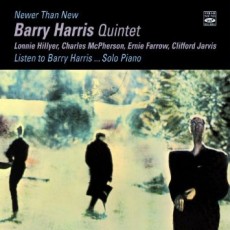
Lonnie Hillyer was born on March 25, 1940 in Monroe, Georgia but moved with his family to Detroit at age three, and began studying music at 14 under Barry Harris. By 1960, he moved to New York City where he played with Charles Mingus, Yusef Lateef and Clifford Jarvis. His association with Mingus lasted more than a decade, performing on records such as “My Favorite Quintet” and “Let My Children Hear Music”.
In 1966, Lonnie and fellow Detroit friend Charles McPherson formed a quintet performed together during the years following. Around 1983 he and former Monk tenor saxophonist Charles Rouse formed a jazz quintet “Bebop Quintessence”, with drummer Leroy Williams, pianist Hugh Lawson and bassist Ben Brown.
Over the years of his career Hillyer performed with Thelonious Monk, Art Blakey, Philly Joe Jones, Willie Bobo, Barry Harris, Walter Davis Jr., Abbey Lincoln, Eric Dolphy and Pharoah Sanders among others.
Jazz trumpeter Lonnie Hillyer, who was strongly influenced by Dizzy Gillespie, Charlie Parker and Thelonious Monk and other bebop legends of the era, passed away of cancer on July 1, 1985 in New York City.
Inspire A Young Mind
More Posts: trumpet