

Daily Dose Of Jazz…
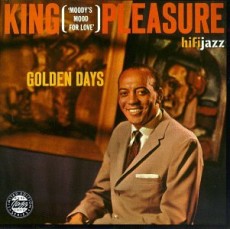
King Pleasure was born Clarence Beeks on March 24, 1922 in Oakdale, Tennessee. He moved to New York City in the mid-1940s and while working as a bartender, he became a fan of bebop music. He first achieved popularity by singing the Eddie Jefferson penned vocalese classic Mood’s Mood For Love, based on a 1949 James Moody saxophone solo to “I’m In The Mood For Love”. On a night in late 1951 at Amateur Night at the Apollo Theater, he won the competition and where Clarence Beeks became King Pleasure that night in Harlem.
Pleasure’s 1952 recording, featured vocalist Blossom Dearie, was his first after signing a contract with Prestige Records and is considered a jazz classic. He and Betty Carter also recorded a famous vocalese version of “Red Top”, a jazz classic penned by Kansas City’s Ben Kynard and recorded by Gene Ammons and others. Other notable recordings include “Parker’s Mood”, the year before Charlie Parker died in 1955, and Ammons’s “Hittin’ The Jug”, retitled as “Swan Blues” in 1962.
He would record with the Modern jazz Quartet, sans Milt Jackson, J.J. Johnson, Kai Winding, Lucky Thompson, with backup vocals by Eddie Jefferson and Jon Hendricks along with The Three Riffs. In Los Angeles in 1960 he was recording with Teddy Edwards and Harold Land. But by this time his popularity was waning and he faded into obscurity. However, his early work influenced Jon Hendricks, Annie Ross, Bob Dorough, Mark Murphy, Al Jarreau, The Manhattan Transfer and others.
Jazz vocalist King Pleasure, an early master of vocalese, where a singer sings words to a famous instrumental solo passed away on March 21, 1982, three days before his 60th birthday.

Give A Gift Of Jazz – Share
More Posts: vocal
Daily Dose Of Jazz…
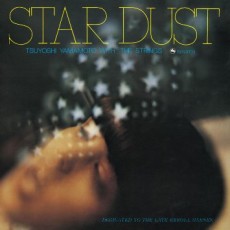
Tsuyoshi Yamamoto was born on March 23, 1948 in Niigata, Japan. He started to play the piano when he was in primary school. In junior high school, he played the trumpet. His interest in jazz began when he first heard Art Blakey’s tunes in the French movie, “Les Liaisons Dangereuses”. It inspired him to return to the piano, to perfect his technique.
Yamamoto was largely self-taught as a pianist, although he did have piano lessons as a child. He attended Nihon University and as a student there, he played professionally, first as an accompanist to pop singer Micky Curtis and the Samurais touring Europe in 1967.
In 1973 Tsuyoshi formed his own band while polishing his piano skills and gleaning influence from Bobby Timmons, Wynton Kelly, Red Garland and Randy Weston. The next year, he became house pianist at Misty, a Tokyo jazz club and recorded his debut as leader.
He played major international festivals in the late 1970s. While living in New York for a year he performed with Dizzy Gillespie, Carmen McRae, Sam Jones, Billy Higgins, Sonny Stitt and Elvin Jones (his favorite drummer) among others. He has recorded fourteen albums as a leader and sideman and continues to perform and record.
Tsuyoshi Yamamoto has a very melodic technique and phrasing with a use of block chords in ballads. The composer and pianist continues to perform and record.
Jazz Is Global – Share
More Posts: piano
Daily Dose Of Jazz…
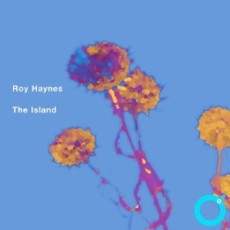
Roy Haynes was born in Boston, Massachusetts on March 13, 1925, and was keenly interested in jazz ever since he can remember. Primarily self-taught, he began to work locally in 1942 with musicians like guitarist Tom Brown, bandleader Sabby Lewis, and Kansas City blues-shout alto saxophonist Pete Brown. In the summer of 1945 he got a call to join bandleader Luis Russell to play for the dancers at New York’s Savoy Ballroom. When not traveling with Russell, the young drummer spent much time on Manhattan’s 52nd Street and uptown in Minton’s, the incubator of bebop.
From 1947 to 1949 Haynes was Lester Young’s drummer, worked with Bud Powell and Miles Davis in ’49, became Charlie Parker’s drummer of choice from 1949 to 1953, toured the world with Sarah Vaughan from 1954 to 1959, did numerous extended gigs with Thelonious Monk in 1959-60. Through the Sixties he performed and recorded with Eric Dolphy, Stan Getz, John Coltrane, has collaborated with Chick Corea since 1968, and with Pat Metheny during the ’90s. He’s been an active bandleader from the late ’50s to the present, featuring on his recordings Phineas Newborn, Booker Ervin, Roland Kirk, George Adams, Hannibal Marvin Peterson, Ralph Moore and Donald Harrison to name a few.
A perpetual top three drummer in the Downbeat Readers Poll Awards, he won the Best Drummer honors in 1996 (and many years since), and in that year received the prestigious French Chevalier des l’Ordres Artes et des Lettres and in 2002 his album “Birds Od A Feather” was nominated for a Grammy. Roy Haynes, percussionist, composer and bandleader nicknamed Snap Crackle, continues to compose, performer, record and tour.
Dose A Day – Blues Away
More Posts: drums,percussion
Daily Dose Of Jazz…
Klaus Weiss was born February 17, 1942 in Gevelsberg, Germany and his influences were Big Sid Catlett and Buddy Rich. He began playing professionally at age 16. His first gigs, with a group called the Jazzopators, provided accompaniment for trumpeter Nelson Williams and vocalist Inez Cavanaugh.
Klaus worked with the Klaus Doldinger Quartet, played the Paris Blue Note with Bud Powell, Kenny Drew and Johnny Griffin. He led a trio beginning in 1965, with pianist Rob Franken and bassist Rob Langereis, recorded his first LP Greensleeves as a leader and won the International Jazz Competition in Vienna in 1966. He would go on to win several Twen Jazz Polls as well. During the late ’60s, he also played with the Erwin Lehn Big Band, the Bayerischer Rundfunk Jazz Ensemble and Friedrich Guida.
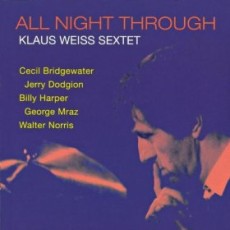
Weiss recorded half a dozen LPs during the early ’70s, several with a quintet or sextet including work by trumpeter Cecil Bridgewater, bassist George Mraz and pianist Walter Norris. He also led an international all-star big band with Slide Hampton, Herb Geller, Philip Catherine and Don Menza among others for the live 1971 album I Just Want To Celebrate
During the late ’70s and early ’80s, Klaus worked mostly with his quintet, but also toured with Eddie Lockjaw Davis, Clifford Jordan and Horace Parlan while making frequent quintet albums as a leader. He recorded two albums during the ’90s, including the trio outing L.A. Calling and the Christmas album A Message from Santa Klaus with the NDR Big Band.
Later in his career, as his extensive discography continued to grow, he began composing music for movies and television. Drummer Klaus Weiss, who played with American expats and led his own bands in trio, quartet, sextet and big band settings from the ‘60s through the ‘90s, passed away unexpectedly, reportedly of heart failure, on December 10, 2008 in Pfaffenhofen an der Ilm, Germany.
Give A Gift Of Jazz – Share
Daily Dose Of Jazz…
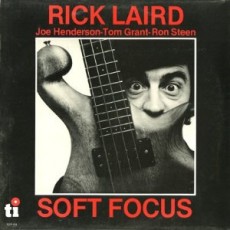
Rick Laird was born Richard Quentin Laird on February 5, 1941 in Dublin, Ireland. He played music from a young age and enrolled for guitar and piano lessons. He started playing jazz after moving to New Zealand at the age of 16 with his father. He played guitar in jam bands in New Zealand before buying an upright bass. After extensive touring in New Zealand he moved to Sydney, Australia, where he played with many top jazz musicians.
He moved to England in 1962 and became house bassist at Ronnie Scott’s Jazz Club in London, where he had the opportunity to play with Wes Montgomery and Sonny Stitt among others. In 1963 Laird attended London’s Guildhall School of Music and Drama. In 1965 He performed with Victor Feldman and recorded on the Sonny Rollins album ”Alfie” and then went on to play in The Brian Auger Trinity and The Brian Auger Group.
Heading to the States, Rick enrolled in Berklee College of Music in Boston where he studied arranging, composition and string bass. He then teamed up with ex-pat John McLaughlin and The Mahavishnu Orchestra as a founding member to play electric bass until 1973, when the band broke up. Moving to New York he joined Stan Getz’s tour in 1977 followed by Chick Corea the next year.
He put out one album as a leader, Soft Focus. Today, he is a successful photographer as well as a private bass tutor and an author of a number of intermediate to advanced level bass books. Richard Laird, as he is known in the art world, in March 2009 came across a collection of photographs in a file cabinet that he had taken in years past. The legendary jazz artists like Miles Davis, Chick Corea, Wayne Shorter, the Mahavishnu Orchestra, Elvin Jones, and Keith Jarrett are now a part of an online archive.
Take A Dose On The Road
More Posts: bass