

Daily Dose Of Jazz…
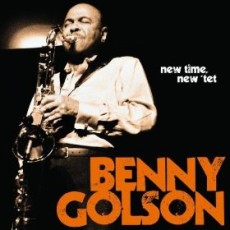
Benny Golson was born January 25, 1929 in Philadelphia, Pennsylvania. While in high school he played with several other promising young musicians, including John Coltrane, Red Garland, Jimmy Heath, Percy Heath, Philly Joe Jones and red Rodney. After matriculating Howard University, Benny joined Bull Moose Jackson’s R&B band where he met and learned about writing from pianist Tadd Dameron.
From 1953 to 1959 Golson played with Dameron’s band and then with the bands of Lionel Hampton, Johnny Hodges, Earl Bostic, Dizzy Gillespie and Art Blakey & The Jazz Messengers. While working with the Lionel Hampton band at the Apollo in 1956, Benny learned that his friend trumpeter Clifford Brown had died in a car accident. In honor, Golson composed “I Remember Clifford”.
From 1959 to 1962 Golson co-led the Jazztet with Art Farmer. Golson then left jazz to concentrate on studio and orchestral work for 12 years and during this period he composed music for such television shows as Ironside, Room 222, M*A*S*H and Mission: Impossible.
By the mid-1970s Golson returned to jazz playing and recording, he re-organized the Jazztet in 1983, was honored as a NEA Jazz Maser in ’95, made a cameo appearance in the Tom Hanks vehicle “The Terminal” that was related to his participation in the classic photo “A Great Day In Harlem”, received the Mellon Living Legend Legacy Award, the Outstanding Lifetime Achievement Award from the University of Pittsburgh International Academy of Jazz, in which he was also inducted into their Hall of Fame.
Since 1996 Howard University created and has awarded the prestigious Benny Golson Jazz Master Award to several distinguished jazz artists. As of 2007, Benny Golson, tenor saxophonist, composer and arranger in the bebop and hard bop genres continues to tour regularly. He is known for his jazz standards “Stablemates”, “Whisper Not”, “Killer Joe”, “Along Came Betty and “Are You Real”, that have been performed and recorded by countless jazz musicians.
More Posts: saxophone

Daily Dose Of Jazz…
Valery Ponomarev was born January 20, 1943 in Russia and the young trumpeter became interested in jazz after hearing it on Voice of America. Feeling a particular affinity for Clifford Brown, he dedicated countless hours to transcribing, studying and memorizing legendary jazz trumpet solos. Fleeing the Soviet Union in 1973 he emigrated to the U.S. where he joined Art Blakey’s Jazz Messengers, an association that lasted four years.
Valery’s tenure with Blakey afforded him the opportunity to perform the major concert venues, clubs and festivals around the world, recording eleven albums and television appearances in Europe, Japan, Brazil and the United States. After his departure from The Jazz Messengers, Valery formed his own band “Universal Language”.
Ponomarev has performed or collaborated with Max Roach, Harold Land, George Morrow, Sam Dockery, Evelyn Blakey, Curtis Fuller, Bobby Watson and others. He is currently a member of the memorial Art Blakey & The Jazz Messengers band led by Benny Golson. He also tours with his big band playing some originals and some music from the Jazz Messengers repertoire.
Considered by many as an outstanding educator and mentor, Valery teaches privately and as part of the Wells Fargo Jazz for Teens program in Newark, New Jersey. He has had a documentary made about his life, “Messenger From Russia” and released his autobiographical book “On The Flip Side of Sound” in 2009.
More Posts: trumpet
Daily Dose Of Jazz…
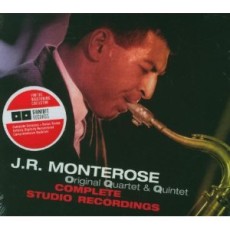
J. R. Monterose was born Frank Anthony Peter Vincent Monterose, Jr. in Detroit Michigan on January 19, 1927. A few months after his birth, the family moved to Utica, New York and this is where he began formal clarinet studies at thirteen. After hearing the Glenn Miller soloist Tex Beneke J.R. taught himself to play tenor saxophone with his early influences Coleman Hawkins and Chu Berry. He also found harmonic inspiration in pianist Bud Powell and learned chord changes from guitarist Sam Mancuso.
Monterose first stepped into the professional arena playing in upstate New York territory dance bands in the late forties. In 1950 he joined the Henry “Hot Lips” Busse touring orchestra, then the Buddy Rich band in ’51 but left for lack of soloing opportunities.
By the mid to late 50s he was in New York City as a featured soloist with Claude Thornhil’s orchestra and with vibraphonist Teddy Charles’ modernist groups, Charles Mingus’s Jazz Workshop and Kenny Dorham’s short-lived Jazz Prophets. He recorded two sessions with Alfred Lion for Blue Note as a leader, “J.R. Monterose” in 1956 and “The Message” in 1959.
Throughout his life he continued to pursue his ever-evolving craft in small time U.S. venues and during extended stays in the late 1960’s through the mid 1970’s in Belgium, The Netherlands and Denmark with occasional low-profile recordings. His preference for small group work in out of the way places would shape much of his subsequent career, contributing to the musical growth upon which he was always so intently focused but ultimately relegating him to an undeserved obscurity.
He steadfastly refused to be pigeonholed in any particular style and was quoted as saying “ I’ve tried all my life to avoid copying. If I can’t be myself, there’s no point in being in jazz”. Tenor saxophonist J.R. Monterose passed away on September 16, 1993.
More Posts: saxophone
Daily Dose Of Jazz…
Wilbert Granville Thodore Hogan Jr., better known as G. T., was born January 16, 1929 in Galveston, Texas. He started out playing saxophone into high school but then switched to the drums. He started playing professionally with Earl Bostic from 1953-55 prior to his move to New York City.
During this period G. T. worked with Randy Weston, recorded with Elmo Hope and was closely associated with Bud Powell during his Parisian sojourn. Over the course of his career he worked with Kenny Drew, Walter Bishop Jr., Ray Charles, Kenny Dorham, Cecil Payne, Wilbur Ware, Julian Priester and Hank Crawford.
A brilliant drummer whose backbeat personified the kind of rhythmic approach that easily made Hogan recognizable as a Texas drummer and whose magnificence shone when teamed with an individualistic pianist. By the 70s he became less active in music but continued into the 90s when he began to suffer from emphysema. Recording on more than 50 albums and credited in a variety of ways as Granville Hogan, Wilbert Hogan, G. T. Hogan, W. T. Hogan and Wilbert G. T. Hogan, the drummer passed away on August 7, 2004 in San Antonio, Texas.
More Posts: drums
Daily Dose Of Jazz…
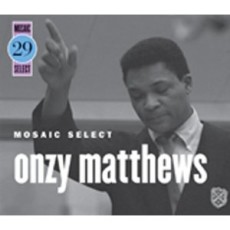
Onzy Matthews was born in Fort Worth, Texas on January 15, 1936, grew up in Dallas until he was 14, when his mother pulled up stakes and moved to Los Angeles for a better job. He graduated from high school at 16 and had already decided he wanted to sing. Nearly every day he walked to a nearby park, where he could play piano for hours in the recreation building.
Augmenting his early gospel roots with healthy doses of smooth California jazz and big band music, Matthews taught himself to accompany his singing on piano until he realized he needed arrangements.
He attended Westlake College of Music, studied ear training and harmony, started singing with a dance band and learning about arranging. After several years of performing, attending concerts and asking questions he had 21 original songs arranged for big band.
His musical career sprang from eight bars of music. As an aspiring singer, pianist and composer in 1963, a young Mr. Matthews gave his first professional arrangement to Les Brown for a tryout with the Band of Renown. Out of the arrangement came 8 bars that sounded good to Onzy and Les Brown advised him to take those 8 bars and start from there. Doing so he went on to become one of the most sought-after arrangers in jazz and pop music. It was later through Dexter Gordon that these first twenty-one were played by the best musicians in Hollywood that turned into a regular Wednesday night jam session. The word spread and he started getting courted by record labels to work with their artists.
Onzy’s first major arranging job was on Lou Rawls’ album Black & Blue, followed by his debut as a leader in 1964 on “Blues With A Touch Of Elegance” for Capitol. About a year later, with his career in full swing, he held a guest spot on a New York radio show hosted by mercer Ellington who introduced him to his dad, friendship was struck and four years later became collaborators, filling the void from Billy Strayhorn’s death.
Matthews tailors the arrangements according to the empathy of the artist by listening to the artist and arranging to bring out things in them they weren’t aware of. This was his magic. After Ellington death in ’74, he moved to Seattle, formed a big band for three years moved between Texas and New York and finally moved to Paris in ’79, put together another big band, played with Miles Davis and finally moved back to Dallas in 1994.
Onzy D. Matthews, whose 35-year career had him working with some of jazz’s most notables, was discovered in his Dallas apartment passed away at his typewriter by jazz singer Jeanette Brantley and her husband Hans Wango on November 15, 1997. He was 67.