


Daily Dose Of Jazz…
Bobby Jaspar was born February 20, 1926 in Liege, Belgium and at a very young age learned to play piano and clarinet. He later took up the tenor saxophone and flute that became his working instruments. Bobby took his first steps in the jazz world with the Bop Shots band but in 1950, Jaspar moved to Paris, played and recorded with the best musicians of the era and met his future wife, Blossom Dearie.
In 1956, Jaspar was persuaded to try his luck in the U.S. where his reputation in jazz circles had preceded him. He played and recorded with J. J. Johnson, Kenny Burrell, Miles Davis, John Coltrane, Toshiko Akiyoshi, Donald Byrd and many others.
In 1961/1962, Jaspar returned to Europe for a year for a series of concerts and a number of recordings. With his colleague, Belgian guitarist Rene Thomas, they formed a successful quintet and in some sessions, this was expanded to a powerful sextet with American trumpeter Chet Baker.
Bobby Jaspar, tenor saxophonist and flautist of the hard bop and cool jazz genres, died from a heart attack in New York City on February 28, 1963 at age 37.

Daily Dose Of Jazz…
Harold de Vance Land was born on February 18, 1928 in Houston, Texas but was raised in San Diego, California. He started playing tenor saxophone at 16 and made his first recording as leader of the Harold Land All-Stars in 1949 for Savoy Records. By 1954 he had joined the Clifford Brown/Max Roach Quintet but due to family problems he moved to Los Angeles in 1955. There he led his own groups, played with Curtis Counce, and co-led groups with Bobby Hutcherson, Blue Mitchell and Red Mitchell.
Harold developed his hard bop playing with the Max Roach/Clifford Brown band into a personal, modern style. His tone was strong and emotional, yet displayed a certain fragility that made him easy to recognize. From the 1970s onwards his style showed the influence of John Coltrane.
In the early 1980s through to the early 1990s he worked regularly with the Timeless All Stars, a group consisting of Cedar Walton, Buster Williams, Billy Higgins, Curtis Fuller, and Bobby Hutcherson and sponsored by the Timeless jazz record label. Land also toured with his own band during this time, often including his son on piano and usually featuring Bobby Hutcherson and Billy Higgins as well. During these years he played regularly at Hop Singh’s in Marina Del Ray in the L.A area and the Keystone Korner in San Francisco.
As an educator he was a professor at the University of California, Los Angeles joining the Jazz Studies Program in 1996 teaching instrumental jazz combo. Tenor saxophonist Harold Land became a major contributor to hard bop and post bop jazz history, passing away from a stroke on July 27, 2001 at age 73.
More Posts: saxophone
Daily Dose Of Jazz…
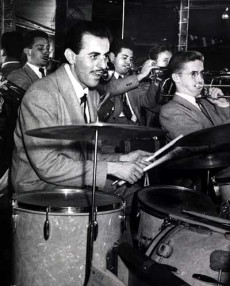
Arthur Mardigan was born February 12, 1923 in Detroit, Michigan. As early as 1942 age 19 he was playing drums with Tommy Reynolds prior to a two-year stint in the Army. After his discharge he worked extensively on the New York City jazz scene, playing and recording with George Auld, Charlie Parker, Dizzy Gillespie, Dexter Gordon, Kai Winding, Wardell Gray and Fats Navarro.
In the 1950s he went on tour with Woody Herman and Pete Rugulo, he recorded as a leader of a sextet that included Al Cohn in 1954 for The Jazz School, recorded with Stan Getz also in 1954 and then moved back to Detroit. There he played with Jack Brokensha in 1963, returning to work with Getz near the end of his life. Drummer Art Mardigan passed away on June 6, 1977 in his hometown of Detroit.
More Posts: drums
Daily Dose Of Jazz…
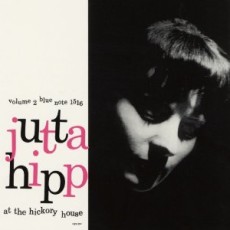
Jutta Hipp was born on February 4, 1925 in Leipzig, Germany. She first studied painting in Germany, but later played jazz during the war and she indicated jazz was important to her during that period. After the war she moved to West Germany due to the Soviet Union working with Hans Zoller and leading a quintet.
In 1954 Jutta played with Attila Zoller where critic Leonard Feather was so impressed with her work that soon after she moved to New York City. She drew some criticism initially from critics who felt she was too similar to her sponsor Horace Silver. In 1956 she played the Newport Jazz Festival and cut a studio album with Zoot Sims that is considered possibly her best.
Hipp went on to work in New York based trios determined to be accepted as an equal amongst her male counterparts, but felt intense nervousness and the anxiety led to her abandoning jazz in 1958. From then on she made her living primarily as a seamstress and returned to her first interest of painting and her portraits of various jazz musicians became popular with musicians.
Although she maintained some contact with musicians like Lee Konitz, she cut herself off from the music industry to the point that by 2000 Blue Note did not know where to send her royalty checks. Jazz pianist Jutta Hipp, who primarily played in the bebop and cool jazz genres during her short musical career, gained new interest after her passing in Queens on April 7, 2003 as a woman instrumentalist in the New York Jazz scene.
More Posts: piano
Daily Dose Of Jazz…
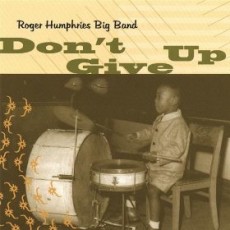
Roger Humphries was born January 30, 1944 in Pittsburgh, Pennsylvania and began playing drums at age four, and went professional at age 14. He led an ensemble at Carnegie Hall at age 16. Early in the 1960s, he began touring with jazz musicians; one of his more prominent gigs was in a trio with Stanley Turrentine and Shirley Scott in 1962.
In 1964, he played with Horace Silver on Song For My Father, following this Humphries drummed for Ray Charles. He led his own band “R. H. Factor” in the 1970s, and led ensembles under other names into the Nineties, recording under his own name in 1993, 2003 and 2011. He held teaching positions at the University of Pittsburgh and the Pittsburgh High School for the Creative and Performing Arts.
Humphries’s list of credits in jazz, R&B, and pop is extensive playing with Lee Morgan, Grant Green, Billy Taylor, Benny Green, Coleman Hawkins, Clark Terry, Dizzy Gillespie, Jack McDuff, Jon Faddis, Joe Williams, Herbie Mann, Gene Harris, Milt Jackson, Slide Hampton and the list goes on. Drummer and big band leader Roger Humphries continues to perform.
More Posts: drums