

Daily Dose Of Jazz…
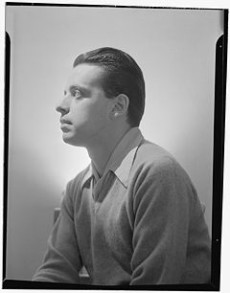
Nesuhi Ertegun was born November 26, 1917 in Istanbul, Turkey, moving to Washington, DC when his father was appointed Ambassador to the United States in 1935. From an early age, Nesuhi’s primary musical interest was jazz, having attended concerts in Europe. While at the Turkish Embassy he also promoted jazz concerts during 1941-44.
After his father’s death in 1944, Ertegun stayed in the U.S., moved to California, got married and established the Crescent record label. He purchased Jazz Man Records and issued traditional jazz recordings producing classic Kid Ory revival recordings plus sessions with Pete Daily and Turk Murphy. He went on to work with Contemporary Records and Imperial Records developing their jazz catalog for the later.
In 1955, he was preparing to work for Imperial Records to develop their jazz record line and develop a catalog of LPs. However, his younger brother Ahmet Ertegun and Jerry Wexler persuaded him to become a partner in Atlantic Records over the jazz and LP department.
As a producer he worked with John Coltrane, Charles Mingus, Ornette Coleman, the Modern Jazz Quartet, Ray Charles, Chris Connor, the Drifters, Bobby Darin, Roberta Flack and numerous others while being first recruiting songwriters and producers Leiber and Stoller. He went on to establish WEA International venturing into Latin-American rockers and other world music groups and remained at the helm until his retirement in 1987.
Nesuhi Ertegun, writer, editor, producer, educator, art collector and soccer promoter died on July 15, 1989, at the age of 71, due to complications following cancer surgery. He was posthumously inducted into the Rock and Roll Hall of Fame, awarded the Grammy Trustees Award for lifetime achievement, the National Soccer Hall of Fame and had the Nesuhi Ertegun Jazz Hall of Fame at Jazz at Lincoln Center dedicated to him.
Daily Dose Of Jazz…
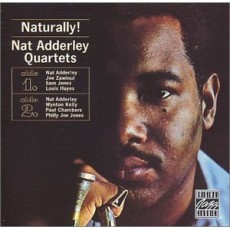
Nathaniel Adderley was born on November 25, 1931 in Tampa, Florida but grew up in Tallahassee when both his parents were hired to teach at Florida A&M University. While living in Tallahassee in the early 40s, he and his brother Julian played with Ray Charles, in the ‘50s he worked with his brother’s original group, and with Lionel Hampton and J. J. Johnson.
In 1959 joined his brother’s new quintet and stayed with it until Cannonball’s death in 1975. It was during this tenure that Nat composed “Work Song,” “Jive Samba,” and “The Old Country” for this group that have since become jazz standards.
After his brother’s death he led his own groups and recorded extensively working with Ron Carter, Sonny fortune, Johnny Griffin, Antonio Hart and Vincent Herring, among others. Adderley moved to Harlem in the 1960s, Teaneck, New Jersey in the 1970s, before moving to Lakeland, Florida where he was instrumental in the founding and development of the annual Child of the Sun Jazz Festival, held annually at Florida Southern College.
Nat Adderley, cornetists and trumpeter in the hard bop and soul jazz genres, lived with diabetes throughout his career, an illness that resulted in his death from complications on January 2, 2000. He left the jazz world a body of work that has been memorialized by a host of jazz musicians.
Daily Dose Of Jazz…
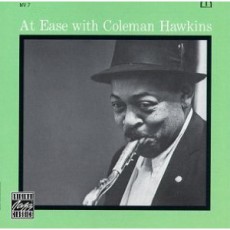
Coleman Randolph Hawkins was born on November 21, 1904 in St. Joseph, Missouri and named after his mother’s maiden name. He started out playing piano and cello prior to playing saxophone at age nine. By the time he turned 14, he was playing around eastern Kansas while attending Topeka High School and simultaneously studying harmony and composition for two years at Washburn College.
In 1921 Hawkins joined Mamie Smith’s Jazz Hounds, toured through 1923 and settled in New York City. Hawkins joined Fletcher Henderson’s Orchestra doubling on clarinet and bass saxophone and becoming a star soloist. He recorded with band mates Louis Armstrong and Henry “Red” Allen, a number of solo recordings with either piano or a pick-up band of Henderson musicians. In late 1934, he played with Jack Hylton’s band in London, toured Europe as a soloist until 1939 and worked with Django Reinhardt and Benny Carter in 1937 Paris.
Returning to the States he worked Kelly’s Stables, recorded two choruses of Body and Soul, his landmark recording of the Swing Era. Recorded as an afterthought at the session, it is notable in that Coleman ignores almost all of the melody, only the first four bars are stated in a recognizable fashion. In its exploration of harmonic structure it is considered by many to be the next evolutionary step in jazz recording from where Louis Armstrong’s “West End Blues” in 1928 left off.
Over the course of his long and prolific career Hawkins had an unsuccessful attempt at a big band, led a combo at Kelly’s Stables, played with Thelonious Monk, Oscar Pettiford, Miles Davis, Oscar Peterson, Herb Ellis, Ray Brown, Ben Webster, Max Roach, Howard McGhee, Sonny Rollins, John Coltrane, Roy Eldridge, J.J. Johnson, Fats Navarro and Duke Ellington among others, recorded a session with Dizzy Gillespie that is considered the first bebop recording and toured with Jazz at the Philharmonic. After 1948 Hawkins divided his time between New York and Europe, making numerous freelance recordings. In the 1960s, he appeared regularly at the Village Vanguard.
Tenor saxophonist Coleman Hawkins directly influenced many future bebop musicians such as Sonny Rollins and John Coltrane. In his later years he stopped recording, began drinking heavily and died of pneumonia on May 19, 1969 in New York.
Daily Dose Of Jazz…
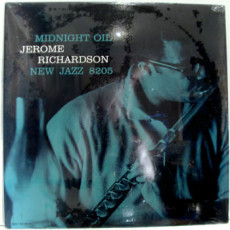
Jerome Richardson was born November 15, 1920 in Oakland, California and started on alto saxophone at the age of eight. In his teens Benny Carter, Johnny Hodges and Willie Smith were his idols. He became a professional musician at the age of fourteen, and had a brief stint with Lionel Hampton, and worked with Bay Area bands until 1941, during which time he also studied music at San Francisco State College. The flute was added to his working compliment in 1940. Both this and his alto sax were used to advantage in a Navy band, under the direction of Marshall Royal, at St. Mary’s Pre-Flight from 1942 to 1945. He joined the Lionel Hampton band again in 1949, with whom he recorded what is widely regarded as the first modern jazz solo played on flute on “Kingfish”, and was also a member of the Earl Hines big band.
Settling in New York in 1954 he began a very active session career, but continued to make his mark in a purely jazz context. He worked with bands led by Lucky Millinder and Cootie Williams, led his own quartet at Minton’s Playhouse in Harlem in 1955 and was part of Oscar Pettiford’s group that summer.
Over the next decade Jerome continued to lead his quartet, work the Roxy pit orchestra, regularly worked with Quincy Jones, toured Europe with Harold Arlen’s blues opera, was a founder member of the Thad Jones-Mel Lewis Orchestra, organizing and performing many Thad Jones tribute concerts. He played with a number of other notable big bands during his long career, including bands led by Jimmy Lunceford, Gerald Wilson, Gil Evans and Charles Mingus.
His standing as a superbly accomplished soloist on a range of reed and wind instruments was complemented by an equally strong reputation as an accompanist of singers, including the likes of Ella Fitzgerald, Frank Sinatra, Sarah Vaughan, Billie Holiday, Peggy Lee, Nancy Wilson, Billy Eckstine, and Lena Horne. Richardson performed with practically every significant post-war jazz artist, including Miles Davis, Dizzy Gillespie, Duke Ellington, Louis Armstrong, John Coltrane, Cannonball Adderley, Lionel Hampton, Herbie Hancock, Milt Jackson, Oliver Nelson, Art Farmer, Clifford Jordan, Slide Hampton, Horace Silver, Gerry Mulligan, Jimmy Smith, Wes Montgomery, Cal Tjader, and Antonio Carlos Jobim, as well as a whole range of blues, soul and pop artists.
Jerome Richardson played tenor, alto, baritone saxophone, clarinet, piccolo, and flute passed away in Englewood, New Jersey on June 23, 2000 recorded sparingly as a leader but was one of the most sought after session musicians for more than half a century was probably the most recorded saxophonist of his generation.
Daily Dose Of Jazz…
Hampton Hawes was born November 13, 1928 in Los Angeles, California and his first experience at the piano was as a toddler sitting on his mother’s lap while she practiced. He was reportedly able to pick out fairly complex tunes by the age of three. Entirely self-taught and influenced by Earl Hines, Bud Powell and Nat King Cole, by his teens Hawes was playing with the leading jazz musicians on the West Coast, including Dexter Gordon, Wardell Gray, Art Pepper, Shorty Rogers and Teddy Edwards. His second professional job, at 19, was playing for eight months with Howard McGhee’s Quintet at the Hi De Ho Club, in a group that included Charlie Parker, who became a great influence on his playing.
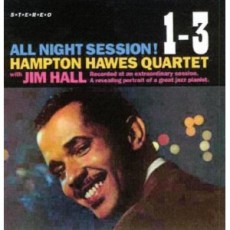
After serving in the U.S. army in Japan from 1952–1954, Hampton formed his own trio, with the bassist Red Mitchell and drummer Chuck Thompson. The subsequent three-record “Trio” sessions made by this group in 1955 for Contemporary Records were considered some of the finest records to come out of the West Coast at the time. The following year he added guitarist Jim Hall for the “All Night Sessions” that produced three records made during a non-stop recording session at the Contemporary Studios in Los Angeles.
In 1956, Hawes won the “New Star of the Year” award in Down Beat magazine, “Arrival of the Year” in Metronome magazine and the following year Hawes recorded in New York City with Charles Mingus on the album “Mingus Three”.
Struggled for many years with a heroin addiction and became the target of a federal undercover operation in Los Angeles in 1958. The DEA bargained that Hawes would inform on dealers in L.A. rather than risk a successful career. Coerced into selling a small amount of heroin to an undercover agent, he was arrested on his 30th birthday. Refusing to talk landed him a twice the mandatory minimum, ten-year sentence at Fort Worth Medical Facility, a federal prison hospital. However, after serving three years, in 1963 he was granted Executive Clemency by President Kennedy in 1963, the 42nd of only 43 such pardons given in the final year of Kennedy’s presidency.
After his release from prison, Hampton resumed playing and recording and during a world tour in 1967-68, the pianist was surprised to discover that he had become a legend among jazz listeners in Europe, Asia and the Middle East. During a ten-month period overseas he recorded nine albums, played sold out shows and concert halls in ten countries, and was covered widely in the press, appearing on European television and radio.
As a pianist Hawes’s style is instantly recognizable – for its almost unparalleled swing, unique approach to time and harmony, and its depth of emotional expression, particularly in a blues context. Hawes influenced a great number of other pianists including Andre Previn, Oscar Peterson, Horace Silver, Claude Williamson, Pete Jolly, Toshiko Akiyoshi and others.
Pianist Hampton Hawes died suddenly of a brain hemorrhage on May 22, 1977 at 48 years old. In 2004, the City Council of Los Angeles passed a resolution declaring November 13th “Hampton Hawes Day”.
More Posts: piano