

Daily Dose Of Jazz…
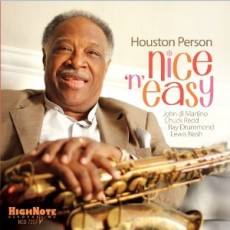
Houston Person, born November 10, 1934, grew up in Florence, South Carolina, first playing the piano before switching to tenor sax. He studied at South Carolina State College, went on to join the Air Force, became a member of a service band stationed in West Germany and played with Don Ellis, Eddie Harris, Cedar Walton and Leo Wright.
After his discharge he continued his studies at Hartt College of Music in Hartford, Connecticut. He first became known for a series of albums for Prestige Records in the 1960s, met Etta Jones while both were with Johnny Hammond’s band and spent many years as her musical partner, recording, performing and touring, and for much of his career this association was what he was best known for. Contrary to popular belief, they were never married.
Houston has performed in the hard bop and swing genres but is best known for his soul-jazz work. He has recorded more than seventy-five albums as a leader for Prestige, Westbound, Mercury, Savoy, and Muse Records. He is currently in residence as a leader and record producer at HighNote and has recorded with Charles Brown, Bill Charlap, Charles Earland, Lena Horne, Etta Jones, Lou Rawls, Horace Silver, Dakota Staton, Billy Butler and Richard “Groove” Holmes among others.
He received the Eubie Blake Jazz Award in 1982 and was inducted into the South Carolina State College Hall of Fame in 1999. He continues to produce, record, perform and tour.

More Posts: saxophone
Daily Dose Of Jazz…
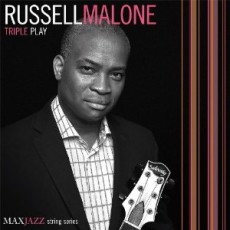
Russell Malone was born November 8, 1963 in Albany, Georgia. He began playing at the age of four with a toy guitar his mother had bought him, influenced by musicians such as B. B. King and The Dixie Hummingbirds. However, his most influential musical experience was seeing George Benson perform on television with Benny Goodman. He learned technique from listening to recordings of Benson, Wes Montgomery and Charlie Christian among others.
Malone played with jazz organist Jimmy Smith, followed by a residency with the Harry Connick Jr. Big Band and in 1995, Malone became part of the Diana Krall Trio, that had three albums nominated for a Grammy. Following his tenure with Krall, he went on to tour regularly leading his own quartet, has played with Dianne Reeves, Romero Lubambo, Ron Carter, Bobby Hutcherson, the late Mulgrew Miller, Dr. Lonnie Smith, Hank Jones, Benny Green, Bill Frisell and Sonny Rollins.
The essentially self-taught swing and bebop jazz guitarist has recorded several sessions for Columbia, Impulse, Venus, Verve and Telarc record labels and since 2004 has recorded on the MaxJazz label with his latest 2010 session being “Triple Play”. Russell Malone has amassed to date 18 albums in his catalogue and continues to perform, record and tour.
More Posts: guitar
Daily Dose Of Jazz…
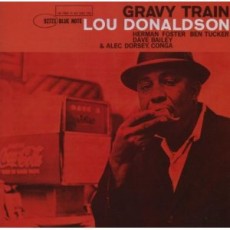
Lou Donaldson was born November 1, 1926 in Baden, North Carolina, the second of four children in a musical family, his mother being a concert pianist and the music director at Baden High School. His mother started him out on the clarinet and once mastering the instrument and his pursuit of a music career was ignited.
At age 15, Lou matriculated to North Carolina A & T College, received a Bachelor’s of Science degree, joined the marching band playing clarinet. Drafted into the US Navy in 1945, he played in the Great Lakes Navy Band playing both clarinet and alto saxophone for dances. Hearing Charlie Parker play, he decided that this was the style of playing he would make his own, having previously playing like Johnny Hodges, Tab Smith or Pete Brown.
Upon return from the military he went back North Carolina A& T College, he played in the Billy Tolles dance band and with the Sabby Lewis Band during the summer months in Boston. Sitting in one night with Illinois Jacquet and hearing him play drummer Poppa Joe Jones told Lou to come to New York. Lou went to work at Minton’s Playhouse, was approached by Alfred Lyons of Blue Note Records and recorded with the Milt Jackson Quartet.
Success came and more records as a leader came with Horace Silver, Clifford Brown, Grant Green, John Patton, Blue Mitchell, Donald Byrd, Horace Parlan, Tommy Turrentine, Al Harewood, George Tucker, Jameel Nasser and Curtis Fuller playing as sidemen. Donaldson went on to have a prolific career playing bebop, hard bop jazz blues and soul jazz, helping fellow musicians get work and get paid, bringing Gene Harris and the 3 Sounds from Washington DC to New York to record with him on the famous album called LD Plus 3.
Awarded an honorary doctorate from North Carolina A&T University and n inducted into the International Jazz Hall of Fame along with countless of honors and awards for his outstanding contributions to jazz, alto saxophonist Lou Donaldson continues to express himself as a composer and bandleader.
More Posts: saxophone
Daily Dose Of Jazz…
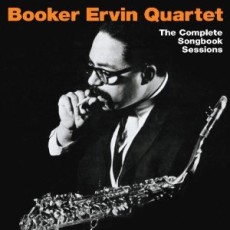
Booker Telleferro Ervin II was born October 31, 1930 in Denison, Texas but didn’t take up the saxophone until he was an adult. After teaching himself tenor saxophone while in the USAF, he moved to the Boston area and studied at Berklee College of Music. His tenor playing was characterized by a strong, tough sound, blues/gospel phrasing and perhaps inspired by growing up in the south. Some thought Coltrane influenced him but it is also thought that they developed their styles independently, and beyond some sheets of sound similarities, they were distinctively different.
Moving to New York, Ervin joined Horace Parlan’s quartet, with whom he recorded “Up & Down” and “Happy Frame of Mind” on Blue Note. He went on to work with Charles Mingus from 1956 to 1963, appearing on “Goodbye Pork Pie Hat” on the album “Mingus Ah Um” and “Wednesday Night Prayer Meeting” on the Blues and Roots session in 1959, as well as the Mingus Mingus Mingus Mingus Mingus recording.
During the Sixties Ervin also led his own quartet, recording for Prestige with ex-Mingus associate pianist Jaki Byard along with bassist Richard Davis and Alan Dawson on drums. Ervin later recorded again on Blue Note and played with pianist Randy Weston.
Tenor saxophonist Booker Ervin had 18 albums as a leader and two dozen as a sideman with Teddy Charles, Andrew Hill, Mal Waldron and others, died of kidney disease in New York City on July 31, 1970 at the age of 39.
More Posts: saxophone

Daily Dose Of Jazz…
Terumasa Hino was born in Tokyo, Japan on October 25, 1942. His initial exposure to music began at four was with his father, a step dancer and trumpeter, taught him tap-dancing. He soon began performing with the trumpet when he was 9 years old, later adding flugelhorn to his arsenal. In the Fifties, Hino began his career as a professional jazz musician and by 1965 after working with several noted jazz artists, he joined Hideo Shiraki’s Quintet. He remained with the band till 1969, leaving to lead his own band full-time, which he formed in 1964.
1969 saw Hino releasing his successful third album “Hi-nology” to critical acclaim and was soon performing at jazz festivals and clubs worldwide before settling in New York City in 1975. Once there he found work with numerous jazz musicians including among others Gil Evans, Elvin Jones, Jackie McLean, Ken McIntyre, Dave Liebman, Hal Galper, Carlos Garnett, Greg Osby and Sam Jones in between leading his own group, which is credited by the jazz guitarist John Scofield for him turning from fusion to jazz.
From the 1980s, he spent more time in Japan and helped incorporate several elements such as avant-garde and fusion into his music. Trumpeter Terumasa Hino has a current catalogue of fifty-one albums and he continues to perform, record and tour around the world.
More Posts: flugelhorn,trumpet