

Daily Dose Of Jazz…
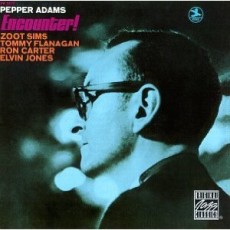
Park “Pepper” Adams III was born on October 8, 1930 in Highland Park, Michigan. His family moved to Rochester, New York when he was young and it was here that he began his musical endeavors. At 16 he moved back to Detroit and met several musicians who would later be important to his career, including trumpeter Donald Byrd. Adams became interested in Wardell Gray’s approach to the saxophone and later named Gray and Harry Carney as his influences.
After his Army band stint and a brief tour in Korea, Pepper moved to New York and recorded the “Dakar” album with Coltrane, with Lee Morgan on “The Cooker”, and briefly worked with Benny Goodman ‘s band in 1958. During this time, Adams also began working with Charles Mingus, performing on one of Mingus’s finest albums from this period, “Blues & Roots” and sporadically recording with Mingus until his death in 1979.
Adams would become a significant member of the Thad Jones/Mel Lewis Big Band from 1965 to 1978, and continued to record Jones’s compositions on many of his own albums. Adams also co-led a quintet with Donald Byrd that produced the live date, “10 to 4 at the 5 Spot” featuring Elvin Jones.
Pepper Adams, the baritone saxophonist nicknamed “The Knife” for his hearty tone, driving rhythmic sense, and big and intense sound that fit well in the up-tempo of hard bop, is considered, along with Gerry Mulligan, as setting the foundation for contemporary playing on the baritone. He died of lung cancer in Brooklyn, New York on September 10, 1986.
More Posts: saxophone
Daily Dose Of Jazz…
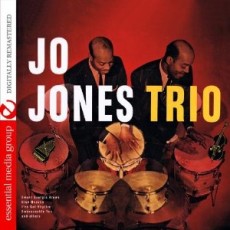
Jo Jones was born Jonathan David Samuel Jones on October 7, 1911 in Chicago, Illinois. He moved to Alabama where he learned to play several instruments, including saxophone, piano, and drums. He worked as a drummer and tap-dancer in carnival shows until joining Walter Page’s band “The Blue Devils” in Oklahoma City, Oklahoma in the late 1920s. He recorded with trumpeter Lloyd Hunter’s Serenaders in 1931, later joining pianist Count Basie’s band in 1934.
Jones, Basie, guitarist Freddie Green and bassist Walter Page were sometimes billed as an “All American Rhythm Section”. Taking a brief break for two years when he was in the military, he remained with Basie until 1948, participating in the Jazz At The Philharmonic concert series.
One of the first drummers to promote the use of brushes on drums and shifting the role of timekeeping from the bass drum to the hi-hat cymbal, Jo had a major influence on later drummers such as Buddy Rich, Kenny Clarke, Roy Haynes, Max Roach and Louie Bellson.
He performed regularly in later years at the West End jazz club at 116th and Broadway in New York City. He also starred in several films, most notably the musical short Jammin’ The Blues in 1944. In his later years, he was known as Papa Jo Jones and often omitted bass drum playing altogether. He continued a ride rhythm on hi-hat while it was continuously opening and closing instead of the common practice of striking it while it was closed. His style influenced the modern jazz drummer’s tendency to play timekeeping rhythms on a suspended cymbal that is now known as the ride cymbal.
In 1979, Jones was inducted into the Alabama Jazz Hall of for his contribution to the Birmingham, Alabama musical heritage and 1985 was the recipient of an American Jazz Masters fellowship awarded by the National Endowment for the Arts.
He recorded nearly a dozen albums as a leader and more as a sideman between 1950 and 1985 working with the likes of Gene Ammons, Art Blakey, Sonny Stitt, Coleman Hawkins, Oscar Peterson, Ella Fitzgerald, Illinois Jacquet, Ben Webster and Charles Mingus.
Drummer Jo Jones, who passed away on September 3, 1985 was often confused with drummer Philly Joe Jones, and ironically the two died a few days apart.
More Posts: drums
Daily Dose Of Jazz…
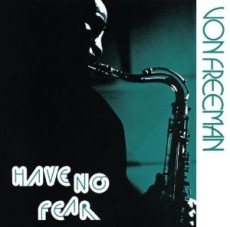
Von Freeman was born Earl Lavon Freeman Sr. on October 3, 1922 in Chicago, Illinois and learned to play the saxophone as a child. Attending DuSable High he studied under band director Walter Dyett. By the time he was 16 he was playing professionally with Horace Henderson’s Orchestra.
After serving in the Navy and playing in the band during WWII, Von returned to Chicago, where he has lived ever since, playing with his brothers George on guitar and Bruz (Eldridge) on drums at the Pershing Hotel Ballroom. Over the years various leading jazzmen such as Charlie Parker, Roy Eldridge and Dizzy Gillespie played with the Freemans as the backing band. In the early 1950s, Von played in Sun Ra’s band.
Freeman’s first venture into the recording studio took place in 1954, backing a vocal group called The Maples for Al Benson’s Blue Lake label. He appeared on Andrew Hill’s second single on the Ping label in 1956, followed by recording for Vee-Jay with Jimmy Witherspoon and Al Smith in the late fifties, and a recorded appearance at a Charlie Parker tribute concert in 1970.
It was not until 1972 that Von recorded under his own name, the album “Doin’ It Right Now” with the support of Roland Kirk. His next effort was a marathon session in 1975 released over 2 albums by Nessa. Since then he has lived, played regularly and recorded in Chicago, his recordings including 3 albums with his son, the tenorist Chico Freeman and “You Talkin’ To Me” with 22-year old saxophonist Frank Catalano, following their successful appearance at the Chicago Jazz Festival in 1999.
Freeman is considered a founder of the “Chicago School” of jazz tenorists along with Gene Ammons, Johnny Griffin and Clifford. His music has been described as “wonderfully swinging and dramatic featuring a large rich sound”. The hard bop tenor saxophonist holds down a regular Tuesday night set and jam session at the New Apartment Lounge on Chicago’s south side, and can also be heard at Andy’s Jazz Club on select weekends. Hard bop tenor saxophonist Von Freeman passed away on August 11, 2012 at age 88 in Chicago, Illinois.
More Posts: saxophone
Daily Dose Of Jazz…
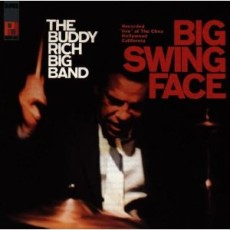
Buddy Rich was born Bernard Rich on September 30, 1917 in New York City to vaudevillians. His father first noticed his musical talent to keep a steady beat with spoons at the age of one. He began playing drums at eighteen months in vaudeville billed as “Traps the Drum Wonder”. At the height of his childhood career he was reportedly the second-highest paid child entertainer in the world, after Jackie Coogan.
By age 11 he became a bandleader without any formal drum instruction, claiming that instruction would only degrade his musical talent; never admitted to practicing, played drums only during performance, and was not known to read music. Buddy’s first major jazz gig was in 1937 with Joe Marsala and guitarist Jack Lemaire was followed with Bunny Berigan, Artie Shaw, Vic Schoen Orchestra, Tommy Dorsey and Frank Sinatra.
In 1942 he enlisted in the Marines and two years later was back with Dorsey. With financial backing from Sinatra in ’46 he formed his own band and continued to lead different groups into the early fifties. In addition he performed with Benny Carter, Harry James, Les Brown, Charlie Ventura, Jazz at the Philharmonic and led several successful big bands in an era that didn’t popularize them, played on sessions with Ella Fitzgerald and Louis Armstrong for their late-career comeback recordings, Oscar Peterson and his famous trio with Ray Brown and Herb Ellis.
Rich always have a drummer there during rehearsals to read and play the parts initially on new arrangements. He’d listen to a chart once, have it memorized, run through it and he’d know exactly how it went, how many measures it ran and what he’d have to do to drive it.
Buddy, once billed as “The World’s Greatest Drummer”, was known for his virtuosic technique, power, groove and speed and remained an active performer until the end of his life. On April 2, 1987 in Los Angeles, California drummer, bandleader and songwriter Buddy Rich succumbed to heart failure following surgery for a malignant brain tumor. He was 69.
More Posts: drums
Daily Dose Of Jazz…
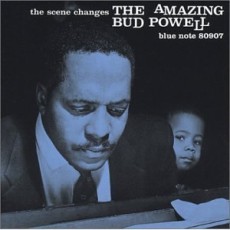
Bud Powell was born Earl Rudolph Powell in New York City on September 27, 1924. Following a family musical legacy, his grandfather a flamenco guitarist, father a stride pianist, older brother William a trumpeter and younger pianist brother Richie, Bud learned classical piano from an early age and by age 8 became interested in jazz. Playing his own transcriptions of Art Tatum and Fats Waller, by 15 he was playing in William’s band. Thelonious Monk was an important early teacher, mentor and close friend who dedicated the composition “In Walked Bud” to him.
The early Forties saw Powell playing in a number of bands, including that of Cootie Williams, who had to become Powell’s guardian because of his youth. His first recording date was with Williams’ band in 1944 and this session produced the first ever recording of Monk’s “Round Midnight”. Monk also introduced him to the circle of bebop musicians starting to form at Minton’s Playhouse and playing on early recording sessions with Frank Socolow, Dexter Gordon, J. J. Johnson, Sonny Stitt, Fats Navarro and Kenny Clarke.
Powell soon became renowned for his ability to play accurately at fast tempos, his inspired bebop soloing, and his comprehension of the ideas that Charlie Parker had found from the chords of “Cherokee” and other song-forms. Powell’s first session as a leader was a trio setting in 1947 with Curly Russell and Max Roach and later recording on a Charlie Parker date with Miles, Max and Tommy Potter. Bud Powell is the most important pianist in jazz and one of the most underrated but his best work is on Blue Note and for Mercury, Norgran, Clef and later Verve Records under Norman Granz. His prolific career had him playing with a who’s who list of musicians like Buddy Rich, Ray Brown, Art Blakey, George Duvivier, Osie Johnson and so on. By the late fifties and into the 60s his playing was far removed from his earlier standard and his talent was in eclipse.
With his health deteriorating he was hospitalized after months of increasingly erratic behavior and self-neglect. Jazz pianist Bud Powell, described as one of “the two most significant pianists of the style of modern jazz that came to be known as bop”, died of tuberculosis, malnutrition, and alcoholism on July 31 1966 in New York City.
More Posts: piano