

Daily Dose Of Jazz…
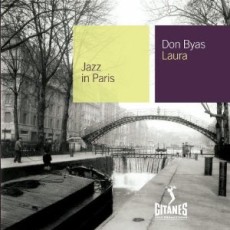
Don Byas was born Carlos Wesley Byas October 21, 1912 in Muskogee, Oklahoma into a musical family, his mother a pianist and father playing clarinet. He started training in classical music, first on the violin, then clarinet and finally the alto saxophone, which he played until the end of the 1920s. He started playing in local orchestras at the age of 17, with the likes of Bennie Moten, Terrence Holder and Walter Page’s Blue Devils.
In 1931 while at Langston College in Oklahoma he founded and led his own college band, “Don Carlos and His Collegiate Ramblers”. Switching to the tenor saxophone when he moved to West Coast, through the Thirties he played with various Los Angeles bands such as Bert Johnson’s Sharps and Flats, Lionel Hampton, Eddie Barefield, Buck Clayton, Lorenzo Flennoy and Charlie Echols bands.
By 1937 Byas moved to New York working with Eddie Mallory and his wife Ethel Waters, went on to work with Don Redman, recorded his first solo in 1939, played with the bands of lucky Millinder, Andy Kirk, Edgar Hayes and his childhood idol Benny Carter. He played and recorded with Billie Holiday, Pete Johnson, Hot Lips Page, Big Joe Turner, Charlie Christian, Thelonious Monk and Kenny Clarke in after hour sessions.
However Byas’ big break came in early 1941 when Count Basie selected him to fill the seat vacated by Lester Young. Through the forties he played the best New York nightspots, had some success with a few hits, collaborated with Dizzy Gillespie, Charlie Parker, George Wallington, Oscar Pettiford and Max Roach. Despite his bebop associations, Byas always remained deeply rooted in the sounds of swing. He started out by emulating Coleman Hawkins, but always cited Art Tatum as his greater influence: “I haven’t got any style, I just blow like Art”.
In 1946 Byas went to Europe and forgot to return to America. A bon vivant in the true sense he was seen on the Riviera, St. Tropez often sporting mask and flippers, sport fishing, shooting pool or dishing up Louisiana style menus for his female admirers all while recording and playing regularly throughout Europe.
Settling in Amsterdam he continued to tour and play with the likes of Art Blakey, Kenny Clarke, Bud Powell, Jazz At The Philharmonic and Ben Webster to name a few. He returned once to the U.S. to appear at the Newport Jazz Festival. Tenor saxophonist Don Byas died on August 24, 1972 from lung cancer in Amsterdam, Netherlands at the age 59.
More Posts: saxophone
Daily Dose Of Jazz…
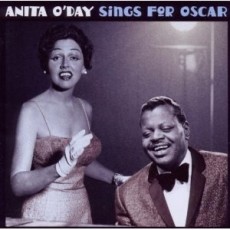
Anita O’Day was born Anita Belle Colton into a broken home in Chicago, Illinois on October 18, 1919. She took the first chance to leave home at age 14, she became a contestant in the popular Walk-a-thons as a dancer. She toured on the Walk-a-thons circuits for two years, occasionally being called upon to sing. In 1934, she began touring the Midwest as a marathon dance contestant and singing “The Lady In Red” for tips.
In 1936, she left the endurance contests, determined to become a professional singer. Anita started out as a chorus girl in such uptown Chicago venues as the Celebrity Club and the Vanity Fair, and then found work as a singer and waitress at the Ball of Fire, the Vialago, and the Planet Mars. It was at the Vialago that O’Day met and later married drummer Don Carter and later married, who introduced her to music theory. Her first big break came in 1938 when Down Beat editor Carl Cons hired her to work at his new club, the “Off-Beat” followed by a stint at The Three Deuces.
She went on to work with Gene Krupa in 1941, recorded her first big hit with him performing a novelty duet with Roy Eldridge titled “Let Me Off Uptown”, was named “New Star of the Year” by Down Beat, appeared in two short musical films, and over the next several years she performed as a solo act, fronted the bands of Woody Herman, Stan Kenton, rejoined Krupa and then became a solo artist again.
During the late forties she would record regularly, attempting to achieve popularity without sacrificing her jazz singer identity. Plagued with long-term problems with heroin addiction and alcoholism, coupled with erratic behavior surfacing earned her the nickname “The Jezebel of Jazz”. During this period she was in and out of jail for various possession charges. However, a date with Count Basie at the Royal Roost resulted in five air checks and her career was back on the upswing. But what secured O’Day’s place in the jazz pantheon are the 17 albums she recorded for Norman Granz’s Norgran and Verve labels between 1952 and 1962, recording her and the label’s inaugural LP “Anita O’Day Sings Jazz” in 1952.
Anita’s backbeat-based singing style was strongly influential on many other female singers of the late swing and bebop eras, including June Christy, Chris Connor and Doris Day. Admired for her sense of rhythm and dynamics, her early big band appearances shattered the traditional image of the “girl singer” by presenting herself as a “hip” jazz musician, wearing a band jacket and skirt. Anita O’Day passed away in her sleep of cardiac arrest on Thanksgiving Day, November 23, 2006, at age 87.
More Posts: vocal
Daily Dose Of Jazz…
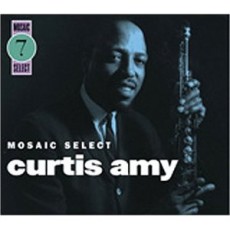
Curtis Amy was born on October 11, 1929 in Houston, Texas and learned how to play clarinet before joining the Army. During his time in service he picked up the tenor saxophone and after his discharge he enrolled and graduated from Kentucky State College.
Working as an educator in Tennessee while playing in mid-western jazz clubs for a time and in the mid-1950s, Amy relocated to Los Angeles and signed with Pacific Jazz Records. By the mid-60s he spent three years as musical director for Ray Charles’ orchestra, together with his wife and singer Merry Clayton, and Steve Huffsteter.
Curtis lead his own bands and recording albums under his own name, Amy also did session work and played the solos on several recordings, including The Doors song “Touch Me”, Carole King’s “Tapestry”, and Lou Rawls’ first albums, “Black and Blue and Tobacco Road”; with Dexter Gordon in the Onzy Matthews’ big band as well as working with Marvin Gaye, Tammy Terrell and Smoky Robinson.
Soul jazz and hard bop tenor saxophonist Curtis Amy, a part of the West coast jazz scene who explored other musical mediums, passed away on June 5, 2002.
More Posts: saxophone
Daily Dose Of Jazz…
Cecil Bridgewater was born on Oct. 10, 1942 in Urbana, Illinois and studied music at the University of Illinois. Along with his brother Ron, they formed the Bridgewater Brothers Band in 1969. In 1970 he played with Horace Silver following this stint with a Thad Jones/Mel Lewis association from 1970 to 1976. During this period of the Seventies he married Dee Dee Bridgewater and played with Max Roach starting a decades-long association.
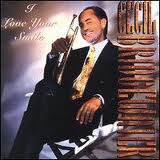
Cecil recorded his debut album “I Love Your Smile” in 1992, has enjoyed playing the sideman on some two dozen recordings with Dizzy Gillespie, Art Blakey, Randy Weston, Charles McPherson, Joe Henderson, Roy Brooks, Abdullah Ibrahim and Sam Rivers; and has composed works premiered by the Cleveland Chamber Orchestra and Meet the Composer.
Bridgewater has become a great supporter of The Jazz Foundation of America in their mission to save the homes and the lives of America’s elderly jazz and blues musicians including musicians that survived Hurricane Katrina. Cecil performed at the 2008 Benefit Concert, “A Great Night in Harlem” at the World Famous Apollo Theater. He continues to perform while currently teaching as adjunct faculty at Manhattan School of Music, New School, William Patterson and The Julliard School.
More Posts: trumpet
Daily Dose Of Jazz…
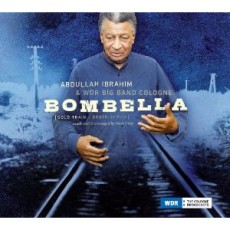
Abdullah Ibrahim was born October 9, 1934 in Cape Town, South Africa, formerly known as Adolph Johannes Brand, and as Dollar Brand. He first received piano lessons at age seven, was an avid consumer of jazz records brought by American sailors, and was playing jazz professionally by 1949. In 1959 and 1960, he played alongside Kippie Moeketsi and Hugh Masekela with The Jazz Epistles in Sophiatown, later recording the first jazz LP by Black South African musicians in 1960. Ibrahim then joined the European tour of the musical King Kong.
Moving to Europe in 1962, it was in the following year that Duke Ellington heard the Dollar Brand Trio at Zurich’s Africana Club at the request of Brand’s wife-to-be Sathima Bea Benjamin. As a result, Duke Ellington presents The Dollar Brand Trio was recorded at Reprise followed by a second session of the trio with Duke Ellington and Billy Strayhorn also on piano performing with Sathima as the vocalist. The recording, A Morning In Paris, remained unreleased until 1996 and then under Benjamin’s name. This led to wider appearances of the Dollar Brand Trio at many European festivals, as well as on radio and television.
Ibrahim has toured mainly in Europe, the United States, and South Africa, the band performing mainly in concert and club settings, and sometimes playing solo piano. Mainly playing the piano, he also plays the flute, saxophone, and cello, performing mostly his own compositions, although he sometimes performs pieces composed by others.
Abdullah Ibrahim to date has recorded more than forty albums as a leader, has written the soundtracks for a number of films, Chocolat and No Fear, No Die; and was a part of the 2002 documentary Amandla! – A Revolution in Four Part Harmony where he and others recalled the days of apartheid. He has ventured into orchestral performances with the inauguration of Nelson Mandela and the later initiation of the 18-piece Cape Town Jazz Orchestra in 2006.
A pianist and composer, Abdullah Ibrahim’s music reflects many of the musical influences of his childhood in the multicultural port areas of Cape Town, ranging from traditional African songs to the gospel of the AME church and ragas, to more modern jazz and other Western styles reflecting the influences of Thelonious Monk and Duke Ellington. He continues to perform, record and tour.