

Daily Dose Of Jazz…
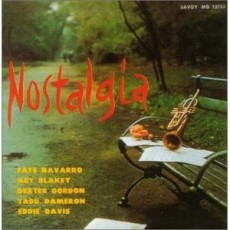
Theodore “Fats” Navarro was born on September 24, 1923 in Key West, Florida to Cuban-Black-Chinese parentage. He began playing piano at age six, but did not become serious about music until he began playing trumpet at age of thirteen. By the time he graduated from Douglass High School he wanted to be away from Key West and joined a dance band headed for the mid-west.
Tiring of the road life after touring with many bands and gaining valuable experience, including influencing a young J. J. Johnson when they were together in Snookum Russell’s territory band. Navarro settled in New York City in 1946, where his career took off. He met and played with, among others, Charlie Parker, but was in a position to demand a high salary, so Fats didn’t join one of Parker’s regular groups. Unfortunately he developed a heroin addiction, which, coupled with tuberculosis and a weight problem led to a slow decline in his health.
Through his short-lived career, trumpeter Fats Navarro played with among others Andy Kirk, Billy Eckstine, Benny Goodman and Lionel Hampton big bands, and also participated in small group recording sessions with Kenny Clarke, Tadd Dameron, Eddie “Lockjaw” Davis, Coleman Hawkins, Illinois Jacquet, Howard McGhee, Bud Powell and Charles Mingus, with whom he had a deep friendship.
Hospitalized on July 1st after his final performance with Charlie Parker at Birdland, the pioneering bebop jazz improvisation trumpeter Fats Navarro passed away at the age of 26 on July 7, 1950.
More Posts: trumpet
Daily Dose Of Jazz…
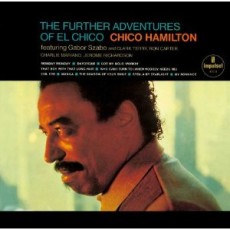
Chico Hamilton was born Foreststorn Hamilton on September 20, 1921 in Los Angeles, California and was on a drumming fast track musical education in a band with his schoolmates Charles Mingus, Illinois Jacquet, Ernie Royal, Dexter Gordon, Buddy Collette and Jack Kelso. Subsequent engagements with Lionel Hampton, Slim & Slam, T-Bone Walker, Lester Young, Count Basie, Duke Ellington, Charlie Barnet, Billy Eckstine, Nat King Cole, Sammy Davis Jr., Billie Holiday, Gerry Mulligan and six years with Lena Horne established this young West Coast prodigy as a jazz drummer on the rise, before striking out on his own as a bandleader in 1955.
He recorded his first LP as leader in 1955 on Pacific Jazz with George Duvivier and Howard Roberts and in the same year formed an unusual quintet in L.A. featuring cello, flute, guitar, bass and drums that has been described as one of the last important West Coast jazz bands. The original personnel: Buddy Collette, Jim Hall, Fred Katz and Jim Aton. Hamilton continued to tour using different personnel, from 1957 to 1960, Paul Horn and John Pisano that are featured in the film “Sweet Smell Of Success in 1957 and Jazz On A Summer’s Day with Nate Gershman and Eric Dolphy in 1960. Dolphy was enlisted to record on Hamilton’s first three albums, however by 1961 the group was revamped with Charles Lloyd, Gabor Szabo, George Bohannon and Albert Stinson.
Over the course of his career Chico changed personnel keeping his sound fresh and innovative. Subsequently he recorded for Columbia, Reprise and Impulse, scored for television, commercials and radio. He has worked with countless musicians and vocalists, received the New School Jazz and Contemporary Music Programs Beacons in Jazz Award and was awarded the WLIU-FM Radio Lifetime Achievement Award. He has been given a NEA Jazz Master Fellowship, was confirmed by Congress with the President’s nomination to the Presidents Council on the Arts, received a Living Legend Jazz Award as part of The Kennedy Center Jazz in Our Time Festival, as well as receiving a Doctor of Fine Arts from the New School where he currently teaches. Drummer Chico Hamilton continued to perform and record until his passing on November 25, 2013.
More Posts: drums
Daily Dose Of Jazz…
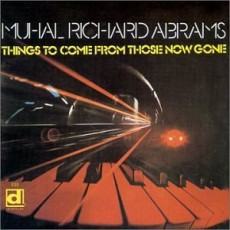
Muhal Richard Abrams was born on September 19, 1930, in Chicago, Illinois. He didn’t start his musical training until his enrollment in Roosevelt University but not hearing what he heard in the streets caused him to study piano on his own. His natural ability to study and analyze things allowed him to read, identify the key the music was in, then the notes and how to play the piano. Listening to Art Tatum, Charlie Parker, Bud Powell, Thelonious Monk and many others, he concentrated on the composition of Duke Ellington and Fletcher Henderson pieces. Although it took a lot of time and sweat, he was soon playing on the scene.
Abrams’ first gigs were playing the blues, R&B, and hard bop circuit in Chicago and working as a sideman with everyone from Dexter Gordon and Max Roach to Ruth Brown and Woody Shaw. In 1950 he began writing arrangements for the King Fletcher Band, and in 1955 played in the hard-bop band Modern Jazz Two + Three, with tenor saxophonist Eddie Harris.
After this group folded he kept a low profile until he organized the Experimental Band in 1962, a contrast to his earlier hard bop venture in its use of free jazz concepts. This band, with its fluctuating lineup, evolved into the Association for the Advancement of Creative Musicians (AACM), emerging in May 1965 with Abrams as its president. Opting not to play in smoky nightclubs they often rented out theatres and lofts where they could perform for attentive and open-minded audiences.
His landmark album “Levels and Degrees of Light” in 1967 saxophonists Anthony Braxton and Maurice McIntyre, vibraphonist Gordon Emmanuel, violinist Leroy Jenkins, bassist Leonard Jones and vocalist Penelope Taylor. However, he never strayed too far from hard bop during this period playing with Eddie Harris, Dexter Gordon and other hard boppers.
Moving to New York in 1975, Abrams became a part of the local Loft Jazz scene and in 1983 he established the New York chapter of the AACM. Over the course of his career he composed for symphony orchestras, classical works, string quartets, solo piano, voice, and big bands in addition to making a series of larger ensemble recordings that include harp and accordion. He has recorded extensively under his own name frequently on the Black Saint label and as a sideman on others’ records, working with the likes of Marion Brown, Chico Freeman, Eddie “Lockjaw” Davis, Art Farmer, Sonny Stitt, Art Ensemble of Chicago, and numerous others.
Muhal Richard Abrams, educator, administrator, composer, arranger, cellist, clarinetist and pianist was given a Lifetime Achievement Award by the Vision Festival, New York City’s premier jazz festival and in 2010 was honored as a NEA Jazz Master. He continues to perform and record.

Daily Dose Of Jazz…
“Brother” Jack McDuff was born Eugene McDuffy on September 17, 1926 in Champaign, Illinois. He began his musical career playing bass first with Joe Farrell followed by Willis Jackson who encouraged him to take up the organ. In the late 50’s he moved to his new instrument and began attracting the attention of Prestige Records. He soon became a bandleader, leading groups that featured then, young guitarist George Benson, saxophonist Red Holloway and drummer Joe Dukes.
McDuff’s debut recording “Brother Jack” for Prestige was followed by his sophomore project, The Honeydripper, featuring Jimmy Forrest and Grant Green. After his Prestige tenure he joined the Atlantic Records family for a brief period and then by the 70s was recording for Blue Note.
The decreasing interest in jazz and blues during the late 70s and 1980s meant that many jazz musicians went through a lean time and it wasn’t until the late 1980s, with The Re-Entry, recorded for the Muse label in 1988, and once again began a successful period of recordings, initially for Muse, then on the Concord Jazz label from 1991. George Benson appeared on his mentor’s 1992 Colour Me Blue album.
Despite health problems, Brother Jack continued working and recording throughout the 1980s and 1990s, touring Japan with Atsuko Hashimoto in 2000. “Captain” Jack McDuff, as he later became known, was one of the most prominent jazz organist and organ trio bandleader during the hard bop and soul jazz era of the Sixties. He passed away of heart failure on January 23, 2001 at the age of 74 in Minneapolis, Minnesota.
More Posts: organ
Daily Dose Of Jazz…
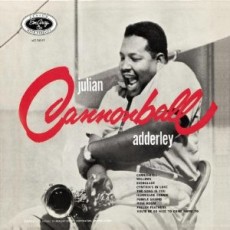
Cannonball Adderley was born Julian Edwin Adderley on September 15, 1928 in Tampa, Florida but moved with his parents to Tallahassee when his parents accepted teaching positions at Florida A&M University. While there both he and his brother Nat played with Ray Charles during the early forties, with Cannonball becoming a local legend prior to moving to New York in 1955.
It was in New York during this time that Adderley’s prolific career began when he visited Cafe Bohemia and witnessed the Oscar Pettiford group playing that night. Bringing his saxophone into the club with him, for fear of it being stolen, he was asked to sit in, as the saxophone player was late. In true Cannonball style, he soared through the changes, and became a sensation in the following weeks.
Cannonball formed his own group with his brother Nat after signing onto the Savoy jazz label in 1957. He was noticed by Miles Davis and it was because of his blues-rooted alto saxophone that Davis asked him to play with his group in October, three months before Coltrane’s return to the group. This group released the seminal “Milestones” and “Kind of Blue” and the association with Bill Evans produced “Portrait of Cannonball” and Know What I Mean”.
By the end of ‘60s, Adderley’s playing began to reflect the influence of the electric jazz avant-garde producing such albums as “Accent on Africa” and “The Price You Got To Pay to Be Free”. In 1970 his quintet played the Monterey Jazz Festival and a brief scene of that performance was featured in the Clint Eastwood film “Play Misty For Me”, and shortly before his death in 1975 he was casted in an episodic role alongside Jose Feliciano and David Carradine in Kung Fu.
His interest as an educator led him to teach applied instrumental music classes at Dillard High School in Fort Lauderdale; and carried over to him narrating and recording “The Child’s Introduction to Jazz” released in 1961 on Riverside Records.
Joe Zawinul’s “Mercy, Mercy, Mercy” and “Walk Tall”, “This Here” written by Bobby Timmons, “The Jive Samba” and “Work Song” are a few of the songs made famous by Cannonball. Joe Zawinul composed “Cannon Ball” that was recorded on the Weather Report album Black Market as a tribute to his former leader.
Alto saxophonist and educator Julian “Cannonball” Adderley, who added so much to the hard bop era of the ‘50s and ‘60s, died of a stroke on August 8, 1975. Later that year he was inducted into the Down Beat Jazz Hall of Fame.
More Posts: saxophone