

Daily Dose Of Jazz…
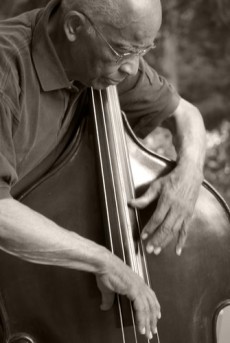
Bassist Julian Euell was born on May 23, 1929 in New York City. He first began playing bass in 1944, served in the Army from 1945-47 and after his discharge began playing with Sonny Rollins, Jackie McLean and Art Taylor that same year. He quit music in ’49 for steady work in the post office eventually studying under Charles Mingus in ’52 and attending Julliard fro 1953 to 1956. He also took classes at NYU, earned a bachelor’s degree from Columbia University and subsequently taught there.
His musical associations during the fifties were with Elmo Hope, Benny Harris, Charlie Rouse, Joe Roland, Freddie Redd, Gigi Gryce and Phineas Newborn. Leaving music again late in the decade he found employment in New Jersey as a social worker. Though less active at this time he continued to perform with Mal Waldron, Randy Weston, Abbey Lincoln, Charles Mingus and Kenny Dorham.
In the 1960s Euell worked in Harlem directing an arts program and then returned to school, receiving a Ph.D. from George Washington University in 1973. He was Assistant Secretary for Public Service at the Smithsonian from 1970-1982, and was partly responsible for the institution’s increasing interest in jazz history. From 1983 to 1988 he directed the Oakland Museum History-Arts-Science and from 1991-95 was director of the Louis Armstrong House. He returned to semi-regular performing in the 1980s and 1990s.
More Posts: bass
Daily Dose Of Jazz…
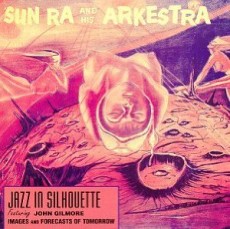
Sun Ra was born Herman Poole Blount in Birmingham, Alabama on May 22, 1914 and as a child was a skilled pianist. By twelve he was writing original songs and could sight read sheet music. With Birmingham being an important stop for touring musicians, during his childhood he was able to see famed musicians like Fletcher Henderson, Duke Ellington and Fats Waller.
By his teenage years he was producing from memory full transcriptions of big band songs he had heard and began playing semi-professional solo piano in ad hoc jazz bands. Attending Birmingham Industrial High School he took lessons the tutelage of John T. “Fess” Whatley, a demanding disciplinarian and producer of many professional musicians.
Claiming that he was of the “Angel Race” and not from Earth, but from Saturn, Sun Ra developed a complex persona of “cosmic” philosophies and lyrical poetry that made him a pioneer of “afro-futurism” as he preached awareness and peace above all. He abandoned his birth name and took on the name and persona of Sun Ra (Ra being the ancient Egyptian god of the sun).
From the mid-1950s to his death, Sun Ra led “The Arkestra”, an ensemble with an ever-changing lineup and names, asserting that the ever-changing name of his ensemble reflected the ever-changing nature of his music. His mainstream success was limited, but Sun Ra was a prolific recording artist and frequent live performer with music ranged from keyboard solos to big bands of over 30 musicians and music touching on virtually the entire history of jazz, from ragtime, swing, bebop, free improvisation, electronic and space music.
Sun Ra had several music periods during his lifetime – late 30s creating a conservatory workshop in his family home, conscientious objector during the war years, Chicago playing blues and jazz with Fletcher Henderson, Coleman Hawkins and Stuff Smith, New York Monday night gig at Slug’s Saloon and praise from Dizzy Gillespie and Thelonious Monk, and Philadelphia that would be the base of operations for the Arkestra until his death.
Sun Ra known for his “cosmic philosophy, musical compositions and performances was inducted into the Alabama Jazz Hall of Fame in 1979. The prolific Jazz composer, bandleader, piano and synthesizer player, poet and philosopher passed away on May 30, 1993, at 79.
Daily Dose Of Jazz…
Betty Carter was born Lillie Mae Jones on May 16, 1929 in Flint, Michigan but grew up in Detroit. The first music she heard was church music as her father led a choir. She studied piano at the Detroit Conservatory and winning a talent contest became a regular on the local club circuit. By 16 she was singing with Charlie Parker and would later perform with Dizzy Gillespie and Miles Davis.
Honing her scatting while touring with Lionel Hampton in the late 40s, it was Hampton’s wife Gladys who nicknamed her “Betty Bebop”, a name she reportedly detested. In the fifties she recorded with King Pleasure and Ray Bryant, and released her first solo LP, Out There With Betty Carter in 1958.
Although her career was eclipsed somewhat through the 60s and 70s, she made a series of duets with Ray Charles that rendered “Baby, It’s Cold Outside” which brought her a modicum of new recognition. She established Bet-Car in 1970, her own record label, after an A&R man attempted to run off with her master recordings. Her private label produced some of her most famous recordings including the double album “The Audience With Betty Carter”.
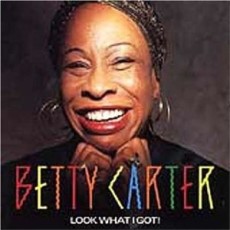
In the last decade of her life she won a Grammy for “Look What I Got”, appeared on the Cosby show, performed at the White House, was awarded the National Medal of Arts by President Clinton and headlined Verve’s 50th Anniversary at Carnegie Hall.
Betty Carter remained active in jazz until her death from pancreatic cancer on September 26, 1998 at the age of 69. The singer renowned for her improvisational technique and idiosyncratic vocal style was devoted to the jazz idiom. Her fellow vocalist Carmen McRae once claimed: “There’s really only one jazz singer – only one Betty Carter”.
More Posts: vocal
Daily Dose Of Jazz…
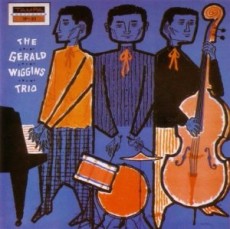
Gerald Wiggins was born on May 12, 1922 in New York City. He started classical piano lessons when he was four but by his teenage years became interested in jazz. He doubled on bass while attending High School & Art and for a period in the 40s accompanied Stepin’ Fetchit. Following this he worked and toured with the big bands of Les Hite, Louis Armstrong and Benny Carter. Stationed in Seattle while in the military he played in the local jazz clubs.
By the mid 40s Wiggins relocated to Los Angeles and played music for television and film. He has worked with Lena Horne, Kay Starr, Nat King Cole, Lou Rawls, Jimmy Witherspoon Helen Humes, Joe Williams, Ernie Andrews and Eartha Kitt to name a few. He also worked at the Hollywood studios as a vocal coach and worked with Marilyn Monroe and others.
Always a highly flexible pianist, Wiggins was comfortable in swing and bop settings with a consistently witty style filled with catchy riffs became his distinctive signature. His best-known recording as an organist was Wiggin’ Out but it was Wiggins’ trio work with Andy Simpkins and Paul Humphreys that is legendary. Pianist Gerald Wiggins passed away at the age of 86 on July 13, 2008.
More Posts: piano
Daily Dose Of Jazz…
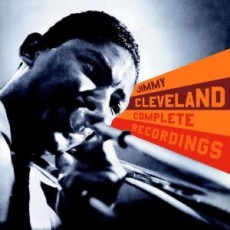
Jimmy Cleveland was born May 3, 1926 in Wartrace, Tennessee but didn’t start playing the trombone until he was sixteen. His first important gig didn’t happen until 1950 with Lionel Hampton and a subsequent European tour.
Leaving Hampton in 1953, Cleveland went to moved to New York and became a successful freelance musician recoding with the likes of Dizzy Gillespie, Gil Evans, Oliver Nelson, Antonio Carlos Jobim, Sarah Vaughan, Gigi Gryce, Oscar Pettiford, Lucky Thompson, James Moody and Gerry Mulligan.
As a leader Jimmy recorded a series of albums for EmArcy/Mercury records in the ‘50s and later in the decade toured Europe once again this time with Quincy Jones and in 1967 recorded with Thelonious Monk. He moved to Los Angeles to work with the Merv Griffin show and continued recording with Quincy.
Although he moved into a season of obscurity once he moved to the West coast, he continued to play till shortly before his death on August 23, 2008 in Lynwood, California at age 82. Jimmy Cleveland remains one of the most technically skilled of the bop-based jazz trombonists.

More Posts: trombone