

Daily Dose Of Jazz…
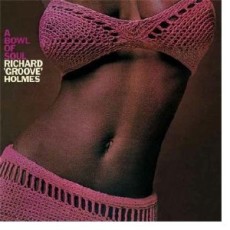
Richard Arnold “Groove” Holmes was born in Camden, New Jersey on May 2, 1931. A self-taught organist, he began his early career working along the East coast. It wasn’t until a recording session with Les McCann and Ben Webster in 1961 that widespread interest was piqued in his work.
Touring and recording throughout the 60s he achieved important recognition and acceptance amongst mainstream and post-bop jazz audiences. His landmark recording of “Misty” brought him critical acclaim and is considered by some a precursor of acid jazz.
He developed a solid relationship with Gene Ammons and their playing exemplified the soul-heavy organ-tenor playing that proliferated the decade. He played with big bands including one led by Gerald Wilson and recorded with Dakota Staton, Houston Person and Jimmy Witherspoon among others.
His sound was immediately recognizable in the upper register, but even more so because of his virtuosity in creating, undoubtedly, the most rapid, punctuating, and pulsating bass lines of all the jazz organists. He stands alongside the elite of jazz organists Jimmy Smith, Brother Jack McDuff and Jimmy McGriff for his contributions to the instrument and music.
Performing to the end of life, his last concerts in a wheelchair, organist Richard “Groove” Holmes, revered in soul-jazz circles died of a heart attack on June 29, 1991 in St. Louis, Missouri after a long struggle with prostate cancer.
More Posts: organ
Daily Dose Of Jazz…
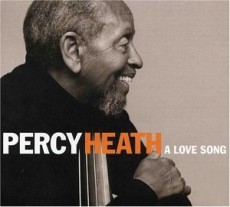
Percy Heath was born on April 30, 1923 in Wilmington, N.C. but was raised in Philadelphia. The second of four children, he was the brother of saxophonist Jimmy Heath and drummer Albert “Tootie” Heath. With music in the house, as a child Percy started playing violin at eight but it wasn’t until after serving as a Tuskegee Airman during WWII that he took up the bass. After a stint in music school he was playing in Philly clubs, ventured to Chicago in 1948 to record a Milt Jackson session with his brother. Moving to New York he worked with Joe Morris, Johnny Griffin and Dizzy Gillespie.
Working with Dizzy were pianist John Lewis, drummer Kenny Clarke, vibist Milt Jackson and bassist Ray Brown who would become the Modern Jazz Quartet. When Ray decided to leave to become a part of his wife Ella Fitzgerald’s band, Percy stepped into the position and the MJQ was officially launched in 1952, with Connie Kay replacing Clarke shortly after.
In 1975 along with brothers Jimmy and Albert and Stanley Cowell, he formed the Heath Brothers, sometimes playing cello when recording a series of albums. Over the course of his lifetime he played and recorded with such notables as Miles Davis, Charlie Parker, Wes Montgomery, Thelonious Monk and Dizzy Gillespie.
After a second bout with bone cancer Percy Heath passed away on April 28, 2005 in Southampton, New York. His final recording A Love Song garnered critical acclaim and was a fitting tribute to his long and illustrious career.

Daily Dose Of Jazz…
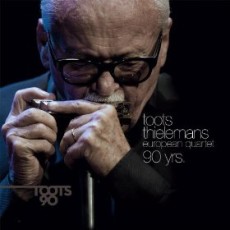
Jean-Baptiste Frédéric Isidor Baron Thielemans was born on April 29, 1922 in Brussels, Belgium. Known to the world as Toots, he began his musical training on accordion at age three. Not playing harmonica until he was seventeen, Toots original reputation was made as a guitarist greatly influenced by Django Reinhardt. By 1949 he was sharing the Paris Jazz Festival bandstand with Charlie Parker, Miles Davis, Max Roach and Sidney Bechet for a jam session. That same year he began touring Europe with Benny Goodman and making his recording debut with Zoot Sims.
Moving to the US in 1952 he joined Charlie Parker’s All-Stars and worked with Miles Davis and Dinah Washington. He played and recorded with names like Ella Fitzgerald, Peggy Lee, George Shearing, Quincy Jones, Oscar Peterson, Bill Evans, Paul Simon, Billy Joel, The Happenings, Astrud Gilberto, Shirley Horn, Elis Regina and others.
His composition “Bluesette”, recorded in 1962, where he introduced whistling and guitar in unison, has become a jazz standard. Norman Gimbel later penned the lyrics and the tune became a worldwide hit for several singers and is still highly requested.
His trademark harmonica playing and whistling has been heard in movie scores, television series and commercials. He has been a proponent of world music releasing a French flavored album Chez Toots and the two-volume Brasil Project. He has received honorary doctorates, made a baron by King Albert II of Belgium, and in 2008 became a NEA Jazz Master.
Apart from his popularity as an accomplished musician, he is well liked for his modesty and kind demeanor. The composer and musician continued to play and record until he passed away on August 22, 2016 in Braine-l’Alleud, Belgium. He is credited with single-handedly introducing the chromatic harmonica as a jazz instrument in the Fifties, playing with the dexterity of a saxophone.
More Posts: harmonica
Daily Dose Of Jazz…
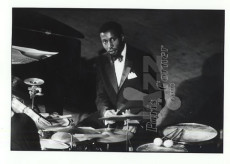
Connie Kay, the drummer for the longstanding Modern Jazz Quartet was born Conrad Henry Kirnon on April 27, 1927, in Tuckahoe, New York. The self-taught drummer played with Sir Charles Thompson in the 40s along with Miles Davis and Cat Anderson.
By the late forties to the mid-fifties he played off and on with Lester Young, Beryl Booker, Stan Getz, Coleman Hawkins, Charlie Parker and others. But it wasn’t until 1955 when replacing Kenny Clarke, that Kay found his home with the Modern Jazz Quartet, an association that would last nearly twenty years.
After the dissolution of the MJQ, Connie played with Chet Baker, Cannonball Adderley, Jimmy Heath, Jim Hall and Paul Desmond. In the 70s he worked with Tommy Flanagan, Soprano Summit, Benny Goodman and became the house drummer at Eddie Condon’s club.
In 1981 the MJQ reorganized to play festivals and later on a permanent six-months-per-year basis. When Kay’s health began to suffer, the drummer was replaced first by Mickey Roker and then by Albert “Tootie” Heath.
Kay was known for his subtle and quietly effortless playing with the MJQ, but beyond that memorable interaction he was an invaluable asset to everyone he came in contact with. He played with great discretion and restraint making his contribution to one of the great aggregations of all time.
Connie Kay died in New York City on 30 November 1994. He was sixty-seven years old.
More Posts: drums
Daily Dose Of Jazz…
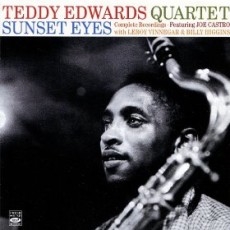
Teddy Edwards was born Theodore Marcus Edwards in Jackson, Mississippi on April 26, 1924. Learning to play at a very early age he began on alto, then clarinet, finally settling on the tenor. His first professional gig was with the Royal Mississippians prior to his uncle sending for him in Detroit where he lived for a short time. Although presented with the chance for greater opportunities family illness took him back to Jackson.
Venturing to Louisiana he met Ernie Fields who persuaded him to join his band and touring through Tampa, Washington, DC thwarted his dream of New York and Edwards ended up in Los Angeles, which would become his permanent residence in 1945. It was during this period in his career when he started playing with Howard McGhee’s band that Teddy switched to the tenor saxophone.
Teddy played with such notables as Charlie Parker, Roy Milton, Wynonie Harris, Vince Guaraldi, Joe Castro, Ernie Andrews among others and recording “The Duel” with Dexter Gordon in 1947 set Edwards up as a dueling legend. As a leader, throughout the 50s and 60s he worked with Max Roach, Clifford Brown, Benny Carter, Benny Goodman, Milt Jackson Sarah Vaughan, Tom Waits and Jimmy Smith, recording on Onyx, Pacific Jazz, Contemporary, Prestige and other labels, writing his best known composition Sunset Eyes.
Teddy Edwards, who became one of the most influential tenor saxophonists passed away on April 20, 2003. His sound exemplified an affinity for the blues and tone-quality that accompanies within a fluent post-bop vocabulary.
More Posts: saxophone