

Daily Dose Of Jazz…
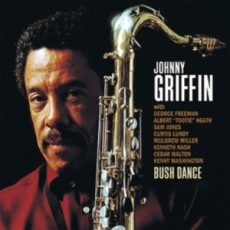
John Arnold Griffin III was born on April 24, 1928 in Chicago, Illinois. Nicknamed the “Little Giant”, he studied music at DuSable High School starting out on clarinet, taking up the oboe and finally the alto saxophone. At fifteen he was playing with T-Bone Walker and three days after graduation joined Lionel Hampton who encouraged the young man to take up the tenor, appearing on a Hamp recording in 1945 at age 17.
In the mid-forties Johnny formed a sextet with Joe Morris and George Freeman, played on R&B records for Atlantic Records and played baritone with Arnett Cobb’s R&B band. After a two-year stint in the Army he returned to Chicago and began establishing his reputation, subsequently signing with Blue Note. By 1957 he gained membership into Art Blakey’s Jazz Messengers, then replaced Coltrane in Monk’s Five Spot Quartet, and recorded Thelonious In Action and Misterioso.
On his first leader outing in 1956 with Blue Note that brought him critical acclaim, Griffin led Wynton Kelly, Curly Russell and Max Roach on “Introducing Johnny Griffin”. This was immediately followed the next year with “A Blowing Session” featuring Coltrane and Hank Mobley. He went on to play with Monk, Blakey and with Clark Terry. During this period he became known as the fastest tenor in the west for the ease with which he could execute fast note runs with excellent intonation.
In 1960 he teamed up with Eddie “Lockjaw” Davis establishing a quintet and recorded several albums over the next two years, then moved to France in ’63 and recorded with Wes Montgomery and Dizzy Gillespie, Nat Adderley, and joined the Kenny Clarke-Francy Boland Big Band and by 1978 he moved to the Netherlands. He became the first choice sax player for touring musicians to the continent. In the seventies he and Davis recorded again, he played with Toots Thielemans, Nat Adderley, Grady Tate, Stan Getz, Art Farmer, Slide Hampton, Gerry Mulligan and arranger Quincy Jones among a host of others.
On July 25, 2008, Johnny Griffin passed away of a heart attack at the age of 80 in Mauprévoir, France, his home for the last 24 years of his life.

More Posts: saxophone
Daily Dose Of Jazz…
Benny Harris was born on April 23, 1919 in New York City. His first major gig as a trumpeter was in 1939 with Tiny Bradshaw. He would go on to play with Earl Hines in 1941 and 1943, and worked New York’s 52nd Street bebop circuit in the 1940s.
Harris collaborated with Benny Carter, John Kirby, Coleman Hawkins, Don Byas and Thelonious Monk. He was with Boyd Raeburn from 1944-45 and Clyde Hart in 1944; he and Byas worked together again in 1945. He played less in the late 1940s, though he appeared with Dizzy Gillespie in 1949 and Charlie Parker in 1952. After this Harris quit music entirely.
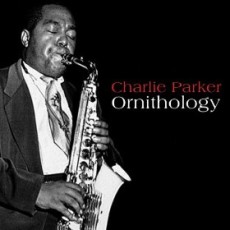
Never a well-known soloist, Benny is better known for such compositions as “Crazeology” and “Ornithology”, the latter being a signature Charlie Parker tune; “Reets and I”, a Bud Powell favorite; and “Wahoo”, a tune associated with Duke Pearson.
Benny Harris, bebop trumpeter and composer died on May 11, 1975 in San Francisco, California.
More Posts: trumpet
Daily Dose Of Jazz…
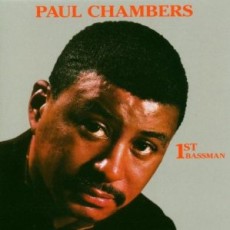
Paul Laurence Dunbar Chambers, Jr. was born in Pittsburgh, Pennsylvania on April 22, 1935 but was raised in Detroit after the death of his mother. He began his music career as a youth playing the baritone horn, then switched to the tuba but by age 14 finally settled on the string bass in 1949. Through high school he trained with a Detroit Symphony Orchestra bassist, played classical music with the Detroit String Band, played with the Cass Technical High School Symphony and various other student groups that often had him playing the baritone saxophone.
Bassist Jimmy Blanton was Paul’s biggest influence but Charlie Parker and Bud Powell were his first influences. He admired Oscar Pettiford and Ray Brown, followed by Percy Heath, Milt Hinton and Wendell Marshall for their rhythm section work. It was Charles Mingus’ and George Duvivier’s technical prowess that gave him an understanding of their broadening of the jazz bass.
Chambers was invited to New York by Paul Quinichette and was soon touring and playing with George Wallington, J.J. Johnson, John Coltrane, Wes Montgomery, Bennie Green, Thad Jones, Barry Harris and Kai Winding. In 1955 he joined the Miles Davis followed by Wynton Kelly and freelanced with many jazz greats throughout his short but impressive career.
Paul Chambers was a prominent figure and one of the most influential jazz bassists of the 1950s and 60s. His importance in the development of jazz bass can be measured by his impeccable time, intonation and virtuosic improvisations. He, along with Slam Stewart was first to perform arco or bowed features.
Over the span of his extremely short career Paul was a member of two of the jazz world’s most famous “rhythm sections”, the first with Red Garland and Philly Jo Jones, the second with Wynton Kelly and Jimmy Cobb. On January 4, 1969 he passed away of tuberculosis at the premature age of 33.

More Posts: bass
Daily Dose Of Jazz…
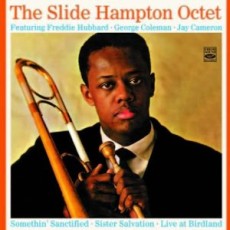
Slide Hampton was born Locksley Wellington Hampton on April 21, 1932 in Jeannette, Pennsylvania, one of twelve children born to Laura and Clarke Hampton, who taught them to play instruments. One of the few left-handed trombonists, not naturally having received a left-handed trombone from his father, by age twelve the Hamptons were living in Indianapolis and Slide was playing in the Duke Hampton Band, led by his father.
Just eight years later Slide was on stage at Carnegie Hall playing with Lionel Hampton in 1952. Throughout the 1950s Slide played with Buddy Johnson, played and arranged for Maynard Ferguson, and recorded with master trombonist Melba Liston. As his reputation grew he began working with Art Blakey, Tadd Dameron, Barry Harris, Thad Jones, Mel Lewis, and Max Roach, contributing both original compositions and arrangements. In the early Sixties he formed an octet with Freddie Hubbard, Booker Little and George Coleman that toured and recorded throughout the U.S. and Europe.
Over the course of fifty plus years Hampton has played with Woody Herman, lived in Europe for ten years, taught at Harvard, University of Massachusetts, DePaul University and Indiana State. He has led a nine trombone 3 rhythm band – World Of Trombones, co-led a quintet with Jimmy Heath called Continuum and freelanced as a writer and player.
This gifted jazz musician has been inducted into the Indianapolis Jazz Hall of Fame, is a two-time Grammy winner, and was honored in 2005 with the NEA Jazz Masters Award. Trombonist, bandleader, educator, master composer, arranger Slide Hampton, who is among the most distinguished assembly of careers in music, passed away on November 18, 2021 in Orange, New Jersey.

More Posts: trombone
Daily Dose Of Jazz…
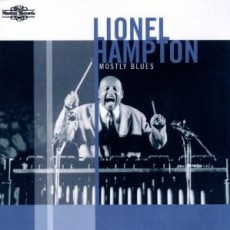
Lionel Leo Hampton was born on April 20, 1908 in Louisville, Kentucky and was raised by his grandmother. The multi-instrumentalist spent his early childhood first in Birmingham, Alabama and then in Kenosha, Wisconsin before his family settled in Chicago by the time he was ten. During his teen years he took up the xylophone, fife and drums. It was drums that kicked started his career in music playing with the Chicago Defender Newsboy’s Band.
Towards the end of the Roaring Twenties Hampton moved to California playing with the Dixieland Blues-Blowers, the Les Hite band and recording with The Quality Serenaders. But it was in 1930 when Louis Armstrong invited Hampton to play vibes during one of his California dates that his career as a vibraphonist and the popularity of the instrument began. But it was later that his star would shine when Johnny Hammond brought Benny Goodman to see Hampton play and invited him to join his group.
Over the course of his lifetime Lionel Hampton led his own orchestras, played with Bing Crosby, Billie Holiday, Teddy Wilson, Gene Krupa, Wes Montgomery, Illinois Jacquet, Dinah Washington Arnett Cobb, Charlie Parker, Quincy Jones, Buddy Rich, Slam Stewart and the list of jazz luminaries is to numerous.
Hampton, a vibraphonist, pianist, percussionist, bandleader and actor was inducted into the Alabama Jazz Hall of Fame in 1992, received the Papal Medal from Pope Paul VI, has toured and performed around the world, had his vibraphone of 15 years placed in the National Museum of American History and the University of Idaho renamed their music school for Hampton, becoming the first university to do so for a jazz musician.
One of the first jazz pioneers of the vibes and a giant whose career spanned over six decades, Lionel Hampton passed away of heart failure at the age of 94 on August 31, 2002.
More Posts: vibraphone