

Daily Dose Of Jazz…
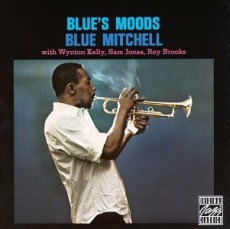
Blue Mitchell was born Richard Allen Mitchell on March 13, 1930 and was raised in Miami, Florida. He didn’t begin playing trumpet until high school, where he received his nickname “Blue”. In the years following he played in the rhythm and blues bands of Paul Williams, Earl Bostic and Chuck Willis but upon returning to Miami caught the ear of Cannonball Adderley, with whom he recorded in 1958 for Riverside.
He joined the Horace Silver Quintet playing alongside Junior Cook, Gene Taylor and Roy Brooks until 1964 and then formed his own band replacing Silver with Chick Corea an ailing Brooks with Al Foster. By 1969 Mitchell disbanded the group and joined Ray Charles, touring till ’71.
This stint was followed by Jazz Blues Fusion with John Mayall and throughout the seventies he recorded and worked as a session player, performed with Louis Bellson, Bill Holman, Lou Donaldson, Grant Green, Philly Joe Jones, Jackie McLean, Dexter Gordon, Hank Mobley and a host of other major players.
On May 21, 1979 the multi-faceted trumpeter Blue Mitchell, who delivered a light and swinging tone and known for his jazz, rhythm and blues, passed away from complications of cancer at age 49 in Los Angeles, California.
More Posts: trumpet
Daily Dose Of Jazz…
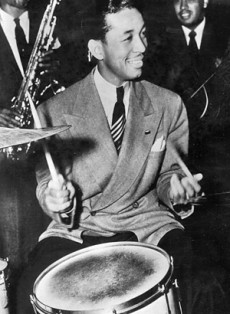
Drummer and singer Lee Young was born on March 7, 1914 as Leonidas Raymond Young in New Orleans, Louisiana to parents who were both musicians and teachers. The younger brother of tenorist Lester Young, his father drilled music into his children long before they started school, preparing them for the carnival and vaudeville road. The family finally settled in Los Angeles.
Steeped in the roots deep in New Orleans jazz, Lee played and recorded with Fats Waller in the thirties, and helped forge a burgeoning and vibrant jazz scene in Los Angeles in the ‘40s, and in 1944 he was drumming with Les Paul, J. J. Johnson, and Illinois Jacquet at Norman Granz’s first Jazz At The Philharmonic. In the Fifties he conducted and drummed for Nat King Cole.
Young was the first Black musician to be a regular studio musician in Hollywood and taught Mickey Rooney to play drums for a movie. By the 60’s he was a successful A&R man and record producer for Vee-Jay and Motown with a reputation for predicting what would sell.
Young is considered one of the most significant figures in jazz who directly connected the world to the early glories of jazz: the birth of jazz in New Orleans, the jazz age, the swing era and bebop. He led an integrated band at a time when it was not fashionable. He worked with Duke Ellington, Count Basie, Benny Goodman, Lionel Hampton and Les Hite. Lee Young passed away at the age of 94 on July 31, 2008.
Lee Young: 1914-2008 / Drums

More Posts: drums
Daily Dose Of Jazz…
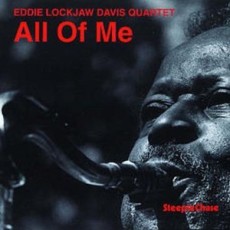
Edward Davis was born on March 2, 1922 in New York City. He was known to his friends, peers, jazz enthusiasts and aficionados by his nickname “Lockjaw” and became one of the pre-eminent jazz saxophonists of the 20th century.
In the early to mid-forties he played with Cootie Williams, Lucky Millinder, Andy Kirk, Louis Armstrong and Cont Basie. By 1946 he was leading his own band “Eddie Davis and His Beboppers” that housed Fats Navarro, Al Haig, Huey Long, Gene Ramey and Denzil Best.
In the 50’s he teamed with Sonny Stitt, from 1960 to ’62 he co-led a quintet with Johnny Griffin, and he and Griffin performed as part of the Kenny Clarke-Franz Boland Big Band. Davis recorded with Ella Fitzgerald, collaborated with Shirley Scott and played off and on with Count Basie’s Orchestra in the early 70’s.
In his later years he played with Harry “Sweets” Edison and remained busy as a soloist until his death on November 3, 1986 at the age of 64. Eddie “Lockjaw” Davis performed within the jazz genres swing, bop, hard bop, Latin and soul jazz.
More Posts: saxophone

Daily Dose Of Jazz…
Dave Pell was born on February 26, 1925 in New York City. Growing up in Brooklyn between Brighton and Manhattan beaches, as a teenager he was playing the saxophone and touring with the Tony Pastor, Bob Astor, and Bobby Sherwood bands as a teenager, before moving to California in the mid-’40s. He found work with Bob Crosby on the Ford radio show in 1946, and then played with the Les Brown band from 1947 to 1955.
Drawing from the ranks of the Brown band, Pell, one of the founding fathers of the West Coast jazz, began leading his own groups in 1953, usually in an octet format, augmented by guests like Pepper Adams, Benny Carter, Mel Lewis, Red Mitchell, Marty Paich, and Art Pepper.
He also played as a sideman on records by Shorty Rogers, Pete Rugolo, Benny Goodman, and Gene Krupa in the 1950s, while recording under his own name for Atlantic, Kapp, Coral, Capitol, and RCA Victor.
During the 1950’s and ‘60s his primary focus of activity in the record business was as a producer for the budget Tops label and Liberty, supervising a few hit pop/rock records for Gary Lewis & the Playboys.
Then in the late 1970s Dave put together a tribute band to Lester Young called Prez Conference, recording two albums for GNP/Crescendo. In the ’80s and ’90s, the saxophonist and bandleader revived his octet for recordings and sporadic live dates in the Los Angeles area, including an appearance at the Jazz West Coast festival in 1994. He has had several reissues on CD along with a few imports and new recordings over the past decade. Saxophonist Dave Pell, known for his octet recordings and performances, passed away on May 7, 2017, at the age of 92.

More Posts: saxophone
Daily Dose Of Jazz…
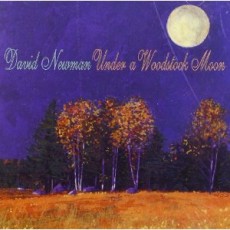
David Newman Jr. was born on February 24, 1933 in Corsicana, Texas. He got his nickname in high school when his then music teacher noticed his upside down sheet music tapped him on the head with his conductors baton and called him “Fathead”. Preferring to be called David, the jovial Newman accepted the nickname that stuck with him his whole life.
Moving to Dallas he graduated from Lincoln High School, began playing flute and tenor at local shows, and received a scholarship to Jarvis Christian College where he studied theology and music for two years. This brief stay was followed with him on the road touring with Bester Smith (Charlie Parker’s mentor) and dance hall one-nighters with T-Bone Walker.
Newman’s professional career as a musician began in 1954 as a member of the Ray Charles Band playing baritone sax that was the beginning of a twelve-year relationship followed by ten years with Herbie Mann and playing with Red Garland for a period in the 70’s. By the late 90’s he was recording for HighNote Records and a long and profitable relationship started producing some ten albums.
For over a half century, Newman recorded over thirty-eight albums under his own name beginning in 1958 with Fathead – Ray Charles Presents David Fathead Newman. Although best known for his hard bop style, he’s recorded with James Clay, Cannonball Adderley, Stanley Turrentine, Aretha Franklin, B. B. King, Natalie Cole, Average White Band, Eric Clapton, Jimmy McGriff and many others.
Always a musicians’ musician, Newman has influenced whole generations of saxophone players of different genres including R&B, blues and country, and texmex. On January 20, 2009, saxophonist and flautist David “Fathead” Newman died from complications of pancreatic cancer in Kingston, New York at age 75.
