

Daily Dose Of Jazz…
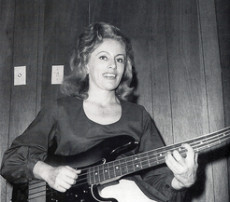
Carol Kaye was born March 24, 1935 in Everett, Washington to professional musicians Clyde and Dot Smith. Growing up in poverty near the Port of Los Angeles, she began teaching guitar professionally in 1949 at age 14. Throughout the fifties Kaye played bebop in L. A. clubs with Bob Neal, Jack Sheldon who backed Lenny Bruce, Teddy Edwards and Billy Higgins.
One of the most prolific and widely heard bass players of her time she played many of Phil Spector’s sessions, Brian Wilson productions, Richie Valens, Simon and Garfunkel, Quincy Jones and Dave Grusin. Her television credits are a who’s who with shows like M*A*S*H, Get Smart, Kojak, It Takes A thief, The Love Boat, Hogan’s Heroes, Mannix, The Cosby Show, Wonder Woman, Mission Impossible and so on and so on.
An educator, Carol wrote beginning in 1969, How To Play The Electric Bass, the first of many bass tutoring books and DVD Courses. By the late 70’s she retired from playing due to arthritis but later returned to session work, teaching both bass and guitar to the likes of John Clayton, and performing, giving seminars and interviews.
A noted session player she carved out a lucrative career beginning with backing the likes of Sam Cooke in 1957 and working with leading producers like Michel Legrand, Lalo Schifrin, Hugh Montenegro, John Williams and Steven Spielberg. She is estimated to have played on 10,000 recording sessions over a career spanning 55 years.
Daily Dose Of Jazz…
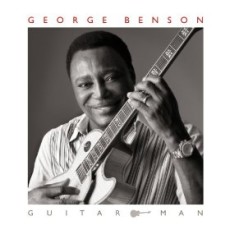
George Benson was born in Philadelphia, Pennsylvania on March 22, 1943 and raised in the Hill District. A child prodigy at the age of 7, he first played the ukulele in a corner drug store and received a few dollars for his efforts. At age 8, he was playing guitar in an unlicensed nightclub on Friday and Saturday nights that was soon closed down by the police. By the time he was 10, George was in New York recording his first single record with RCA-Victor in New York, called “She Makes Me Mad”.
He attended Connelly High School and although he left before graduation, he learned how to play straight-ahead instrumental jazz during a relationship performing for several years with organist Jack McDuff. At the age of 21, he recorded his first album as leader, “The New Boss Guitar” featuring McDuff, followed by “It’s Uptown with the George Benson Quartet” and “The George Benson Cookbook”.
During the ‘60s he was recording with Miles Davis for Columbia’s “Miles In The Sky”, moved on to Verve for a period and then signed with Creed Taylor producing such albums as “White Rabbit” and “The Other Side of Abbey Road” among others.
Benson released “Breezin” in 1976 and it went triple platinum topping Billboard’s 200. Tuning to vocal chops, the guitarist added a crossover audience adding smooth jazz to his repertoire of genres that include R&B, pop and jazz. The multi-Grammy award winner, he has recorded over two hundred albums and singles as a leader, sideman and collaborator; and has performed with the likes of Jaki Byard, Hank Mobley, Jimmy Smith, Lou Donaldson, Hank Crawford, Don Sebesky, Stanley Turrentine, Hubert Laws, Lee Morgan, Red Holloway, J. J. Johnson and Kai Winding, Freddie Hubbard, Deodato, Aretha Franklin, Freddy Cole, and Sadao Watanabe among numerous others.
In 2009 the National Endowment of the Arts honored George Benson with the distinction of being a Jazz Master and he continues to record, perform and tour worldwide.

Daily Dose Of Jazz…
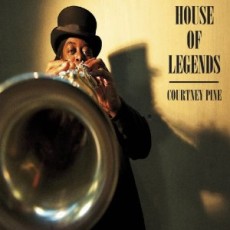
Courtney Pine, Commander of the British Empire (CBE), was born on March 18, 1964 in London, England. At school he studied clarinet, although he is known primarily for his saxophone. A product of Jamaican immigrants, as a child he wanted to be an astronaut but spent his childhood learning a host of instruments including flute, clarinet, tenor, soprano and baritone saxophones and keyboards.
Cutting his teeth with the hard bop group called Dwarf Steps, he went on to tour with Clint Eastwood and reggae star General Saint. This was followed with a return to jazz, studying Sonny Rollins and Coltrane’s improvisation and becoming a member of Charlie Watts’ band. Pine went on to tour with George Russell and Art Blakey’s Jazz Messengers and recorded his debut album Urge Within for Antilles Records, garnering both critical and financial success.
His Modern Day Jazz Stories immersed him in tradition and the purest were pleased with Geri Allen, Mark Whitfield, Eddie Henderson, Charnett Moffett and Cassandra Wilson. But their zeal was soon diminished with the release of his ’97 hip-hop Underground that employed the talents of Jeff Watts, Mark Whitfield, Reginald Veal, Nicholas Payton and Cyrus Chestnut alongside some great DJs.
An adventurer in jazz, saxophonist Courtney Pine continually fascinates and frustrates critics with his musical vision that has brought the world within and outside the jazz tradition – pop, reggae, electronic, funk, soul and world music as he tackles new and uncharted territory.
Courtney Pine: 1964 / Saxophone
More Posts: saxophone
Daily Dose Of Jazz…
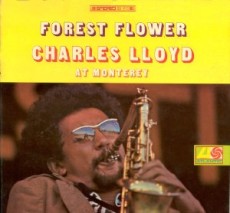
Charles Lloyd was born on March 15, 1938 in Memphis, Tennessee and from an early age was exposed to jazz and immersed in the city’s rich musical culture. Beginning saxophone at age 9, he took lessons from pianist Phineas Newborn and hung out with his closest friend Booker Little. Being in the blues city started gigging with B.B. King, Howlin’ Wolf, Bobby Blue Bland and others.
In ’56 he moved to Los Angeles earning a music degree from USC, playing with Gerald Wilson due this period. By 1960 he became Chico Hamilton’s music director, revolutionizing then chamber jazz to a more progressive post-bop sound. From thee he went on to join Cannonball working with Herbie Hancock, Ron Carter, and Tony Williams, then leading his own quartet with Keith Jarrett, Cecil McBee and Jack DeJohnette that signed with Atlantic Records.
This group brought an interesting fusion of straight-ahead post-bop, free jazz and soul jazz to their music catching on with both fans and critics. Crossing over with young rock fans Lloyd became the first jazz group to play the Fillmore West in San Francisco. The subsequent album Forest Flower, recorded at the 1966 Monterey Jazz Festival, became a huge commercial success.
Entering a period of semi-retirement in 1968 he recorded several albums in the seventies and appeared occasionally as a sideman. During the ’70s he backed and toured with the Beach Boys and a member of Celebration comprised of members of the band. In the early eighties he resumed playing actively after being approached by Michel Petrucciani and by the end of the decade was touring and recording again. This period of recording showcased his sensitivity to playing ballads.
His tenor is soft-toned, reminiscent of a variation of Coltrane but his flute is original. Throughout his career Lloyd’s style has remains unchanged and he continues to play and record.

More Posts: saxophone
Daily Dose Of Jazz…
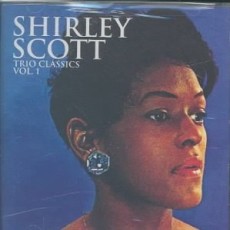
Shirley Scott was born in Philadelphia, Pennsylvania on March 14, 1934. She began her musical journey with piano and trumpet in high school but her admiration for Jimmy Smith moved her to the Hammond organ as her primary instrument, though she continued to play piano.
In the Fifties she came to prominence working with saxophonist Eddie Davis, but by the ‘60s Scott married Stanley Turrentine and the subsequent musical collaboration was fruitful with releases.
A very melodic player, Shirley graduated to an aggressive, highly rhythmic approach of organ player blending intricate bebop harmonies with blues and gospel with soul jazz. Her visibility waned in the seventies as labels interest in organ combos was replaced by fusion and pop jazz.
By the 1980s she would become a jazz educator and recording for Muse with the new found interest in organ late in the decade. Scott, a superb pianist, exclusively played piano during the Nineties in Philly jazz clubs and recorded trio projects for Candid.
By the turn of the new century with her health declining, she was diagnosed with heart damage due to adverse effects from the diet pill “fen-phen”. She was awarded $8 million in a lawsuit against the drug manufacturers. Shirley Scott died of heart failure on March 10, 2002.