

Daily Dose Of Jazz…
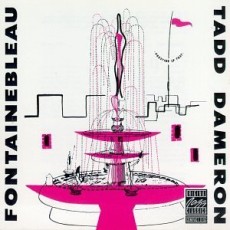
Cleveland, Ohio was the birthplace of Tadley Ewing Peake Dameron on February 21, 1917. Tadd as he was known in the jazz world became the definitive arranger/composer of the bop era writing such standards as “Good Bait,” “Our Delight,” “Hot House,” “Lady Bird,” and “If You Could See Me Now.” Not only did he write melody lines, he also wrote full arrangements. Though he never financially prospered, Dameron was an influential force from the mid-’40s till his death.
Dameron started out in the swing era touring with the Zack Whyte and Blanche Calloway bands, he wrote for Vido Musso in New York and most importantly, contributed arrangements for Harlan Leonard’s Kansas City Orchestra, some of which were recorded.
Soon he was writing charts for such bands as Jimmie Lunceford, Count Basie, Billy Eckstine, and Dizzy Gillespie (1945-1947) in addition to Sarah Vaughan. Always very modest about his own piano playing but he did gig with Babs Gonzales’ Three Bips & a Bop in 1947 and led a sextet featuring Fats Navarro at the Royal Roost during 1948-1949.
Dameron co-led a group with Davis at the 1949 Paris Jazz Festival, stayed in Europe for a few months (writing for Ted Heath), and then returned to New York. He wrote for Artie Shaw’s last orchestra that year, played and arranged R&B for Bull Moose Jackson (1951-1952) and in ‘53 led a nonet featuring Clifford Brown and Philly Joe Jones.
He also led bands that included Dexter Gordon, Sonny Rollins and Wardell Gray. Drug problems, however, started to get in the way of his music. After recording a couple of albums including 1958’s Mating Call with John Coltrane, drug addiction caused him to spend much of 1959-1961 in jail. After he was released, Dameron wrote for Sonny Stitt, Blue Mitchell, Milt Jackson, Benny Goodman, suffered several heart attacks and diagnosed with cancer from which he would eventually succumb to on March 8, 1965 in New York City.

Daily Dose Of Jazz…
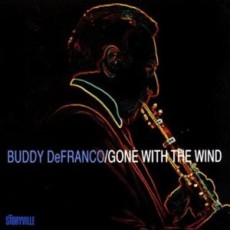
Buddy DeFranco was born Boniface Ferdinand Leonard DeFranco in Camden, New Jersey on February 17, 1923. By the age 14 he had won an amateur swing contest sponsored by Tommy Dorsey. Just four short years later he was working with the big bands of Gene Krupa in 1941 and Charlie Barnet in 1943. Those stints were followed with him playing off and on with Tommy Dorsey over the next few years.
Outside of a short-lived association with the Count Basie Septet in 1950, Buddy mainly lead his own bands from then on, playing and recording with Tal Farlow, Art Blakey, Kenny Drew and Sonny Clark, Art Tatum and Oscar Peterson as his sidemen, among others too numerous to name. He also played in some of Norman Granz’s Verve jam sessions and during the late 60’s DeFranco became the bandleader of the Glenn Miller Orchestra, an association that lasted until 1974. He has found more artistic success co-leading a quintet with Terry Gibbs off and on since the early 80’s and has recorded numerous albums.
Buddy DeFranco is considered one of the great clarinetists of all time and, until the rise of Eddie Daniels, he was indisputably the top clarinetist to emerge since 1940. It was DeFranco’s misfortune to be the best on an instrument that after the swing era dropped drastically in popularity and, unlike Benny Goodman and Artie Shaw, he has never been a household name for the general public and while most jazz clarinet players were unable to adapt to fading popularity, Buddy Defranco was one of the few bebop musicians who successfully continued to play clarinet exclusively until he passed away on December 24, 2014 in Panama City, Florida at age 91.

More Posts: clarinet

Daily Dose Of Jazz…
Pete Christlieb was born on February 16, 1945 in Los Angeles, California to bassoonist Don Christlieb. He began his musical career playing the violin at seven, adding the tenor sax by thirteen. After high school he played with diverse L.A. bands in the early 60’s including those led by Chet Baker, Woody Herman and Sy Zenter. He joined Louis Bellson in 1967 and stayed into the eighties.
He recorded his first leader session for the Jazz City label in 1971 and by the early 80’s he started his own label, Bosco Records that would issue small group albums as well as records by Bellson and Bob Florence.
Christlieb has long been in demand as a studio player and the saxophonist has played with innumerable artists including Count Basie, Benny Goodman, Quincy Jones and Sarah Vaughan while also knocking out legendary solos on Steely Dan’s Deacon Blues, Natalie Cole’s Unforgettable and the extended solo on the movie theme FM. He held a longtime seat in Doc Severinsen’s band on The Tonight Show with Johnny Carson.
Pete Christlieb, a bebop, hard bop and West coast tenor saxophonist currently plays with his group the Tall and Small Band, the Bill Holman Orchestra and his own quartet.

More Posts: saxophone
Daily Dose Of Jazz…
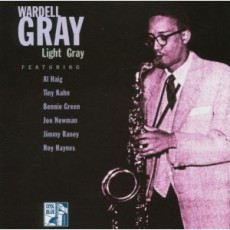
Wardell Gray was born the youngest of four children on February 13, 1921 in Oklahoma City, Oklahoma. Though his early years were spent there, in 1929 his family moved to Detroit. By 1935 he attended Northeastern High but soon transferred to Cass Technical High, whose noted alumni were Donald Byrd, Lucky Thompson and Al McKibbon. After year and before graduating Wardell dropped out and began playing the clarinet, but it was hearing Lester Young that drove him to pick up the tenor.
He played around Michigan in various bands led by pianist Dorothy Patton, Jimmy Raschel and Benny Carew and by 1941 a short-lived marriage produced a daughter. Gray got his big break when he joined the Earl Hines Orchestra in 1943, not only nationally known but had nurtured the careers of Dizzy Gillespie and Charlie Parker. For the young tenor he toured all over the country for the next three years becoming a featured soloist and subsequent recordings showed a relaxed, fluent stylist.
After leaving Hines, Wardell settled in Los Angeles and started recording under his own name for the Sunset label. He also worked with Benny Carter, Billy Eckstine and blues singer Ivory Joe Hunter. But it was Central Avenue that he found his greatest pleasure playing after-hours sessions, attracting the owner of Dial Records to hire him to play showcases for Charlie Parker, showing no signs of intimidation. On the avenue Gray held tenor battles with Dexter Gordon and his light sound and swift delivery was a match for Dexter’s big sound. The tenor jousts soon became a symbol for the Central Avenue scene.
With his career moves progressing he joined Benny Goodman’s small groups in 1947 and although musically successful, it was not financially. In ’48-‘50 he moved between Count Basie and Benny Goodman, recorded with Tadd Dameron, ended his second marriage and formed a septet that included Clark Terry and Buddy DeFranco bringing to audiences a very relaxed swinging band. Over the next few years he got married for the third time, did a few recording dates with Art Farmer, Hampton Hawes, Dexter Gordon and Teddy Charles, and performing most notably with Gerald Wilson’s Orchestra trading choruses with Zoot Sims and Stan Getz.
One of the top tenors to emerge during the bop era, Wardell Gray passed away under mysterious circumstances, found on a stretch of desert outside Las Vegas with a broken neck, on May 25, 1955.
More Posts: saxophone
Daily Dose Of Jazz…
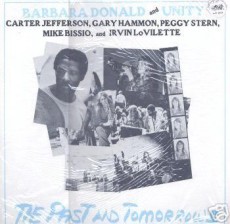
Barbara Donald was born February 9, 1942 in Minneapolis, Minnesota. At 9 she was playing the cornet, listening to Dixieland, Louis Armstrong and Benny Goodman and showed physical abilities unusual for a woman. She soon switched to the trumpet, receiving a good musical education on various reed instruments and vocals.
In 1955 her parents moved to California where she was denied access to the high school big band, so she formed her own groups. By age 19, she was sharing bandstands with Dexter Gordon, Stanley Cowell and Bert Wilson, a daringly unusual position for a white woman. Ironically, she faced the same denial with jazz big bands refusing to audition women. Therefore she paid her dues to rhythm & blues, rock and roll and dance bands.
A brief stay in New York City strengthened her determination and upon her return to Los Angeles, Barbara started hanging out with jazz musicians and studying the art of playing bebop with “Little” Benny Harris, who co-wrote “Ornithology” with Charlie Parker. Settling in San Diego in 1964 she met mentor Sonny Simmons and taught her structure with hard keys and hard chords. Simmons’ own innovation stressed playing the melody and staying on top of the beat.
From 1964 to 1972, Barbara and Sonny lived, performed and struggled together. Their career, if too often chaotic with irregular engagements and recordings, remained underground, producing brilliant and singular music. However, Barbara’s presence balanced her husband’s revolutionary moods at a time when Sonny was prone to radical sojourns between tradition and modernity.
Her voluble and powerful, somehowunadorned playing, indicating a perfect control of the bop idiom, characteristic of the immediate post-Trane free expression, was the perfect supporting structure of Simmons’ angular themes and improvisations.
Barbara Donald parted from Sonny, moved to Washington in the early 80’s, formed Unity and began to expose and refine her own concept. In 1984, Barbara presented Unity at the Kool Jazz Festival with then rising star Charnett Moffett on bass. By 1992, Barbara Donald’s health was failing and one of the top female jazz trumpeters, after experiencing a series of strokes that rendered her unable to actively play live, Donald had been living in an assisted care facility in Olympia, Washington, from 1998 until her death on March 23, 2013.
More Posts: trumpet