

Daily Dose Of Jazz…
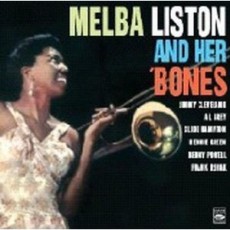
Melba Doretta Liston was born on January 13, 1926. Growing up in Kansas City, MO the young trombonist studied with Alma Hightower and played in youth bands. At 17 the talented trombonist joined Gerald Wilson’s big band and by the mid-1940’s Melba began working with the emerging beboppers like Dexter Gordon, Dizzy Gillespie, Paul Gonsalves, John Coltrane and John Lewis. She toured with Count Basie and Billie Holiday in the late 40’s but was so profoundly affected by audience indifference and the rigors of the road she quit playing.
For the next few years she did clerical work and supplemented her income working as an extra in Hollywood appearing in The Prodigal and The Ten Commandments. By the mid 50’s Melba was back playing, touring with Dizzy Gillespie for the U.S. State Department and recording with Art Blakey’s Jazz Messengers. In 1958 she formed her all-women quintet and with her show “Free and Easy” she toured Europe with Quincy Jones as her musical director.
The 60’s saw Melba collaborating with pianist Randy Weston, arranging primarily her own compositions for mid-size to large ensembles and are widely acknowledged as jazz classics. Melba worked with the likes of Milt Jackson, Clark Terry, and Johnny Griffin as well as arranging for various Motown records. In 1971 she became the musical director for Stax Records, working with Stevie Wonder, Joe Sample, Wilton Felder, Arthur Adams and jazz drummer Paul Humphrey whose uncharted album released in 1972 contains some of Melba’s finest works ever.
Melba Liston was a trombonist, composer and an important jazz arranger whose collaboration with pianist/composer Randy Weston continued until her death on April 23, 1999.
More Posts: trombone
Daily Dose Of Jazz…
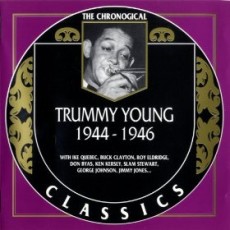
Trummy Young was born James Young in Savannah, GA on January 12, 1912 but grew up in Washington, DC. He originally started out as a trumpeter but by the time he debuted in 1928, he had switched to trombone and soon became one of the finest trombonists of the swing era. From 1933 to ’37 Young was a member of Earl Hines’ orchestra and later joined Jimmie Lunceford from ‘37 to 1943.
Although he was never really a star or bandleader, Trummy had one hit with his version of “Margie” and with Sy Oliver wrote the tune “Tain’t What You Do (It’s The Way You Do It)” that became a hit for both Lunceford and Ella Fitzgerald in 1939.
Young played with Charlie Parker and Dizzy Gillespie on a Clyde Hart led session in 1945 and with the Jazz At The Philharmonic. In 1952 he joined the Louis Armstrong All Stars and stayed a dozen years recording St. Louis Blues in ’54 and performing in the 1956 musical High Society. 1964 saw Young quitting the road to settle in Hawaii where on September 10, 1984 he succumbed to a cerebral hemorrhage.

More Posts: trombone
Daily Dose Of Jazz…
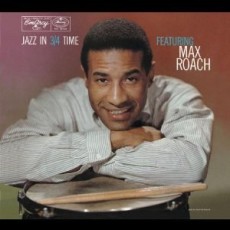
Max Roach was born Maxwell Lemuel Roach into the musical family of Alphonse and Cressie Roach on January 10, 1924 in the township of Newland in Pasquotank County, North Carolina. At the age of 4 the family moved to Bedford–Stuyvesant in Brooklyn, New York and few years later he was playing bugle and by 10 he was drumming in gospel bands. Upon graduation from Boy’s High School in 1942, the eighteen year old was called up to the majors filling in for Sonny Greer in the Duke Ellington Orchestra.
Roach’s most significant innovations came in the 1940s, when he and jazz drummer Kenny Clarke devised a new concept of musical time. By playing the beat-by-beat pulse of standard 4/4 time on the “ride” cymbal instead of on the thudding bass drum, Roach and Clarke developed a flexible, flowing rhythmic pattern that allowed soloists to play freely. The new approach also left space for the drummer to insert dramatic accents on the snare drum, “crash” cymbal and other components of the trap set. By matching his rhythmic attack with a tune’s melody, Roach brought a newfound subtlety of expression to his instrument.
Max along with Kenny Clarke were the first drummers to play bebop and performed in the bands of Dizzy Gillespie, Thelonious Monk, Coleman Hawkins, Bud Powell, Charles Mingus, Sonny Rollins, Clifford Brown, Duke Ellington, Miles Davis and Charlie Parker. He played on many of Parker’s most important records including the Savoy 1945 session, a turning point in recorded jazz.
Roach went on to lead his own groups, and made numerous musical statements relating to the Black civil rights movement. He once observed, “In no other society do they have one person play with all four limbs.” Jazz percussionist, drummer, composer and innovator Max Roach left the jazz world on August 16, 2007.

More Posts: drums
Daily Dose Of Jazz…
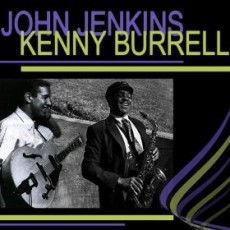
The hard bop alto saxophonist John Jenkins was born January 3, 1931 in Chicago, IL where he initially studied clarinet in high school but switched to saxophone after six months on the instrument. He played in jam sessions led by Joe Segal at Roosevelt College from 1949-1956 going on to play with Art Framer in 1955 and led his own group in Chicago later that year.
Jenkins had a sound similar to Jackie McLean and the 50’s saw his most active period. In 1957 he played with Charles Mingus s and recorded two albums as a leader, “Jenkins, Jordan & Timmons” on the New Jazz label and “John Jenkins with Kenny Burrell” on Blue Note.
He played as a sideman with Donald Byrd, Hank Mobley, Paul Quinichette, Clifford Jordan, Sahib Shihab and Wilbur Ware. in the late 1950s and early 1960s, but essentially dropped out of music after 1962, aside from a few dates with Gloria Coleman.
After leaving the jazz world John worked as a messenger in New York and dabbled in jewelry; he sold brass objects at street fairs in the 1970s. After 1983 he began practicing again and playing live on street corners and he played with Clifford Jordan shortly before his death on July 12, 1993.
More Posts: saxophone
Daily Dose Of Jazz…
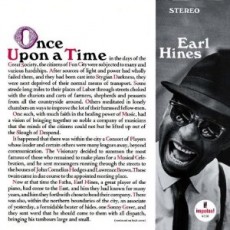
Earl “Fatha” Hines was born Earl Kenneth Hines on December 28, 1903 in Duquesne, Pennsylvania. The youngster took classical piano lessons and by eleven was playing organ in his local Baptist church. Having a “good ear and a good memory” he could re-play songs and numbers he heard in theaters and park concerts. At 17, with his father’s approval, Hines moved away from home to take a job playing piano in a Pittsburgh nightclub with baritone Lois Deppe & his Symphonian Serenaders. He would accompany Deppe on his concert trips to New York and record his first four sides for Gennett Records in 1923 that included Hines’ composition Congaine.
In 1925 Hines moved to Chicago, Illinois, then the world’s “jazz” capital, home to Jelly Roll Morton and King Oliver. He started in The Elite no. 2 Club but soon joined Carroll Dickerson’s band, touring with him on the Pantages Theatre Circuit to Los Angeles. He met Louis Armstrong in the poolroom at Chicago’s Musicians’ Union and becoming good friends played together Louis was astounded by Hines’s avant-garde “trumpet-style” piano playing. They played together in Dickerson’s band, Louis’ Hot Five and The Unholy Three.
Hines joined clarinetist Jimmy Noone, recorded his first piano solos for QRS Records in 1928, then for Okeh in Chicago. In Chicago he lead his own big band at the Capone controlled Grand Terrace Café, working continuously through the Great Depression. He influenced or taught Nat “King” Cole, Jay McShann and Art Tatum. Fatha brought along in his band Dizzy Gillespie, Budd Johnson, Ray Nance, Trummy Young, Harry “Pee Wee” Jackson, Charlie Parker, Scoops Carry, Teddy Wilson, Omer Simeon and Nat “King” Cole, along with vocalists Sarah Vaughan and Billy Eckstine among others.
He laid the seeds for bebop bringing modern players like Gene Ammons, Benny Carter Wardell Gray, Bennie Green and shadow Wilson to name a few. Earl would hire and all-women group during WWII, fronted Duke Ellington’s band when he was ill, and had a serious head injury from a car crash that affected his eyesight for the rest of his life.
Earl “Fatha” Hines was one of the most influential figures in the development of modern jazz piano and according to one major source, is “one of a small number of pianists whose playing shaped the history of jazz”. To name a few would be an injustice to those unmentioned as his list of recordings with jazz notables runs endlessly.
Over the course of his career Earl joined up again with Armstrong in what became the hugely successful “Louis Armstrong and his All-Stars small-band”, he won Downbeat Magazine’s Hall of Fame “International Critics Poll” and elected him the world’s “No. 1 Jazz Pianist”, made a hour long documentary at Blues Alley in Washington, DC, played solo at the White House and for The Pope, and played and sang his last show in San Francisco a few days before he died in Oakland, California on August 22.1983. On his tombstone is the inscription: “Piano Man”.
More Posts: piano