

Daily Dose Of Jazz…
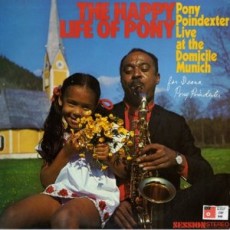
Saxophonist Pony Poindexter was born Norwood Poindexter on February 8, 1926 in New Orleans, LA. Poindexter began on clarinet and switched to playing alto and tenor sax growing up. In 1940 he studied under Sidney Desvigne followed by his move to Oakland to attend Candell Conservatory.
From 1947 to 1950 he played with Billy Eckstine, 1950 he played in a quartet with Vernon Alley, from 1951 to 1952 he was with Lionel Hampton and in 1952 he played with Stan Kenton. Neal Hefti wrote the tune “Little Pony”, named after Poindexter, for the Count Basie Orchestra.
Through the end of the 1950s Poindexter played extensively both as a leader and as a sideman, recording with Charlie Parker, Nat King Cole, T-Bone Walker and Jimmy Witherspoon. In the early sixties he backed up Lambert, Hendricks & Ross, who together also recorded a vocal version of “Little Pony”.
He was one of the first bebop saxophonists to begin playing soprano saxophone in the early 60’s, recording with Eric Dolphy and Dexter Gordon before moving to Paris in ’63 and recording with Annie Ross, Phil Woods, Lee Konitz and Leo Wright. He lived in Spain and Germany before returning to the states in ’77, residing in San Francisco to record again.
Pony Poindexter published his autobiography, Pony Express in 1985 but he had already slipped away into obscurity and never gained the recognition he deserved by the time of his passing on April 14, 1988 in Oakland.

More Posts: saxophone
Daily Dose Of Jazz…
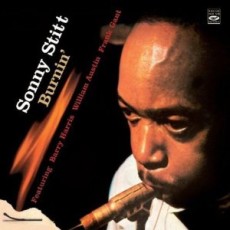
Sonny Stitt was born Edward Stitt on February 2, 1924 in Boston, Massachusetts but grew up in Saginaw, Michigan in a musical family and was given a strong musical background as a child. His father was a college music professor, his mother a piano teacher and his brother was a classically trained pianist.
Meeting Charlie Parker in 1943, the two found their styles extraordinarily similar, due in part to Stitt’s emulation. Considered on of Parker’s greatest disciples he was also influenced by Lester Young, both helping Sonny develop his own style, which would later influence John Coltrane.
Nicknamed the “Lone Wolf” by jazz critic Dan Morgenstern, attributing his relentless touring and devotion to jazz, Stitt recorded over 100 albums in his lifetime. His earliest recordings were with Stan Getz in 1945, he played in swing bands like Tiny Bradshaw’s big band and replaced Charlie Parker in Dizzy’s band, and sat alongside bop pioneers Dexter Gordon and Gene Ammons in Billy Eckstine’s big band in the forties.
Sonny began to develop a far more distinctive sound on tenor playing with other bop musicians Bud Powell and Eddie “Lockjaw” Davis. In the fifties he teamed up with Thad Jones and Chick Corea and experimented with Afro Cuban jazz. He joined Miles Davis briefly in 1960 but was fired for an excessive drinking habit he developed.
Stitt went on to record a number of albums with his long-time friend Gene Ammons, regarded as some of their best work of dueling partnerships; then ventured into soul jazz with Booker Ervin, recorded with Ellington alumnus Paul Gonsalves and was a regular at Ronnie Scott’s in London during the sixties.
By the 1970s, Sonny slowed his recording output slightly, experimenting with an electric saxophone called the “Variphone” heard on the album “Just The Way It Was – Live At The Left Bank” in ’71 and returning to the alto to record the classic “Tune Up” in 1972. Sonny joined the Giants Of Jazz along with Art Blakey, Kai Winding, Dizzy Gillespie, Thelonious Monk and Al McKibbon, and continued to record throughout the seventies.
A fiery tenor with enthusiastic solos, he was equally effective with blues and ballads, whether he was playing the alto, tenor or baritone. Sadness fell upon the jazz world on July 22, 1982 when Sonny Stitt passed away in Washington, D.C. after suffering a heart attack.

More Posts: saxophone
Daily Dose Of Jazz…
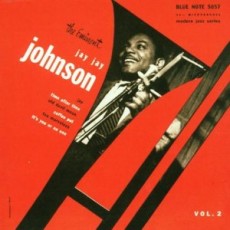
J. J. Johnson was born James Louis Johnson in Indianapolis, Indiana on January 22, 1924. He started studying piano at the age of 9 and at fourteen decided to play the trombone. By 1941 he began his professional career with Clarence Love and followed by Snookie Russell in ’42, then playing through the forties with the Benny Carter Orchestra, participating in the first Jazz At The Philharmonic organized by Norman Granz in Los Angeles.
He would tour and record with the Count Basie band, Illinois Jacquet and then began leading and recording small groups featuring Max Roach, Sonny Stitt and Bud Powell. By 1951 he took a job as a blueprint inspector but never abandoned his love for music as documented by his compositions Enigma and Kelo recorded by Miles Davis, garnering an invitation to play on the 1954 classic Davis Blue Note session, Walkin’.
Johnson went on to lead groups with Kai Winding, arranging for and backing Sarah Vaughan, following with a successful solo career touring the U.S., the U.K. and Scandinavia. He recorded a wide range of albums with notables as Bobby Jaspar, Clifford Jordan, Freddie Hubbard, Tommy Flanagan, Cedar Walton, Andre Previn and the list goes on and on.
In 1958-59 Johnson was one of three plaintiffs in a court case that hastened the abolition of the cabaret card system. By the sixties he was concentrating more on composition, writing a number of large-scale works that incorporated elements of both classical and jazz.
The 70’s saw J.J. in Hollywood scoring for film and television – Across 110th Street, Starsky & Hutch, and the Six Million Dollar Man but racism and other prejudices kept a black jazz musician from securing the amount and quality of work he was qualified to perform. However, his compositions including “Wee Dot”, “Lament” and “Enigma” have become jazz standards.
The trombonist, composer and arranger also authored a book of original exercises and etudes and a biography titled “The Musical World Of J.J. Johnson. He was voted into the Down Beat Hall of Fame in 1995. Diagnosed with prostate cancer, on February 4, 2001, he committed suicide by shooting himself.

Daily Dose Of Jazz…
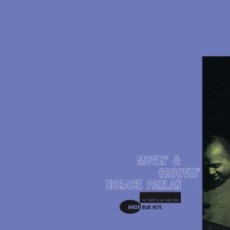
Horace Parlan was born on January 19, 1931 in Pittsburgh, PA who became an influential hard bop and post-bop pianist. Stricken with polio as a child that partially crippled his right hand, Parlan turned this would be handicap into what has been described as a “pungent left hand chord voicing style while complimenting highly rhythmic phrases with this right”.
He began playing in R&B bands in the 50’s until his move to New York where he joined Charles Mingus’ band from 1957 to 1959, a collaboration that greatly influenced Parlan’s career. Time would see him playing with Booker Ervin, Eddie Lockjaw Davis, Johnny Griffin and Rahsaan Roland Kirk; was the house rhythm section for Minton’s Playhouse in Harlem with bassist George Tucker and drummer Al Harewood while recording a strong series of sessions for Blue Note in the 60’s.
By 1973 Horace was on his way to Europe, settling in Copenhagen and gained international recognition through his Steeplechase recordings including exceptional duet dates with Archie Shepp. He also recorded with Dexter Gordon, Red Mitchell and in the 80’s with Frank Foster and Michael Urbaniak.
His later work, notably a series of duos with the tenor saxophonist Archie Shepp, including the album Goin’ Home, is steeped in gospel music. He has recorded nearly two-dozen albums as a leader and more as a sideman. In 2000 he was a recipient of the Ben Webster Prize given by the Ben Webster Foundation. Horace Parlan, the hard bop/post-bop pianist who attributes Ahmad Jamal and Bud Powell as his major influences, resided and performed regularly in Copenhagen, Denmark until his passing on February 23, 2017 in Korsør, Denmark.

More Posts: piano
Daily Dose Of Jazz…
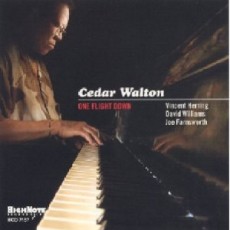
Cedar Walton was born Cedar Anthony Walton Jr. was born January 17, 1934 in Dallas Texas. After attending the University of Denver, he moved to New York in 1955. A two-year stint in the Army saw him performing in a jazz ensemble, whereupon his discharge he joined Kenny Dorham’s band. By the late 1950s Walton was playing with J. J. Johnson, the Art Farmer/Benny Golson Jazztet and Gigi Gryce. In 1959 he recorded as a member of John Coltrane’s group on his seminal work Giant Steps.
In the early 1960s, Cedar joined Art Blakey’s Jazz Messengers and for three years held the position of pianist/arranger, playing with Wayne Shorter and Freddie Hubbard. He left the Messengers in 1964 and by the late Sixties was part of Prestige Records’ house rhythm section, where in addition to releasing his own recordings, he recorded with Sonny Criss, Pat Martino, Eric Kloss, and Charles McPherson.
Although he has been one of the finest interpreters of standards, Walton is considered one of the jazz world’s most underrated composers contributing “Bolivia”, “Fantasy in D”, Mosaic and “Ugetsu”.
During the mid-1970s, Walton led the funk group Mobius. He has recorded with Hank Mobley, Abbey Lincoln, Lee Morgan and led the group Eastern Rebellion with rotating members included Clifford Jordan, George Coleman, Bob Berg, Sam Jones and Billy Higgins.
In January 2010, he was inducted as a member of the National Endowment for the Arts Jazz Masters. Since first recording as a leader he has recorded some four-dozen albums and an equal amount as a sideman. Pianist Cedar Walton continued to lead his own groups and freelance until his death on August 19, 2013.
More Posts: piano