

Daily Dose Of Jazz…
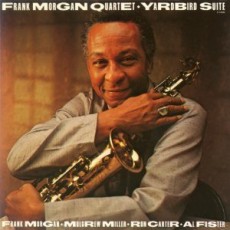
Frank Morgan was born on December 23, 1933 in Minneapolis, Minnesota and took after his father playing the guitar until he was seven, when he went to see Charlie Parker. Meeting him backstage, Parker suggested the clarinet for embouchure and two years later he switched to the saxophone.
Moving to California at age of 14, Frank entered and won a talent contest that provided him the opportunity to solo with Freddy Martin. But he hung out in the wrong circles and started taking heroin at 17, subsequently becoming addicted. He recorded with Teddy Charles in ’53 and Kenny Clarke in ’54 and touted as Charlie Parker’s successor, he would cut his first self-titled album “Frank Morgan” in 1955.
It would be three decades before his sophomore project due to his addiction and spending some twenty years in prison for various drug-related crimes. He would, however, form a small ensemble at San Quentin prison in the 1960s with another addict and sax player Art Pepper.
The Frank Morgan Quartet featured pianist Dolo Coker on piano, Flip Greene on bass and drummer Larance Marable. In 1985 he started recording again, releasing Easy Living in June 1985. This kicked off one of jazz’s most amazing comebacks. He recorded and toured vigorously but suffered a stroke in 1998. He subsequently recovered and once again began recording and performing.
Though mainly playing alto saxophone, Frank also played soprano and has recorded a string of excellent sets for Contemporary, Antilles, and Telarc, and has become an inspiring figure in the jazz world. Bebop alto saxophonist Frank Morgan passed away on December 14, 2007.

More Posts: saxophone
Daily Dose Of Jazz…
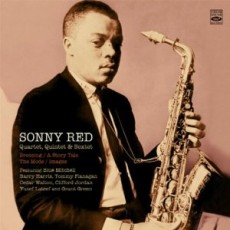
Sonny Red was born Sylvester Kyner Jr. on December 17, 1932 in Detroit, Michigan. He learned a lot in the shadow of hard bopper Charlie Parker but went on to develop his own voice and style.
He started professionally in the 1940s playing with Detroit pianist Barry Harris. By the mid-Fifties he was playing tenor with both the trombonist Frank Rosolino, and Art Blakey. Three years later he performing and recording in New York with the trombonist Curtis Fuller.
A fluent soloist, Sonny found success as a sideman and in the late 1950s and early Sixties his reputation increased leading albums for the Blue Note and Jazzland labels. With Barry Harris and Cedar Walton splitting piano duties on the “The Mode” and Harris solely on “Images” these two albums showcased his talent and established his voice. He would go on to work as a sideman with Clifford Jordan, Donald Byrd, Bill Hardman, Paul Quinichette, Bobby Timmons, Frank West and others.
The fortunes of jazz diminishing and changes in the music offered limited opportunities for him to record a slim discography and unfortunately gained him a modest reputation. Sonny Red fell into obscurity in the Seventies and he died in his hometown on March 20, 1981 at 49 years old.

More Posts: saxophone

Daily Dose Of Jazz…
Clark Terry was born on December 14, 1920 in St. Louis, Missouri. After high school he started his professional career in the early 40s playing in local clubs, and then served as a bandsman in the U.S. Navy during World War II. He influenced both Quincy Jones and Miles Davis, teaching the later while in St. Louis.
Terry’s years with Basie and Ellington in the late 1940s and 1950s established him as a world-class jazz artist, blending the St. Louis tone with contemporary styles. After leaving Ellington, Clark’s international recognition soared when he became NBC’s first African-American staff musician. He a ten-year member of The Tonight Show band where his unique “mumbling” scat singing became famous when he scored a hit with “Mumbles.”
Terry continued to play with musicians such as J. J. Johnson and Oscar Peterson, and led a popular group with Bob Brookmeyer in the early 1960s. In the 1970s he concentrated on the flugelhorn, performed studio work and teaching at jazz workshops, toured regularly in the 1980s with small groups and performed as the leader of his Big B-A-D Band.
At the behest of Billy Taylor, early in his career he and Milt Hinton bought instruments and gave instruction to young hopefuls and the idea was planted the seed that became Jazz Mobile in Harlem. He toured with the Newport Jazz All Stars and Jazz at the Philharmonic, recorded for the Red Hot + Rhapsody and Red Hot + Indigo albums, composed more than two hundred songs, performed for seven U.S. Presidents, has been both leader and sideman on more than three hundred albums performing with Clifford Brown, Gary Burton, Charlie Byrd, Tadd Dameron, Eddie “Lockjaw” Davis, Lionel Hampton, Paul Gonsalves and Milt Jackson among others, recorded with symphonies and orchestras and established the Clark Terry Archive at William Paterson University.
Swing and bop trumpeter, pioneer of the flugelhorn and educator Clark Terry has received over 250 awards, medals and honors including a NEA Jazz Masters Award, has received a Grammy Lifetime Achievement Award, 16 honorary degrees, a knighthood, keys to several cities, the French Order of Arts and Letters and over the course of a seventy year career is the most recorded trumpet player of all time appearing on more than 900 known recording sessions.
Trumpeter, and flugelhorn player Clark Terry passed away from complications from advanced diabetes on February 21, 2015 at the age f 94 in Pine Bluffs, Arkansas.

More Posts: flugelhorn,trumpet

Daily Dose Of Jazz…
Art Davis was born in Harrisburg, Pennsylvania on December 5, 1934 where he began studying the piano at the age of 5, switched to tuba and finally to bass while attending high school. He studied at Juilliard and Manhattan School of Music but graduated from Hunter College.
Davis became a busy New York session musician recording with the like of Thelonious Monk, John Coltrane, Dizzy Gillespie and Max Roach. He worked with many pop artists and also with classical symphony orchestras including the Los Angeles Philharmonic.
Art performed with bassist Reggie Workman in Coltrane’s group and pioneered the use of two basses in a jazz combo setting. He also launched a legal case that led to the current system of blind auditions for orchestras. Besides working as a leader, he worked as a sideman with Art Blakey, Curtis Fuller, Eddie Harris, Freddie Hubbard, Elvin Jones, Clifford Jordan, Roland Kirk, Abbey Lincoln, Booker Little, Lee Morgan, Hilton Ruiz and Dizzy Reece among others.
He earned a Ph.D. in clinical psychology from New York University, moved to southern California in 1986, taught at Orange Coast College and balanced his teaching, psychology practice and jazz performances. Bassist Art Davis died on July 29, 2007 from a heart attack.
More Posts: bass

Daily Dose Of Jazz…
Art Themen was born Arthur Edward George Themen on November 26, 1939 in Manchester, England. In 1958 he began his medical studies at the University of Cambridge, going on in 1961 to complete his studies at St. Mary’s Hospital Medical School in London, qualifying in 1964. He specialized in orthopedic medicine and eventually became a consultant.
Themen started playing saxophone with the Cambridge University Jazz Group, and then in London playing with blues musicians Jack Bruce and Alexis Korner. In 1965 he played with the Peter Stuyvesant Jazz Orchestra in Zurich, going on to play with such English luminaries as Michael Garrick and Graham Collier’s Music.
In 1974 Art entered into what was to be one of his central musical relationships when he started playing with Stan Tracey that took him throughout the United Kingdom and all over the world. He has also played and toured with musicians such as Nat Adderley, Ian Carr, George Coleman and Al Haig. In 1995 he formed a quartet with pianist John Critchinson.
Themen’s style originally owed much to the influence of Dexter Gordon and Sonny Rollins, but later influences included such disparate saxophonists Coleman Hawkins, Evan Parker and John Coltrane.

More Posts: saxophone