

Daily Dose Of Jazz…
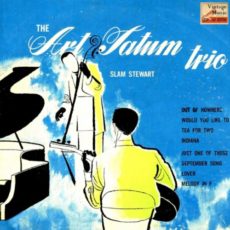
Everett Barksdale, born April 28, 1910 in Detroit, Michigan, played bass and banjo before settling on guitar. During early 1930 he moved to Chicago, Illinois where he joined Erskine Tate’s band. He recorded for the first time with violinist Eddie South in 1931, who he remained with until 1939.
A move to New York City saw Everett become a member of the Benny Carter Big Band. Around that same time, he recorded with Sidney Bechet and during the 1940s, he worked for CBS as a session musician.
As a sideman, Barksdale played guitar in many genres, working with vocalists Dean Barlow, Maxine Sullivan, the Blenders, and the Clovers. He played on the hit Love Is Strange by Mickey & Sylvia, was the music director for the Ink Spots, and beginning in 1949, he worked with pianist Art Tatum until Tatum died in 1956.
During the Fifties and Sixties, he was part of the ABC house band and played on recordings with a who’s who list of vocalists and musicians not limited to Lena Horne, Sammy Davis Jr., Dinah Washington, Sarah Vaughan, Milt Hinton, Buddy Tate, Chet Baker, Red Allen, Harold Vick, Oscar Brown Jr., J. J. Johnson, Clark Terry, Kai Winding, Louis Armstrong, The Drifters and Ben E. King. He also played guitar in the studio for pop and soul musicians such as.
Guitarist and session musician Everett Barksdale retired from active performance in the 1970s, moved to the West Coast and passed away in Inglewood, California on January 29, 1986.

More Posts: guitar,history,instrumental,jazz,music
Daily Dose Of Jazz…
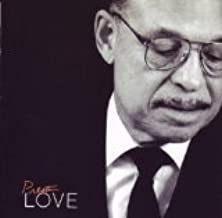
Preston Haynes Love, born April 26, 1921 in Omaha, Nebraska, grew up in the North Omaha and graduated from North High. He became renowned as a professional sideman and saxophone balladeer in the heyday of the big band era. He was a member of the bands of Nat Towles, Lloyd Hunter, Snub Mosley, Lucky Millinder and Fats Waller before getting his big break with the Count Basie Orchestra when he was 22. Love played and recorded with the Count’s band from 1945–1947 and played on Basie’s only #1 hit record, Open The Door Richard.
Love eventually became a bandleader and played behind Lena Horne, Billie Holiday, his friends Johnny Otis and Wynonie Harris, with whom he had several hits.
In 1952, he launched the short-lived Spin Records, as a joint effort with songwriter Otis René (When It’s Sleepy Time Down South). The label released material by the Preston Love Orchestra, among others.
As the music changed so did he and in the early 1960s Love moved to Los Angeles, California and began working with Ray Charles and Aretha Franklin, eventually becoming Motown’s West Coast house bandleader with whom he played & toured with The Four Tops, The Temptations, Tammi Terrell, Marvin Gaye, Gladys Knight, Smokey Robinson, Diana Ross, and Stevie Wonder among others.
He recorded with Nichelle Nichols, Janis Joplin, Frank Zappa, Shuggie Otis, T-Bone Walker, Charles Brown, Ruth Brown, and many others. Preston also appears in the Clint Eastwood film Play Misty For Me with the Johnny Otis band. He toured the U.S. and Europe quite frequently into the 2000s, additionally lecturing and writing about the history he was part of.
In his later years Love moved back to Omaha, wrote a book, led bands, the last of which featured his daughter vocalist Portia Love, drummer Gary E. Foster, pianist Orville Johnson, and bassist Nate Mickels. He was an advertising agent for the Omaha Star, a local newspaper serving the city Black community.
A recipient of several awards and honors including induction into the Omaha Black Music Hall Of Fame, saxophonist, bandleader, and songwriter Preston Love, who released three albums as a leader, passed away on February 12, 2004, after battling prostate cancer.
More Posts: bandleader,history,instrumental,jazz,music,saxophone,songwriter
Daily Dose Of Jazz…
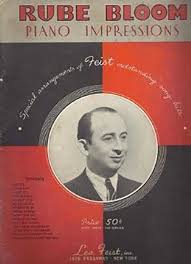
Reuben Bloom was born on April 24, 1902 in New York City, where he learned to play the piano. During the 1920s he wrote many novelty piano solos which are still well regarded today. He recorded for the Aeolian Company’s Duo-Art reproducing piano system various titles including his Spring Fever.
In 1927 Rube had his first hit with Soliloquy and his last hit was “Here’s to My Lady” in 1952, which he wrote with Johnny Mercer. In 1928, he made a number of records with Joe Venuti’s Blue Four for OKeh Records, including five songs he sang, as well as played piano.
He formed and led a number of bands during his career, most notably Rube Bloom and His Bayou Boys. They recorded three records in 1930 that are considered some of the best made during the early years of the Depression. The Bayou Boys was an all-star studio group consisting of Benny Goodman, Adrian Rollini, Tommy Dorsey and Mannie Klein. At other times, Bloom played with other bands, such as with Bix Beiderbecke and Frankie Trumbauer in the Sioux City Six as well as his continued frequent work with Joe Venuti’s Blue Four.
During his career, Rube also worked with many well-known performers, including Ruth Etting, Stan Kenton, Jimmy Dorsey. He collaborated with a wide number of lyricists including Ted Koehler, and Mitchell Parish. During his lifetime he published several books on the piano method.
Bloom’s I Can’t Face the Music with lyrics by Ted Koehler was recorded by Ella Fitzgerald on her 1962 Verve release, Rhythm is My Business, in a fabulous swing/big band version with Bill Doggett. Some of his best-known composition collaborations with lyricists were Day In, Day Out and Fools Rush In (Where Angels Fear to Tread) with lyrics by Johnny Mercer; Give Me the Simple Life with Harry Ruby; and Maybe You’ll Be There with lyrics by Sammy Gallop.
Pianist, vocalist, songwriter, arranger, bandleader, recording artist, and author Rube Bloom passed away on March 30, 1976 in his hometown.
More Posts: arranger,author,bandleader,history,instrumental,jazz,music,piano,recording artist,songwriter,vocal
Daily Dose Of Jazz…
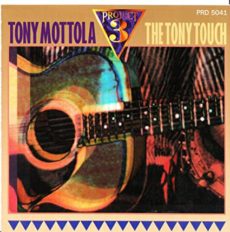
Anthony C. Mottola was born on April 18, 1918 in Kearny, New Jersey. He started out learning to play the banjo, then took up the guitar and had his first guitar lessons from his father. In 1936 he toured with an orchestra led by George Hall, marking the beginning of his professional life.
His first recordings were duets with guitarist Carl Kress. In 1945 he collaborated with accordionist John Serry Sr. in a recording of Leone Jump for Sonora Records which was played in jukeboxes throughout the United States. Tony’s only charted single as a soloist was This Guy’s In Love With You, which reached No. 22 on the Billboard magazine Easy Listening Top 40 in the summer of 1968.
Mottola worked often on television, appearing as a regular on shows hosted by vocalist Perry Como and comedian Sid Caesar and as music director for the 1950s series Danger. From 1958–1972, he was a member of The Tonight Show Orchestra led by Skitch Henderson.
He composed music for the TV documentary Two Childhoods, which was about Vice President Hubert Humphrey and writer James Baldwin, and won an Emmy Award for his work. In 1980, Mottola began performing with Frank Sinatra, often in duets, appearing at Carnegie Hall and the White House. He retired from the music business in 1988 but kept playing at home almost every day.
Guitarist Tony Mottola, who released dozens of albums as a leader, passed away in Denville, New Jersey on August 9, 2004.
More Posts: bandleader,guitar,history,instrumental,jazz,music
Daily Dose Of Jazz…
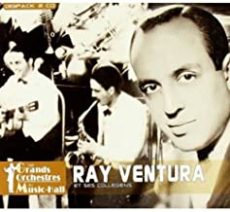
Raymond Ventura was born on April 16, 1908 into a Jewish family in Paris, France and learned to play the piano as a child. By the time he turned 17 in 1925 he was the pianist for the Collegiate Five, which recorded as the Collegians for Columbia Records beginning in 1928 and then for Decca in the 1930s.
Later he led the Collegians and it became a dance orchestra resembling a big band. His sidemen included Alix Combelle, Philippe Brun, and Guy Paquinet. In the early Forties, Ray led a big band in South America and in France during the rest of the decade.
One of his band’s popular songs from 1936 was Tout va très bien, Madame la Marquise in which the Marquise is told by her servants that everything is fine at home except for a series of escalating calamities. It was seen as a metaphor for France’s obliviousness to the approaching war.
Between 1931 and 1953 he appeared with his big band in four films, American Love, Beautiful Star, Women of Paris, and A Hundred Francs A Second. Pianist and bandleader Ray Ventura, who helped popularize jazz in France in the 1930s, March 29, 1979 in Palma de Mallorca, Spain.
More Posts: bandleader,history,instrumental,jazz,music,piano