

Daily Dose Of Jazz…
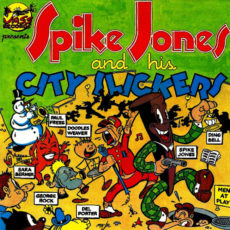
Del Porter was born Delmar Smith Porter on April 13, 1902 in Newberg, Oregon. He first began singing in 1928 as a member of the Foursome, which came to prominence in the Ethel Merman Broadway hit shows, Girl Crazy in 1930 and 1934’s Anything Goes. With the Foursome’s arranger and Porter’s lifelong friend, Raymond M. Johnson, he reorganized the quartet around 1946 as the Sweet Potato Tooters, one of the hottest bands in the country at the time. He would go on to record as a leader, toured with Glenn Miller, and recorded with Bing Crosby, Dick Powell, and Red Nichols.
They recorded extensively for Decca, but a long dry spell followed the quartet’s appearance in the Eleanor Powell movie Born to Dance which resulted in the creation of a six-piece group the Feather Merchants, patterned after the cockeyed musical humor of Frank & Milt Britton and Freddie Fisher’s Schnickelfritz Band. This band evolved into City Slickers, a band he co-founded with Spike Jones about the time the group split up.
The zany band that revolutionized the field of comedy music during World War II, from their earliest days, as lead vocalist, clarinetist, composer, and arranger. He wrote two songs Siam and Pass the Biscuits, Mirandy which became staples of the band’s repertoire. But he was all talent and no ambition, and soon took a back seat to Jones.
After leaving the Slickers in 1945, he returned to lend his melodious voice on Spike Jones Plays the Charleston and their Bottoms Up album. In addition to his music publishing business, Tune Town Tunes, with fellow City Slicker and songwriting partner Carl Hoefle. Porter later wrote jingles for Paper Mate pens, recorded with his Sweet Potato Tooters for Capitol transcriptions, as well as Mickey Katz and Spade Cooley. He continued to dabble in songwriting in his later years.
Vocalist, saxophonist, and clarinetist Del Porter, who in the 1940s, led his own big band, passed away on October 4, 1977 in Los Angeles, California.

More Posts: bandleader,clarinet,history,instrumental,jazz,music,saxophone,vocal
Daily Dose Of Jazz…
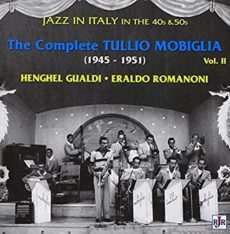
Tullio Mobiglia was born in Carezzano, Italy on April 12, 1911. In the early 1930s, after his studies at the conservatory in Genova and his first local engagements, he made several trips to the United States as a member of an on-board ship’s orchestra. Once in America, he made the acquaintance of the leading tenor saxophonists, including Coleman Hawkins.
In 1940 he visited Berlin, Germany as a member of the Italian Orchestra Mirador and in 1941 Tullio was with the Heinz Wehner Orchestra, and from April to November, he formed his own sextet played in the Patria Bar and was also in the Komiker Cafe’s musical revue Dreams About Me.
In the early Forties, Mobiglia’s orchestra played in the Rosita Bar and he also did some Film and Recordings during this period. Kramer combined musicians from two different generations to form his orchestra utilizing trumpeter Alfredo Marzaroli and saxophonist and clarinetist Francesco Paolo Ricci from the Twenties along with the younger members, Tullio Mobiglia, Eraldo Romanoni, Carlo Pecori, and the Triestino Angelo Bartole that performed during the Second World War II in Berlin.
After the war, he operated mainly in Italy, but also performed in Dortmund and Frankfurt Germany. From 1967 into the ’80s, he was active as a violin teacher at the Sibelius Conservatory in Helsinki, Finland.
Tullio directed a band without interruption in Berlin between 1941 and 1943, along with the Kramer’s Orchestra during the second half of the Thirties, the only stable group in the history of Italian Jazz between the years 1935 and ’43. He enlisted the brilliant and inventive guitarist Alfio Grasso to take part in the recordings.
Tenor saxophonist, violinist and bandleader Tullio Mobiglia passed away on July 24, 1991, aged 80, in Helsinki, Finland.
More Posts: bandleader,history,instrumental,jazz,music,saxophone,violin

Daily Dose Of Jazz…
Ian Armit was born on April 11, 1929 in Fife, Scotland. He played in Sandy Brown’s band in 1957, and that same year he released the solo EP Jazz Club Piano on Decca Records. The late 1950s saw him as part of the band by Humphrey Lyttelton and was part of the recording sessions by Al Fairweather, Cy Laurie, and Wally Fawkes.
In the 1960s Armit worked in the British blues scene with Alexis Korners Blues Incorporated, with Rod Stewart and toured the United States with the singer Long John Baldry in 1971. As a session musician, he worked with Sandy Denny, Bob Wallis, and went on a European tour.
Moving to Switzerland, he led his own quartet, recorded his Ian’s Boogie Woogie with the Old Rivertown Jazz Band and performed with Piccadilly Six, the Harlem Rambler and other local blues bands. Pianist Ian Armit, who recorded five albums as a leader from 1954 to 1976, passed away on February 18, 1992, in Zurich, Switzerland.
More Posts: bandleader,history,instrumental,jazz,music,piano
Daily Dose Of Jazz…
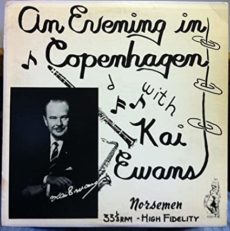
Kai Ewans was born Kai Peter Anthon Nielsen on April 10, 1906 in Hørsholm, Denmark. He initially played the banjo but switched to saxophone in 1923 when he formed the Blues Jazz Band. Disbanded in 1924, he joined Valdemar Eiberg’s ensemble from 1924–26.
Adopting the name Kai Ewans in 1927, he led Denmark’s first big band in 1927–28 and then led bands in Belgium and Germany through 1931. Following this, he played with Bernard Etté, Kai Julian, and Eric Tuxen through the mid-thirties.
He founded a new big band including mostly musicians from Tuxen’s ensemble in 1936, performed with Adelaide Hall, and recorded copiously with Benny Carter in the 1940s until the ensemble dissolved in 1947. Kai then emigrated to the United States, working in business before moving to California in 1956. From 1960 to 1964 he ran a restaurant with Carter in Beverly Hills. He later in the decade returned to Copenhagen to play again.
Retiring late in life to Connecticut, saxophonist Kai Ewans passed away on April 3, 1988.
More Posts: bandleader,history,instrumental,jazz,music,saxophone
Daily Dose Of Jazz
Harry Howell Carney was born on April 1, 1910 in Boston, Massachusetts and grew up close to future bandmate Johnny Hodges. He began playing the piano at age seven, moved to the clarinet at 14, and added the alto saxophone a year later. His first professional gig was in Boston clubs.
Early influences on Carney’s playing included Buster Bailey, Sidney Bechet, and Don Murray. He also reported that, for his baritone saxophone playing, he “tried to make the upper register sound like Coleman Hawkins and the lower register like Adrian Rollini”
After moving to New York City he played a variety of gigs at the age of 17, and soon Carney was invited to join the Duke Ellington band for its performances in Boston in 1927. In October the same year, he recorded his first session with the band and having established himself, stayed with it for the rest of his life.
The band began a residency at the Cotton Club in New York at the end of the year, and Ellington added more personnel in 1928. Carney’s main instrument became the baritone saxophone and he became a dominant figure on the baritone in jazz, with no serious rivals on the instrument until the advent of bebop in the mid-1940s. Within the overall sound of the Ellington band, Carney’s baritone was often employed to play parts of harmonies that were above the obvious low pitching of the instrument; this altered the textures of the band’s sound.
In 1938, Carney was invited to play with Benny Goodman’s band at Carnegie Hall and the recordings were released as The Famous 1938 Carnegie Hall Jazz Concert. By 1944 he added the bass clarinet, co-composed Rockin’ in Rhythm and was usually responsible for executing the bubbling clarinet solo on this tune. In 1957, he was part of a band led by pianist Billy Taylor that recorded the album Taylor Made Jazz.
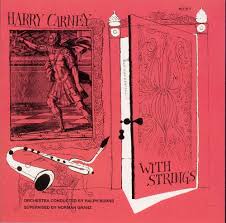
For over four decades Harry became the longest-serving player in Ellington’s orchestra. On occasions, he would serve as the band’s conductor, recorded one album as a leader and had many showpiece features written for him by the bandleader including his 1973 Third Sacred Concert built around his baritone saxophone.
Over the course of his career, he recorded with Rosemary Clooney, Ella Fitzgerald, Johnny Hodges, Jazz at the Philharmonic, and Billy Taylor. After Ellington’s death on May 24, 1974, some four months later baritone saxophonist and bass clarinetist Harry Carney, who was an early jazz proponent of circular breathing, passed away on October 8, 1974, in New York City.
More Posts: bandleader,history,instrumental,jazz,music,saxophone