

Daily Dose Of Jazz…
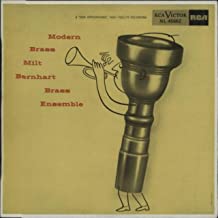
Milt Bernhart was born on May 25, 1926 in Valparaiso, Indiana and began on tuba but switched to trombone in high school. At 16 he worked in Boyd Raeburn’s band and later had some gigs with Teddy Powell. After time in the Army he worked, off and on, with Stan Kenton for the next ten years. In 1955 Bernhart recorded his first album as a leader. In 1986 he was elected President of the Big Band Academy of America.
Although known as mild-mannered or humorous, he spent a brief period with Benny Goodman, who brought out his ire. He indicated working with Goodman was “the bottom” of his first 23 years of life, except for basic training in the Army. He called Goodman a bore and claimed he did nothing about the treatment Wardell Gray faced at a segregated club in Las Vegas and he even alleges that he quit because Goodman publicly humiliated Gray in front of an audience.
The West Coast jazz trombonist recorded more than a hundred albums as a sideman working with Maynard Ferguson, Henri Rene, Shorty Rogers, Pete Rugolo, Howard Rumsey, Lalo Schifrin, Chet Baker, Sammy Davis Jr., June Christy, Astrud Gilberto, Peggy Lee, Johnny Mandel, and Henry Mancini among numerous others.
He recorded with Frank Sinatra, supplying the solo in the middle of Sinatra’s 1956 recording of I’ve Got You Under My Skin conducted by Nelson Riddle. Trombonist Milt Bernhart passed away from congestive heart failure at the Adventist Health in Glendale, California at the age of 77 on January 22, 2004.

More Posts: bandleader,history,instrumental,jazz,trombone
Daily Dose Of Jazz…
Bill Barber was born John William Barber on May 21, 1920 in Hornell, New York. He started playing tuba in high school and studied at the Juilliard School of Music. After graduating, he traveled west to Kansas City, Missouri, where he played with the Kansas City Philharmonic and various ballet and theatre orchestras.
Joining the United States Army in 1942, he played in Patton’s 7th army band for three years. After the war, he started playing jazz, joining Claude Thornhill’s big band where he became friends with trombonist Al Langstaff, pianist Gil Evans and saxophone player Gerry Mulligan in 1947. Barber was one of the first tuba players to play in a modern jazz style, playing solos and participating in intricate ensemble pieces.
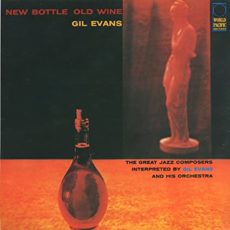
Barber became a founding member of Miles Davis’s nonet in 1949 in what became known as the Birth of the Cool recording sessions. He then worked in the theatre pit orchestras of The King and I, Paradiso, and the City Center Ballet. He joined up with Davis and Gil Evans in the late 1950s to record the albums Sketches of Spain, Miles Ahead and Porgy and Bess. Barber also played tuba on John Coltrane’s album Africa/Brass released in 1961.
Completing a master’s degree from the Manhattan School of Music and became an elementary school music teacher at Copiague, New York. He continued to play where possible including with the Goldman Band. In 1992, he recorded and toured with a nonet led by Gerry Mulligan, reworking material from Birth of the Cool.
From 1998 to 2004 he was part of The Seatbelts, New York musicians who played the music of the Japanese anime Cowboy Bebop. Over the course of his career, he recorded with Art Blakey, Bob Brookmeyer, Kenny Burrell, John Coltrane, Miles Davis, Gil Evans, Urbie Green, Gigi Gryce, Slide Hampton, and Pete Rugolo. Tubist Bill Barber, who was also known as Billy Barber, passed away from heart failure on June 18, 2007 in Bronxville, New York.
More Posts: history,instrumental,jazz,music,tuba
Daily Dose Of Jazz…
Lee Katzman was born on May 17, 1928 in Chicago, Illinois and was raised in Indianapolis, Indiana. His early career saw him playing primarily in big band settings. After arriving in New York in the late ‘40s, he played in the big bands of Gene Krupa, Claude Thornhill, Sam Donahue, Buddy Rich, Jimmy Dorsey, and Benny Goodman.
Relocating to California in 1956, he got an invitation from Stan Kenton to join the band as a jazz soloist, both on recordings and on worldwide tours. The late 1950s and 1960s saw him working with Pepper Adams, Les Brown, June Christy, Bob Dorough, Walter Norris, Med Flory, Bill Holman, Teddy Edwards, Mel Lewis, Shelly Manne, Les McCann, Anita O’Day, Jimmy Rowles, and Sonny Stitt.
Known for his clear tone and fearless, acrobatic solos, Lee was often a featured soloist in Bill Holman’s Great Big Band and Terry Gibbs Dream Band, as well as both the NBC and CBS orchestras. He later became a member of Herb Albert’s Baja Marimba Band.
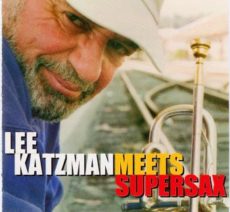
He recorded two sessions as a leader, Beautiful with Teddy Edwards on tenor saxophone, Jack Wilson on piano, bassist Leroy Vinnegar, and Nick Martinis on drums. His second was Lee Katzman Meets Supersax with Med Flory~alto saxophone, Jay Migliore~tenor saxophone, Ray Reed~tenor saxophone, Jack Nimitz~baritone saxophone, Jimmy Rowles~piano, Bob Magnusson~bass, and Donald Bailey~drums.
When he relocated to New York in 1980, he played informal gigs around town with John Bunch and reconnected with Bob Dorough and Walter Norris. He retired with his wife, Judy, to Taos, New Mexico in 2011 and trumpeter Lee Katzman passed away in Taos on August 1, 2013 at age 85.
More Posts: bandleader,history,instrumental,jazz,music,trumpet
Daily Dose Of Jazz…
Pee Wee Hunt was born Walter Gerhardt Hunt on May 10, 1907 in Mount Healthy, Ohio. Developing a musical interest at an early age, his mother played the banjo and his father played the violin. The teenager was a banjoist with a local band while he was attending college at Ohio State University where he majored in Electrical Engineering. During his college years, he switched from banjo to trombone. Graduating from the Cincinnati Conservatory of Music, he joined Jean Goldkette’s Orchestra in 1928.
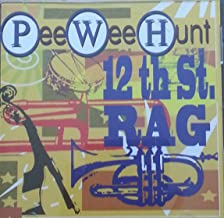
Pee Wee was the co-founder and featured trombonist with the Casa Loma Orchestra, but he left the group in 1943 to work as a Hollywood radio disc jockey before joining the Merchant Marine near the end of World War II. He returned to the West Coast music scene in 1946 and his Twelfth Street Rag became a three million-selling number one hit in 1948.
Hunt was satirized as Pee Wee Runt and his All-Flea Dixieland Band in Tex Avery’s animated MGM cartoon Dixieland Droopy in 1954. His second major hit was Oh! in 1953, his second million-selling disc, which reached number three in the Billboard chart.
Trombonist Pee Wee Hunt passed away after a long illness at age 72, on June 22, 1979 in Plymouth, Massachusetts.
More Posts: bandleader,banjo,history,instrumental,jazz,music,trombone
Daily Dose Of Jazz…
Errol Leslie Buddle was born on April 29, 1928 and raised in Adelaide, Australia. He first learned the banjo and mandolin and began learning jazz after listening to a Bobby Limb performance in 1944. He attended the Elder Conservatorium of Music as well as the Sydney Conservatorium of Music.
Influenced by the sound of the bassoon in Igor Stravinsky’s The Rite of Spring and The Firebird, he began playing the instrument. Over the course of his career, Buddle played fourteen reed instruments and several others. Moving to Melbourne in 1946 he began playing the radio circuit.
Relocating to Sydney by 1951 and performed weekly at the nightclub Chequers’. Another move to Windsor, Ontario in 1952 had him joining the Windsor Symphony Orchestra.
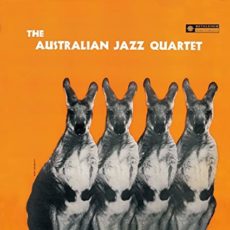
Often performing in Detroit, Michigan, he met and collaborated with Elvin Jones and Johnnie Davis. Errol performed at the jazz club Klein’s and eventually led what later became the Errol Buddle Quartet. He also founded The Australian Jazz Quartet with Jack Brokensha, Bryce Rohde and Dick Healey. The group served as the backing band to several musicians and later played throughout North America before touring Australia in 1958, then disbanded.
He also put together a quintet in various configurations with Bryce Rohde, piano; Dick Healy, flute and alto sax; Jack Brokensha, vibes; Jimmy Gannon, bass; and Frank Capp, drums. After 1958 he performed occasionally.
Bassoon and tenor saxophonist Errol Buddle, who over the course of his career played fourteen reed instruments and several others, passed away at his home in Potts Point, New South Wales on February 22, 2018, aged 89.

More Posts: bandleader,bassoon,history,instrumental,jazz,music,saxophone