

Daily Dose Of Jazz…
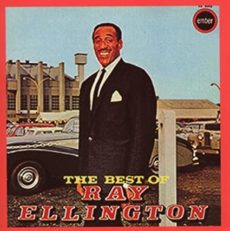
Ray Ellington was born Henry Pitts Brown on March 17, 1916 at 155 Kennington Road, Kennington, London, England, the youngest of four children. His father, a Black music-hall comedian, and entertainer, his mother a Russian Jew. When his father died when he was four years old, he was brought up as an Orthodox Jew and attended the South London Jewish School before entering show business at the age of twelve, when he appeared in an acting role on the London stage.
His first break came in 1937 when he replaced Joe Daniels in Harry Roy and His Orchestra as the band’s drummer. His vocal talents were put to good use too, from the time of his first session when he recorded Swing for Sale. Ellington was called up in 1940, joined the Royal Air Force (RAF) as a physical training instructor where he served throughout the war. He played in various service bands including RAF Blue Eagles.
After demobilisation, Ellington resumed his career, fronting his own group, playing at The Bag O’Nails club. Early in 1947, he rejoined the Harry Roy band for a few months. The Ray Ellington Quartet was formed in the same year, specializing in jazz, while experimenting with many other genres. His musical style was heavily influenced by the comedic jump blues of Louis Jordan. His band was one of the first in the UK to feature the stripped-back guitar/bass/drums/piano format that became the basis of rock and roll, as well as being one of the first groups in Britain to prominently feature the electric and amplified guitar of Lauderic Caton. The other members of his quartet were pianist Dick Katz and bassist Coleridge Goode until 1955 when the players changed.
Vocalist, drummer and bandleader Ray Ellington passed away from cancer on February 27, 1985.

More Posts: bandleader,drums,history,instrumental,jazz,music,vocal
Daily Dose Of Jazz…
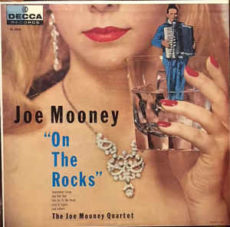
Joe Mooney was born in Paterson, New Jersey on March 14, 1911 and went blind when he was around 10 years of age. His first job, at age 12, was playing the piano for requests called in to a local radio station. He and his brother, Dan, played together on radio broadcasts in the late 1920s, and recorded between 1929 and 1931 as the Sunshine Boys and the Melotone Boys, both sang while Joe accompanied on piano. They continued performing together on WLW in Cincinnati, Ohio until 1936, after which time Dan Mooney left the music industry.
In 1937, he began working as a pianist and arranger for Frank Dailey, a role he reprised with Buddy Rogers in 1938. Through the early 1940s, Joe arranged for Paul Whiteman, Vincent Lopez, Larry Clinton, Les Brown, and The Modernaires. Putting together his own quartet in 1943, he sang and played the accordion with accompaniment on guitar, bass, and clarinet.
In the last half of the 1940s his group experienced considerable success in the United States. By 1946, a newspaper columnist wrote that Mooney’s music “has the most cynical hot jazz critics describing it in joyous terms, such as exciting, new, the best thing since Ellington, and as new to jazz as the first Dixieland jazz band was when it first arrived”. As for Mooney himself, the columnist wrote that he “played in virtuoso fashion … a fellow who knows not only his instrument, but jazz music, both to just about the ultimate degree.”
In the 1950s, Mooney sang with the Sauter-Finegan Orchestra and played with Johnny Smith in 1953. After moving to Florida in 1954 he concentrated more on the organ and recorded in 1956. 1963 saw a group of friends form a company to produce a record, Joe Mooney and His Friends. He recorded again in the middle Sixties. Accordionist, organist, and vocalist Joe Mooney passed away after a stroke at age 64, on May 12, 1975, in Fort Lauderdale, Florida.
More Posts: accordion,bandleader,history,instrumental,jazz,music,organ,vocal
Daily Dose Of Jazz…
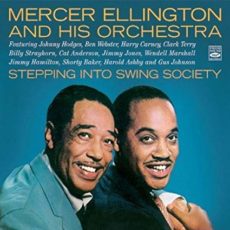
Mercer Kennedy Ellington was born on March 11, 1919 in Washington, D.C. and is the only child of the composer, pianist, and bandleader Duke Ellington and his high school sweetheart Edna Thompson. He grew up primarily in Harlem from the age of eight and by the age of eighteen, he had written his first piece to be recorded by his father, Pigeons and Peppers. He attended New College for the Education of Teachers at Columbia University, New York University, and the Juilliard School.
In 1939, 1946 through 1949, and 1959, Mercer led his own bands, many of whose members later performed with his father, or achieved a successful career in their own right including Dizzy Gillespie, Kenny Dorham, Idrees Sulieman, Chico Hamilton, Charles Mingus, and Carmen McRae. During the 1940s, in particular, he wrote pieces that became standards, Things Ain’t What They Used to Be, Jumpin’ Punkins, Moon Mist, and Blue Serge. He also wrote the lyrics to Hillis Walters’ popular song, Pass Me By in 1946), which was recorded by Lena Horne, Carmen McRae, and Peggy Lee.
Composing for his father from 1940 until 1941, he later worked as the road manager for Cootie Williams’ orchestra in 1941 until 1943 and again in 1954. Ellington returned to work for his father playing alto horn in 1950, and then as general manager and copyist from 1955 until 1959. In 1960, he became Della Reese’s musical director, then later went on to take a job as a radio DJ in New York for three years beginning in 1962. He again returned to his father’s orchestra in 1965, this time as trumpeter and road manager. When his father died in 1974, Ellington took over the orchestra, traveling on tour to Europe in 1975 and 1977.
In the early 1980s, Ellington became the first conductor for a Broadway musical of his father’s music, Sophisticated Ladies which ran from 1981 until 1983. Mercer’s Digital Duke won the 1988 Grammy Award for Best Large Jazz Ensemble Album. From 1982 until the early 1990s, the Duke Ellington Orchestra included Barrie Lee Hall, Rocky White, Tommy James, Gregory Charles Royal, J.J. Wiggins, Onzy Matthews, and Shelly Carrol among others.
Trumpeter, composer, arranger, and bandleader Mercer Ellington, who recorded ten albums as a leader and arranged Clark Terry’s Duke With A Difference album, passed away from a heart attack on February 8, 1996 at age 76 in Copenhagen, Denmark.
More Posts: and bandleader,arranger,composer,history,instrumental,jazz,music,trumpet
Daily Dose Of Jazz…
Bill Pemberton was born William McLane on March 5, 1918 in New York City and played violin as a child before switching to bass. From 1941 to 1945 he was a member of Frankie Newton’s orchestra and then went on to work with Herman “Ivory” Chittison, Mercer Ellington, Eddie Barefield, and Billy Kyle later in the 1940s.
During the Fifties, he worked with Art Tatum and Rex Stewart, and from 1966 to 1969 was Earl Hines’s bassist, including for international tours and at the 1967 Newport Jazz Festival and Monterey Jazz Festival.
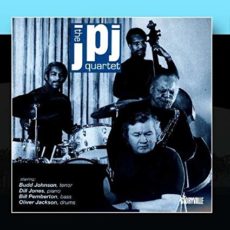
He also worked with Buck Clayton in 1967. In 1969 he joined the JPJ quartet alongside Budd Johnson, Oliver Jackson, and Dill Jones, and remained with the group until 1975. Simultaneously he played with Ruby Braff, Max Kaminsky, and Vic Dickenson. He rejoined Hines in 1977, playing in Europe with him and Benny Carter. Into the Eighties, he played with Panama Francis, Bill Coleman, and Doc Cheatham.
Double-bassist Bill Pemberton passed away on December 13, 1984 in New York City.
More Posts: bass,history,instrumental,jazz,music
Daily Dose Of Jazz…
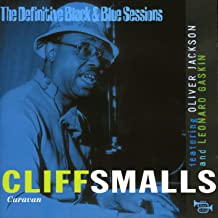
Cliff Smalls was born Clifton Arnold on March 3, 1918 and was raised in Charleston, South Carolina. His father, a carpenter, performed piano and organ for Charleston’s Central Baptist Church. He taught Smalls classical music at an early age. He left home with the Carolina Cotton Pickers and also recorded with them, for instance, Off and on Blues and “Deed I Do, which he arranged and featured Cat Anderson in 1937 when he was 19.
With his career coinciding with the early years of bebop, from 1942 to 1946 he was a trombonist, arranger and also backup piano-player for band-leader and pianist Earl Hines, alongside Dizzie Gillespie and Charlie Parker. While in the Hines band he performed often during broadcasts seven nights a week on open mikes coast-to-coast across America. Hines also used Teddy Wilson, Jess Stacy and Nat “King” Cole as backup piano-players but Smalls was his favorite. He also played in the Jimmie Lunceford and Erskine Hawkins bands.
After the inevitable post-World War II breakup of the Hines big-band, Cliff went on to play and record in smaller ensembles with his former Earl Hines band colleagues, singer and band-leader Billy Eckstine, trombonist Bennie Green, saxophonist Earl Bostic and singer Sarah Vaughan. In 1949 he recorded with JJ Johnson and Charlie Rouse. He was the pianist on Earl Bostic’s 1950 hit Flamingo along with John Coltrane but had a serious automobile accident, with Earl Bostic, in 1951 and laid in bed all of 1952, till March of 1953.
Recovering, Smalls shifted his musical career to serve as music director/arranger for singers Eartha Kitt, Ella Fitzgerald, Sammy Davis, Jr., Smokey Robinson and the Miracles, Clyde McPhatter, Roy Hamilton and Brook Benton. He recorded Bennie Green with Art Farmer in 1956 and was, for many years, a regular with Sy Oliver’s nine-piece Little Big-Band from 1974-1984, a regular stint in New York’s Rainbow Room.
In the 1970s he returned to jazz-recording, including four solo tracks for The Complete Master Jazz Piano Series in 1970, with Sy Oliver in 1973, Texas Twister with Buddy Tate in 1975, Swing and Things in 1976 and Caravan in France in 1978. In 1980 Smalls was featured playing piano in The Cotton Club, directed by Francis Ford Coppola. Trombonist, pianist, conductor and arranger Cliff Smalls, who worked in the jazz, soul and rhythm & blues genres, passed away in 2008.
More Posts: arranger,bandleader,conductor,history,instrumental,jazz,music,piano,trombone