

Daily Dose Of Jazz…
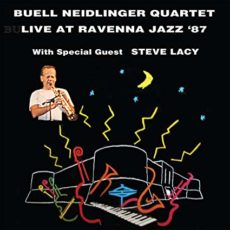
Buell Neidlinger was born in New York City on March 2, 1936 and raised in Westport, Connecticut, where his father ran a cargo shipping business. He played cello in his youth and began studying double bass after a music teacher recommended it to strengthen his hands. He took lessons from jazz bassist Walter Page. In his teens, suffering from a nervous breakdown, which he attributed to the pressure of being perceived as a child prodigy on cello, while institutionalized, he met jazz pianist Joe Sullivan who was in treatment for alcoholism.
Dropping out of Yale University after one year, where he had been studying orchestral music, he moved to New York City and began playing in various jazz settings. He joined Cecil Taylor’s group in 1955 and recorded extensively with Taylor’s groups with Steve Lacy and with Archie Shepp among others until 1961. He played with Herbie Nichols and was also involved with new directions in classical music.
By 1971, Buell moved to California and became the principal bassist for the Los Angeles Chamber Orchestra and was also principal bassist in the Warner Bros. studio orchestra for 30 years. He worked extensively as an orchestral and as a session bassist before becoming a music educator at the New England Conservatory and CalArts. Together with Marty Krystall, he founded K2B2 Records. The sessions he performed on as a strings player included Tony Bennett’s I Left My Heart In San Francisco and the Eagles’ Hotel California.
In 1983, he performed on the Antilles Records release Swingrass ’83. In 1997, and moved to Whidbey Island, Washington State. There, he played in a band called Buellgrass, which included fiddler Richard Greene and featured their version of bluegrass music. Neidlinger’s fourth wife, Margaret Storer, was also a bass player. They played baroque music with friends where he played cello, while she played the violin.
His final recording was The Happenings, accompanied by Howard Alden on guitar and Marty Krystall on bass clarinet and flute, released in December 2017. Bassist and cellist Buell Neidlinger, who worked prominently with iconoclastic pianist Cecil Taylor in the 1950s and ’60s, passed away on March 16, 2018.

More Posts: bandleader,bass,cello,history,instrumental,jazz,music
Daily Dose Of Jazz…
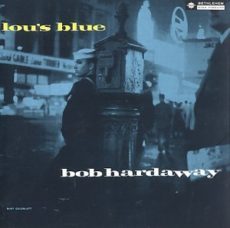
Bob Hardaway was born on March 1, 1928 in Milwaukee, Wisconsin to a dad who earned the nickname of J.B. “Bugs” Hardaway by inventing the characters of Bugs Bunny and Woody Woodpecker. Moving to Hollywood got him his early coaching from film composer Darrell Caulkner. As an instrumentalist, he learned many fundamentals in his Air Force band, which inspired him to write music for a touring show, Air Force Frolics, which he also conducted. After military service he returned to college in Los Angeles, California then began a career as a big-band section player in reliable outfits such as Ray McKinley. It was Billy May who came through with the first recorded solo opportunity for him on a Capitol album promising an instrumental Bacchanalia.
Hardaway’s presence as a soloist was furthermore boosted on a mid-’50s series of Decca sides by bandleader Jerry Gray, among the features being the reliable “Thou Swell,” the gentle “Baby’s Lullaby,” and a pounding “Kettle Drum.” He had the first saxophone chair in the Woody Herman band in 1956 and also performed and recorded with big-band maestros Stan Kenton, Les Elgart, Benny Goodman, Alvino Rey, and Med Flory, among others. He would record on sessions with Lulu, Bonnie Raitt, Neil Diamond, Roger Neumann’s Rather Large Band, Harry Nilsson and Doris Day.
Jazz discographies alone pile up nearly 75 recording sessions involving Hardaway between 1949 and 1995. In addition, there were vocalists and vocal groups too numerous to name outside of that genre with which he recorded, usually in the company of A-list session players such as bassist Carol Kaye. At 91, multi-instrumental reedist Bob Hardaway has been retired since the Nineties.
More Posts: clarinet,english horn,flute,history,instrumental,jazz,music,saxophone
Daily Dose Of Jazz…
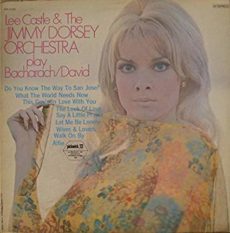
Lee Castle was born Lee Aniello Castaldo on February 28, 1915 in New York City. His first major professional job under his birth name was with Joe Haymes in 1935. This he followed by a couple of stints with Artie Shaw, Tommy Dorsey and also studied under Dorsey’s father. He also performed with Jack Teagarden, Glenn Miller, Will Bradley, and Benny Goodman.
Lee put together his own band in 1938, and continued to lead off and on through the Forties. He didn’t adopt the name Lee Castle in 1942. In 1953 he returned to duty under Tommy Dorsey and his brother Jimmy Dorsey. After Jimmy’s death, Castle became the leader of his ensemble, remaining in the position until the 1980s.
Trumpeter and bandleader Lee Castle passed away on November 16, 1990 in New York City.
More Posts: bandleader,history,instrumental,jazz,music,trumpet

Daily Dose Of Jazz…
Baby Laurence was born Laurence Donald Jackson on Feb 24, 1921 in Baltimore, Maryland. He was a boy soprano at age twelve, singing with McKinney’s Cotton Pickers. When the bandleader Don Redman came to town and heard Jackson, he asked his mother if he could take the boy on the road. She agreed, providing her son traveled with a tutor. Touring on the Loewe’s circuit, his first time in New York City was marked by a visit to the Hoofers Club in Harlem, where he saw the tap dancing of Honi Coles, Raymond Winfield, Roland Holder, and Harold Mablin.
>Returning home sometime later he discovered both his parents had died in a fire. He and his brother formed a vocal group called The Four Buds and tried to establish themselves in New York. He worked in the Harlem nightclub owned by the retired dancer Dickie Wells, who nicknamed him “Baby” and encouraged his dancing. He frequented the Hoofers Club, absorbing ideas and picking up steps from Eddie Rector, Pete Nugent, Toots Davis, Jack Wiggins, and Teddy Hale, who became his chief dancing rival. Baby worked after-hour sessions, danced around Harlem, Washington, D.C., and Cincinnati, and began playing theaters such as Harlem’s Apollo in the late 1930s. He performed with a group called The Six Merry Scotchmen or the Harlem Highlanders, who dressed in kilts, danced, and sang Jimmie Lunceford arrangements in five-part harmony.
By 1940 Baby was focused on tap dancing and became a soloist. Through the decade, he danced with the big bands of Duke Ellington, Count Basie and Woody Herman, and in the Fifties danced in small Harlem jazz clubs. Under the influence of jazz saxophonist Charlie Parker and other bebop musicians, Laurence expanded tap technique into jazz dancing. He performed with Art Tatum, duplicating in his feet what Tatum played with his fingers. Through listening hard to Parker, Dizzy Gillespie, and Bud Powell as well as drummers like Max Roach, he developed a way of improvising solo lines and variations as much as a horn man as a percussionist.
Beset by drugs, alcohol, and financial troubles, Laurence stopped performing in the late fifties. After a long illness, he returned to Harlem in the early sixties to work again in small jazz clubs. Baby began a long time engagement with Charlie Mingus, danced with Max Roach, and would go on to tap dance sessions at the Jazz Museum, dance with Josephine Baker, did some television and gave one of his triumphant performances at the Newport-New York Jazz Festival.
Regarded as an authentic jazz dancer, he further developed the art of tap dancing by treating the body as a percussive instrument. Baby Laurence, an extraordinary jazz tap dancer who had a profound influence on rhythm dancers in the second half of the twentieth century, passed away on Apr 2, 1974.
More Posts: dance,history,instrumental,jazz,music

Daily Dose Of Jazz…
Frederick L. Robinson was born in Memphis, Tennessee on February 20, 1901, and learned to play the trombone as a teenager. He studied music in Ohio before moving to Chicago, Illinois where he played in Carroll Dickerson’s orchestra. As a member of Louis Armstrong’s Hot Five, he played on recordings and continued working with both Dickerson and Armstrong until late 1929.
He went on to take a position in Edgar Hayes’s band and in the 1930s he worked extensively as a sideman, with Marion Hardy, Don Redman, Benny Carter, Charlie Turner, Fletcher Henderson, and Fats Waller. From 1939 to 1940 he was in Andy Kirk’s band, and in the later 1940s he worked with George James, Cab Calloway, and Sy Oliver. Early in the 1950s he was performing with Noble Sissle, but sometime after 1954 he became less active as a performer. Trombonist Fred Robinson passed away on April 11, 1984, in New York City.
More Posts: history,instrumental,jazz,music,trombone