

Daily Dose Of Jazz…
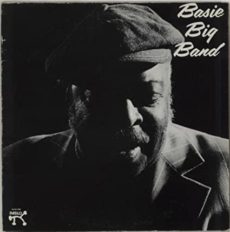
Bill Hughes was born William Henry Hughes in Dallas, Texas on March 28, 1930. His family moved to Washington, D.C., when he was nine years old where his father worked at the Bureau of Engraving and played trombone in the Elks Club marching band. He began learning to play the trombone around age twelve and was performing in Washington jazz venues by the age of sixteen. One of the clubs was the 7T Club, where he met and performed with saxophonist and flutist Frank Wess.
While students at Howard University, Hughes and Wess played in the Howard Swingmasters, along with bassist Eddie Jones. Though interested in music he originally wanted to pursue a career as a pharmacist and graduated from the University’s School of Pharmacy in 1952 and began working at the National Institutes of Health.
His career plans changed the following year when Wess, a member of the Count Basie Orchestra, suggested that Count Basie invite him to join the band. Also asked to join the Duke Ellington Orchestra, he declined and in 1953, he joined the Basie band where he already knew members Frank Wess, Eddie Jones, and Benny Powell. He played in a three-piece tenor trombone section with Powell and Henry Coker until 1957, when he decided to take a break from touring in order to help raise his family.
During this hiatus, Bill worked for the United States Postal Service and played trombone at the Howard Theater as well as with some small groups in Washington. A few years after returning to the band in 1963, he switched from the tenor to the bass trombone. In 2003 he took over leadership of the band following the death of Grover Mitchell. He retired from the band in 2010 and spent the last years of his life in Staten Island, New York with his wife and three children. On January 14, 2018 trombonist Bill Hughes passed away at the age of 87.

More Posts: bandleader,history,instrumental,jazz,music,trombone
Daily Dose Of Jazz…
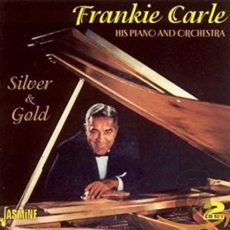
Frankie Carle, born Francis Nunzio Carlone on March 25, 1903 in Providence, Rhode Island. The son of a factory worker who could not afford a piano, he practiced on a dummy keyboard devised by his uncle, pianist Nicholas Colangelo, until he found a broken-down instrument in a dance hall. By 1916, now a teenager, he began working with his uncle’s band as well as a number of local bands around the state. To overcome prejudice against Italians he changed his name to Carle.
In the Thirties, he started out working with a number of mainstream dance bands that included the Mal Hallett Orchestra, had his own orchestra and at one time was billed in an ad for a night club as America’s Greatest Pianist. Joining Horace Heidt and His Musical Knights in 1939, Frankie later became co-leader of the band. His popularity during his time with Heidt’s band allowed him to leave the band in 1944 and form his own band, The Frankie Carle Orchestra and his daughter, Marjorie Hughes, sang with his band. During World War II, with his orchestra, he recorded a couple of V-Disc in a program of the U.S. War Department that featured his new compositions Moonlight Whispers and Sunrise Serenade. Some eleven years later he disbanded, embarked on his solo career in 1955 and until the 1980s, maintained a close following of loyal fans.
He had early exposure on the radio as a pianist for The Four Belles, a singing group distributed by the World Broadcasting System. In the mid-1940s, he and singer Allan Jones starred in the Old Gold Show on CBS radio and was also featured on the shows Pot o’ Gold, Treasure Chest, and The Chesterfield Supper Club. Over the course of his career, he recorded some four-dozen albums, composed over two-dozen popular romantic dance melodies. Pianist and bandleader Frankie Carle, whose #1 hit Sunrise Serenade sold over a million copies, passed away on March 7, 2001.
More Posts: bandleader,composer,history,instrumental,jazz,music,piano
Daily Dose Of Jazz…
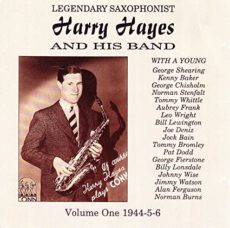
Harry Hayes was born Henry Richard Hayes in Marylebone in the West End of London, England on March 23, 1909, a bookmaker’s son. Winning a scholarship to his local grammar school, he was given a soprano saxophone by his father when he was 11 and by age 16, made his professional debut as an alto player at the Regent dance hall in Brighton. He was soon playing at London’s Kit Kat Club and the Piccadilly hotel. In 1927, he joined Elizalde at the Savoy, working alongside Americans like saxophonists Adrian Rollini, Fud Livingstone and Bobby Davis, trumpeter Chelsea Quealey, and pianist Jack Russin.
He became highly successful during the big band era of popular music that dominated by radio and bands playing London hotels and clubs. The late 1920s through the 30s, Hayes worked with musicians and bands such as Sydney Kyte at Ciro’s Club, pianist Billy Mason at the Cafe de Paris, Spike Hughes’s Orchestra at the Empress Rooms, Leslie “Hutch” Hutchinson, and Maurice Winnick at the Carlton, with Harry Roy at the Mayfair and with Sydney Lipton at the Grosvenor House. In 1932, he was featured in the band that accompanied Louis Armstrong’s first British tour.
Called up in 1940, Hayes served in the Welsh Guards band but continued to perform with others. After his discharge in 1944, he formed an eight-piece band, which went on to record sessions for HMV at Abbey Road featuring some of the best players of the day including Harry Roche, Norman Stenfalt, a young George Shearing and tenor saxophone Tommy Whittle. He played with Benny Carter, and appeared in a London Jazz At The Philharmonic concert with Oscar Peterson, Ella Fitzgerald, and Lester Young.
By 1947, Hayes was playing Charlie Parker bebop, and opening his first music shop in Shaftesbury Avenue. He was also active as a music teacher. While working with Kenny Baker in the 1950s, he led his own band at various London nightspots. Retiring from regular playing in 1965, he continued to run his shops until 1985. He was granted the freedom of the City of London in 1988 nd his last performance was at the Birmingham international jazz festival in 1992. Saxophonist and shopkeeper Harry Hayes passed away at the age of 92 on March 17, 2002.
More Posts: bandleader,history,instrumental,jazz,music,saxophone,shopkeeper

Daily Dose Of Jazz…
Sonny Burke, born Joseph Francis Burke on March 22, 1914 in Scranton, Pennsylvania and in the Thirties attended Duke University where he formed and led the jazz big band called The Duke Ambassadors. Graduating in 1937, during the 1930s and 1940s, he was a big band arranger in New York City, working with Sam Donahue’s band.
In the 1940s and 1950s, he worked as an arranger for the Charlie Spivak and Jimmy Dorsey bands, among others. 1955 saw him writing, along with Peggy Lee, the songs to Disney’s Lady and the Tramp. He also wrote songs with John Elliot for Disney’s Toot, Whistle, Plunk and Boom, which won the 1953 Oscar for Best Short Animated Feature.
Burke wrote the music for number of popular songs that continue to be regarded as jazz standards including Black Coffee, with lyric by Paul Francis Webster, and Midnight Sun, co-written with jazz vibraphonist Lionel Hampton. An active arranger, conductor and A&R man at major Hollywood record labels, especially Decca Records, he worked with Charles “Bud” Dant. He also wrote and arranged the theme for the early 1960s television show Hennesey, a jazzy update of the Sailor’s Hornpipe.
Later Sonny went on to become musical director at Warner Bros./Reprise Records. He was responsible for many of Frank Sinatra’s albums and produced Sinatra’s iconic recording of My Way and Petula Clark’s classic This Is My Song written by Charles Chaplin for his movie A Countess From Hong Kong. He was also the bandleader for recordings of leading singers such as Dinah Shore, Bing Crosby, The Andrews Sisters, The Mills Brothers, Ella Fitzgerald, and Mel Tormé.
Arranger, composer, big band leader, and producer Sonny Burke passed away from cancer on May 31, 1980 in Santa Monica, California at the age of 66.
More Posts: arranger,big band leader,composer,history,instrumental,jazz,music,producer
Daily Dose Of Jazz…
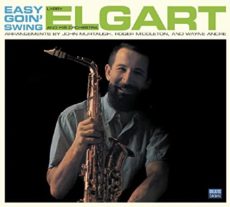
Lawrence Joseph Elgart was born in New London, Connecticut on March 20, 1922, four years younger than his brother, Les, and grew up in Pompton Lakes, New Jersey. Mother and father both played piano, the former being a concert pianist. He attended Pompton Lakes High School and began playing in jazz ensembles in their teens, and he played with jazz musicians such as Charlie Spivak, Woody Herman, Red Norvo, Freddie Slack and Tommy Dorsey.
In the mid-1940s, the brothers started up their own ensemble, hiring Nelson Riddle, Bill Finegan and Ralph Flanagan to arrange tunes for them. Their ensemble was not successful, and after a few years, they scuttled the band and sold the arrangements they had commissioned to Tommy Dorsey. Both returned to sideman positions in various orchestras.
By 1953, Larry met Charles Albertine and recorded two of his experimental compositions, Impressions of Outer Space and Music for Barefoot Ballerinas. Released on 10″ vinyl, these recordings became collectors’ items for fans of avant-garde jazz, though not commercially successful. Putting together a more traditional ensemble they, produced what came to be known as the Elgart Sound in their recordings. This configuration proved to be very commercially successful, and throughout the 1950s, Larry and Les enjoyed a run of successful albums and singles on the Columbia label. Their initial LP, “Sophisticated Swing,” released in late 1953, was credited to The Les Elgart Orchestra, because, according to Larry, Les was more interested than his brother in fronting the band.
In 1954, the Elgarts left their permanent mark on music history in recording Albertine’s Bandstand Boogie, for the legendary television show originally hosted by Bob Horn, and two years later, by Dick Clark. In 1956, Clark took the show from its local broadcast in Philadelphia, to ABC-TV for national distribution as American Bandstand. He remained host for another 32 years. Variations of the original song surfaced as the show’s theme in later years.
In 1955, the band became The Les and Larry Elgart Orchestra, but split up in 1959, subsequently releasing his own series of LPs. Larry signed with RCA Victor and his 1959 album, New Sounds At the Roosevelt, was nominated that year for a Grammy Award. From 1960-62, he released music on MGM Records. The brothers reunited in 1963, recorded several more albums and ended with 1967’s “Wonderful World of Today’s Hits,” after which they once again went their separate ways.
His biggest exposure came in 1982, with the smash success of a recording titled Hooked on Swing. The instrumental was a medley of swing jazz hits – In the Mood, Cherokee, Don’t Sit Under the Apple Tree, American Patrol, Sing, Sing, Sing, Don’t Be That Way, Little Brown Jug, Opus #1, Take the A Train, Zing Went the Strings of My Heart and A String of Pearls. The album became so popular it cracked the US Billboard Pop Singles chart at #31 and Adult Contemporary chart #20. This was the final hit for any artist in the year-long “medley craze,” that lasted from 1981 to 1982.
Continuing to tour internationally and record into the 2000s, alto saxophonist Larry Elgart, who over the course of his career recorded twenty-eight albums as a leader and recorded two-dozen with his brother, passed away at a hospice center in Sarasota, Florida on August 29, 2017 at the age of 95.
More Posts: bandleader,history,instrumental,jazz,music,saxophone